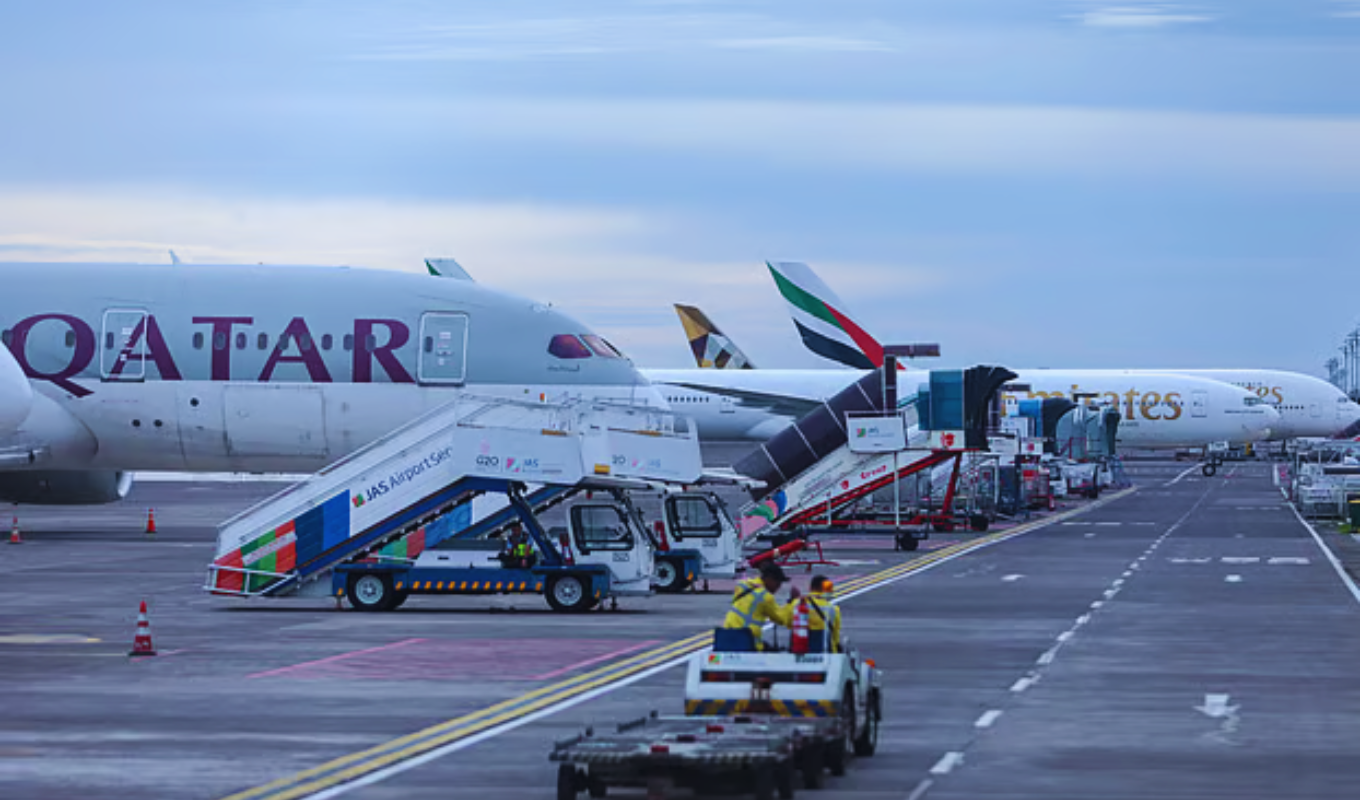
The sports travel Middle East disruption has deeply affected global sporting schedules and travel plans after authorities closed airspace in parts of the Gulf amid rising regional conflict. Airlines cancelled flights, and organisers activated contingency plans to protect teams and staff.
Sporting organisations quickly adjusted travel arrangements when governments shut key Middle Eastern airspace following increased military activity. Airlines disrupted flights linking Europe, Asia and Australasia through Gulf transit hubs, forcing teams to cancel trips, reroute aircraft or accept long delays.
In some cases, the disruption directly hit scheduled matches and tours. Officials cancelled a 50-over fixture in Abu Dhabi between the England Lions and Pakistan Shaheens because teams could not travel safely or on time.
At the same time, the International Cricket Council activated contingency protocols for the ICC Men’s T20 World Cup 2026, recognising that many players and staff rely on transit points such as Dubai for onward journeys home or onward travel. Organisers stated safety and well-being had been prioritised even as fixtures on the field continued.
Players leaving the tournament have reported uncertainty around return travel. Zimbabwe’s squad, for example, planned several batches via Dubai but found their travel arrangements in limbo due to fallout from the Middle East crisis.
In one widely reported case, the escalating crisis stranded Indian badminton star PV Sindhu at Dubai International Airport after authorities suspended flights. She later confirmed that she and her team were safe. Organisers helped them find alternative routes out of Dubai.
The disruption has also hit other athletes and touring squads. Travel uncertainty forced several national tours and development trips to change plans. Members of the England Lions, including Jonny Bairstow and coach Andrew Flintoff, remained in Dubai after airlines cancelled their scheduled departures.
The global motorsport calendar has also felt effects. Teams and support personnel preparing for the 2026 Formula One Australian Grand Prix were reported to have faced significant travel chaos as Middle Eastern travel corridors closed, forcing last-minute reroutes for equipment and personnel. Despite disruption fears, organisers have stated that the Melbourne season opener will proceed as planned.
Meanwhile, the sport’s governing body has stressed that safety and the welfare of participants will be the priority when reviewing the schedules of upcoming races in Gulf states later in the season.
Sports governing bodies have begun to formalise responses to unforeseen travel challenges. The ICC, for instance, announced enhanced logistics support and coordination with airlines to secure alternative routing options for players, support staff and broadcasters impacted by the closure of key hubs such as Dubai.
Many federations are working closely with national and international aviation authorities to monitor changing airspace restrictions and reroute travel plans. Organisers and teams also maintain frequent communication with security specialists to assess risks on a day-by-day basis.
The disruptions extend beyond teams and players to affect fans and local economies. With flights rerouted or cancelled, fans heading to distant fixtures now face added uncertainty, while tourism-dependent cities risk economic loss where anticipated visitor numbers fall short.
Officials caution that while competition continues in some series, travel uncertainty may lead to additional venue changes, match postponements or, in rare cases, cancellations. Government travel advisories remain fluid as the situation evolves.
Sports stakeholders are expected to press ahead with careful planning as long as safety assurances can be maintained and flight paths can be secured via alternative corridors. Where possible, contingency plans remain active and continuously updated.
Teams will likely adopt flexible itineraries and additional pre-departure protocols as the region’s airspace situation remains unpredictable. Federations have reiterated that no decisions will be taken without due regard for athlete and public safety.