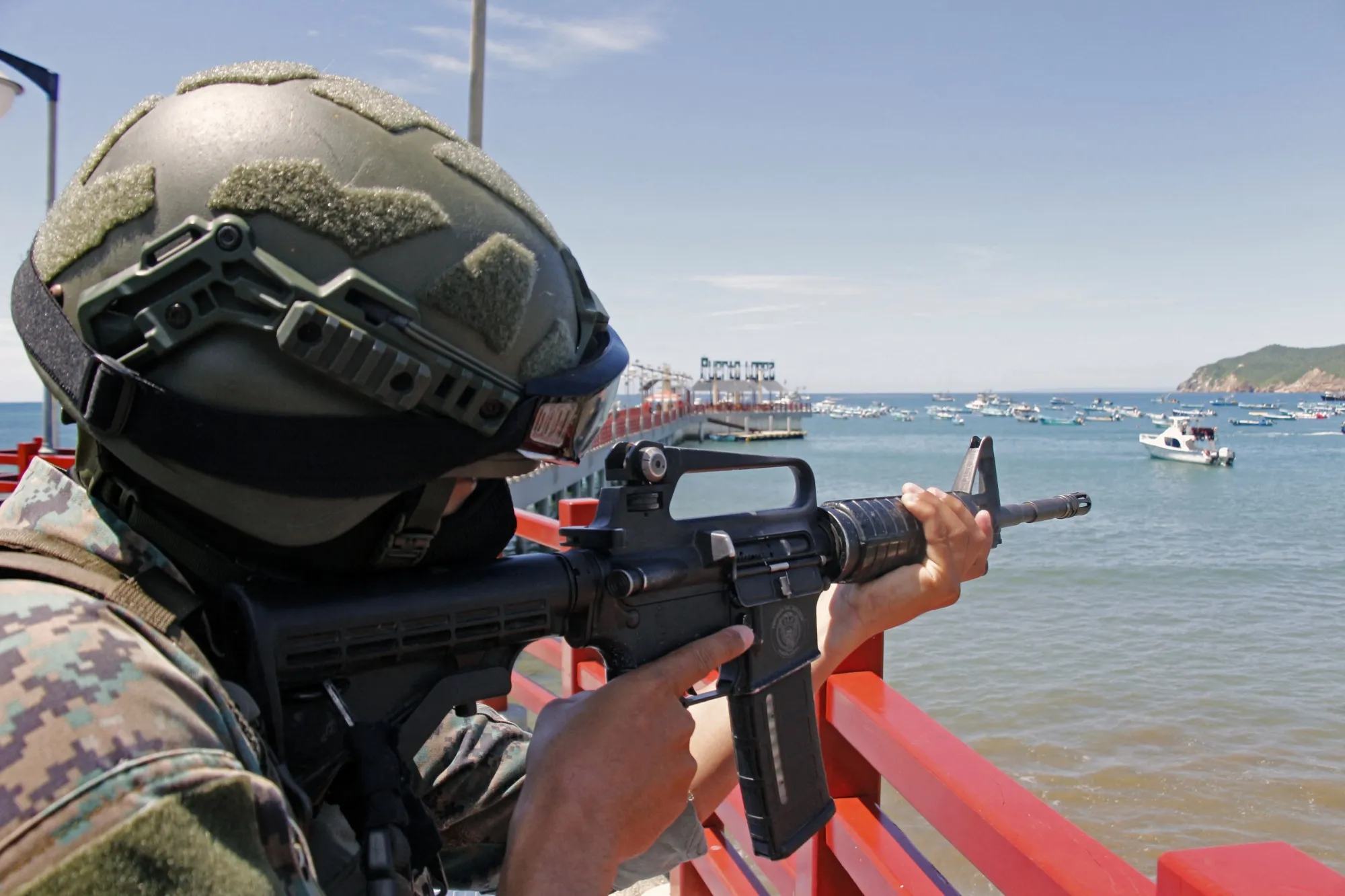
A US–Ecuador joint anti-drug military operation has begun. Forces from the United States and Ecuador launched coordinated actions to fight drug trafficking and narco-terrorism inside Ecuador. Officials confirmed the move earlier this week.
The United States Southern Command and Ecuador’s Defence Ministry announced the initiative. They described it as an offensive phase in the broader fight against criminal drug networks. Authorities say these networks fuel violence and corruption across the region.
Joint forces moved into key regions of Ecuador soon after the announcement. Leaders from both nations framed the action as a major escalation against narcotics trafficking. Official statements said the mission targets specific narco-terrorist groups. It also aims to disrupt smuggling routes that supply global drug markets.
Washington and Quito both called the operation part of a wider regional strategy. In recent years, security agencies have increased aerial surveillance and drug interdiction missions across Latin America. This campaign marks one of the most visible military partnerships between the two countries.
Military commanders have not released details about specific raids or troop deployments. They limited public information to protect operational security. Such restrictions are common during high-risk counter-narcotics missions involving foreign and domestic forces.
General Francis L. Donovan, who leads the United States Southern Command, praised Ecuadorian troops for their cooperation. He said both militaries are showing strong resolve against narco-terrorist networks. In a public statement, he stressed that regional partners must act together to curb organised crime.
Ecuador’s Defence Ministry also described the mission as an “offensive” against trafficking organisations. Officials said they withheld sensitive details for security reasons. President Daniel Noboa has openly supported closer security cooperation with the United States and other allies.
Ecuador has become a key transit hub for cocaine shipments. Traffickers move drugs from neighbouring Colombia and Peru through Ecuadorian ports. From there, shipments head toward North America and Europe. Rising organised crime has increased pressure on the government to act.
Security analysts say joint missions like this reflect a broader regional trend. Governments now combine military strength with law enforcement intelligence. They share logistics, surveillance data and tactical resources to weaken cross-border criminal groups.
Public safety officials warn that narco-terrorism affects more than drug supply chains. It drives homicide rates, spreads corruption and destabilises institutions. Communities across Ecuador have felt the impact in recent years.
Political reaction has been mixed. Supporters say the crackdown is overdue. Critics question the scale of foreign military involvement. Some civil society groups have raised concerns about sovereignty and long-term implications.
Authorities have not reported major civilian casualties since the operation began. They continue to review field reports before releasing verified updates. Officials say they will share more information once assessments are complete.
Military leaders from both nations plan to continue joint patrols and intelligence operations. They aim to expand surveillance and tighten control over major trafficking corridors. Law enforcement agencies will work alongside military units during the campaign.
Observers believe the operation could evolve in the coming months. Drug networks often adapt quickly to enforcement pressure. Both governments will likely adjust tactics as they measure results.
The long-term impact of this campaign will depend on sustained coordination and measurable disruption of trafficking routes. For now, the United States and Ecuador have signaled a clear commitment to confront organised crime together.