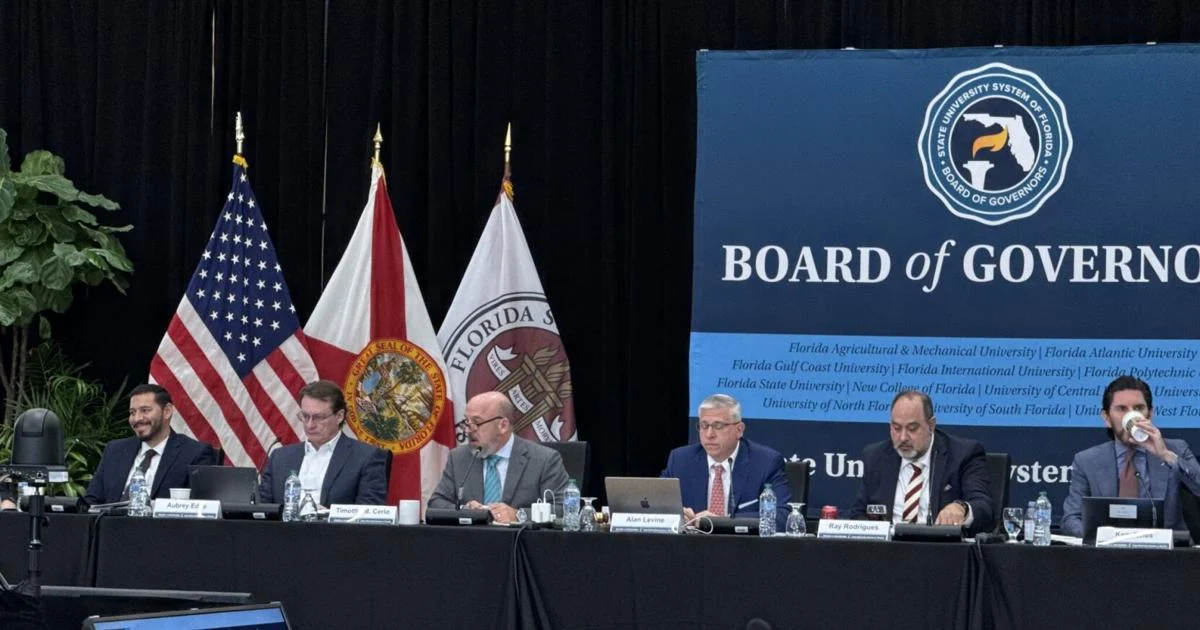
Florida’s public university system has been ordered to halt H‑1B visa hiring at universities. This decision will suspend new foreign faculty and staff recruitment under the federal work visa program through January 5, 2027. The policy, approved by the Florida Board of Governors, is part of a broader effort. It aims to scrutinise how highly skilled foreign workers are recruited by state-funded higher education institutions. The move has intensified debates about academic talent, workforce policy, and immigration rules in the United States.
Earlier this week, the Florida Board of Governors — the body overseeing the 12 public universities in the state — adopted a new regulation. As a result, the hiring of new employees through the H‑1B visa program will pause until January 2027. However, the measure only affects new hires. Meanwhile, faculty and staff already employed on H‑1B visas will continue in their roles. Moreover, they can also renew their visas, according to state officials.
The H‑1B visa programme allows U.S. employers to hire foreign professionals in specialised occupations. These include research, engineering, and academia. It has long been a key route for universities to recruit international talent. Supporters of the freeze argue it will give state leaders time to evaluate visa use and address claims of “visa abuse.” Critics warn it could impair universities’ ability to attract top researchers from abroad.
The current pause reflects directives from Ron DeSantis. He previously voiced concerns about how public institutions utilise the H‑1B programme. He said it may disadvantage local graduates in favour of foreign hires. State officials argued that freezing new visa-based recruitment will allow a closer review of the programme. They said it will ensure opportunities for domestic applicants.
Chancellor Ray Rodrigues of the State University System said the decision provides time for study and reflection. He noted it is not meant to penalise existing employees or dismantle the visa system. Current workers on H‑1B visas are exempt from the freeze. They can maintain their status, preserving continuity for ongoing programmes.
The announcement was met with mixed reactions in academic circles. Many university leaders expressed concern that restricting foreign talent could weaken Florida’s competitiveness in research, innovation, and STEM education. These areas often rely on specialised international faculty. Critics contend that H‑1B workers, although a small proportion of the academic workforce, contribute significantly to research output and teaching quality. Some warned that promising international scholars may choose other states or institutions. This could hinder collaborations and slow scientific progress.
Opposition voices framed the policy in broader political terms. Some educators said the freeze reflects national trends aimed at restricting immigration. They argued it prioritises American citizens in employment. Critics and think-tank analysts warned the move could damage Florida’s reputation as a destination for global talent. Neighbouring states and other regions continue to recruit internationally. Furthermore, critics have raised concerns that universities might shift innovative programmes and high-impact research if they cannot hire qualified foreign staff.
Beyond university recruitment, the pause may affect related sectors such as medical research, engineering, and technology. H‑1B hires historically filled key roles in labs and technical departments. Stakeholders fear the freeze could slow project timelines or strain resident faculty with increased workloads. Some economic analysts warned that a reduced pipeline of international researchers could affect grant funding, graduate training programmes, and collaborations with industry partners. These effects may become more visible as the freeze continues through 2026.
State authorities will continue reviewing the policy and monitor its impacts closely. Advocates believe the freeze will clarify how universities use H‑1B visas. Opponents warn that the decision could have long-term effects on Florida’s educational standing and research capacity.While universities must pause new H‑1B hiring until 2027, other employers in Florida and across the United States can still hire through the federal H‑1B programme. Moreover, this state-level decision does not affect them. In addition, authorities continue to monitor the policy’s impact. However, opponents warn that it could have long-term effects on Florida’s educational standing and research capacity. Therefore, universities and stakeholders must carefully plan for the freeze’s consequences.