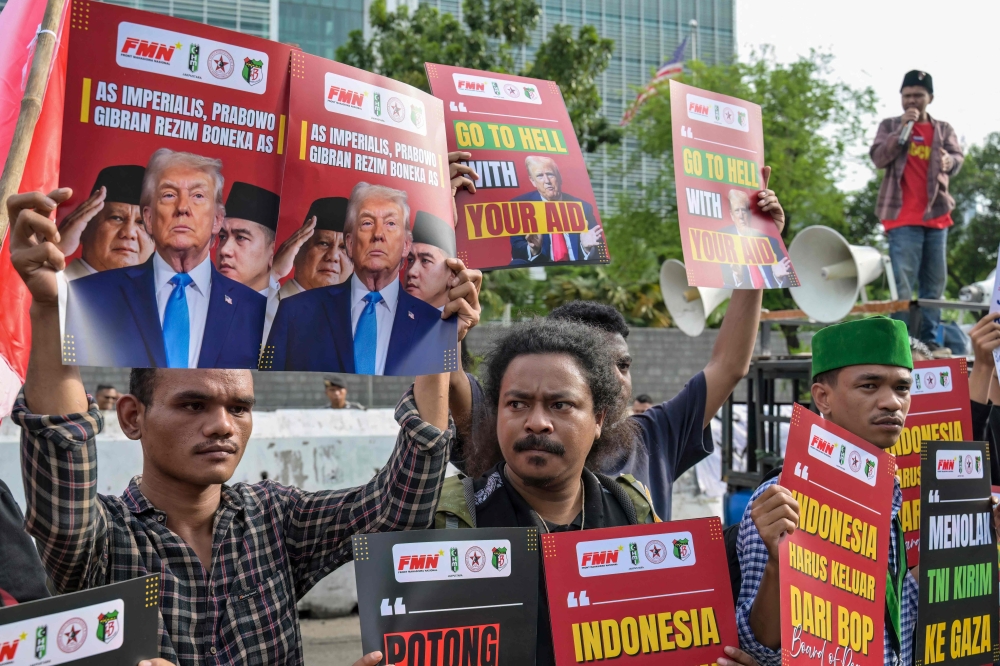
Public debate has intensified in Indonesia after the government’s response to the Iran war and its relationship with the United States came under scrutiny. Critics say the country must carefully balance diplomacy with public sentiment, especially as anger grows among many Indonesians over Washington’s role in the conflict.
The controversy centers on Prabowo Subianto, who has offered to mediate between the United States and Iran while maintaining dialogue with Western governments. His approach has sparked mixed reactions at home, where many citizens sympathize with Iran and criticize American military actions.
Political analysts say the debate highlights Indonesia’s delicate position as the world’s largest Muslim-majority democracy and a nation that traditionally promotes neutral diplomacy.
Indonesia’s foreign ministry recently said the president was willing to facilitate talks between Iran and the United States if both sides agreed. Officials emphasized that Indonesia supports dialogue and diplomatic solutions to the crisis.
The proposal reflects Indonesia’s long-standing policy of promoting international peace. Government leaders say mediation could help reduce tensions in the Middle East and protect global stability.
However, some Indonesian politicians and policy experts questioned whether the plan was announced too quickly. Former diplomats warned that such sensitive initiatives require careful preparation and coordination.
Others argue that Indonesia should take a stronger stance condemning violence in the region rather than positioning itself as a neutral broker.
Public reaction inside Indonesia has become increasingly vocal as the war between Iran and its opponents escalates. Many citizens view the conflict through humanitarian and religious perspectives.
Some Indonesians say they support Iran’s right to defend itself, while others express anger toward the United States and Israel for launching attacks that triggered the wider confrontation.
Experts note that sympathy for Iran in Indonesia does not always stem from religious solidarity alone. Many people see the conflict as part of a broader struggle against perceived Western intervention in the Middle East.
At the same time, not all Indonesians follow the conflict closely. Analysts say information gaps and conflicting narratives about events inside Iran have shaped public opinion.
Indonesia’s powerful Islamic organizations have also entered the debate. Some clerical groups urged the government to reconsider its participation in international initiatives led by the United States.
One of the main concerns involves a US-supported diplomatic initiative often referred to as the “Board of Peace,” created to oversee international stabilization efforts in Gaza after earlier conflicts in the region.
Several religious leaders argue that Indonesia’s involvement could appear inconsistent with its traditional support for Palestinian independence and broader Muslim solidarity.
Government officials responded by saying Indonesia will withdraw from the initiative if it fails to benefit Palestinians or align with national interests.
Indonesia now faces a complex diplomatic challenge. The government maintains relations with Western allies while also cultivating ties with countries across the Middle East.
Foreign Minister Sugiono confirmed that Jakarta has been communicating with Gulf nations following the outbreak of fighting. The president has also held phone calls with several regional leaders to discuss the situation and explore diplomatic options.
Analysts say Indonesia’s approach reflects its broader foreign policy tradition of “active neutrality.” This strategy allows the country to engage with multiple global powers without formally aligning with any side.
Still, critics argue that the current crisis could test that balance.
Beyond political tensions, the Iran war is creating economic worries in Indonesia. Officials warn that the conflict could disrupt global energy supplies and drive up oil prices.
The Strait of Hormuz, one of the world’s most important oil routes, has already experienced disruptions due to the fighting. Any prolonged closure could have serious consequences for energy-importing countries like Indonesia.
To reduce risks, Indonesia is exploring alternative fuel suppliers and monitoring potential impacts on domestic fuel prices.
Government leaders say they want to prevent economic instability while maintaining diplomatic engagement with all parties involved in the crisis.
The growing debate over Indonesia US ties Iran war criticism reflects a broader discussion about the country’s global role.
Supporters of the president argue that Indonesia should play a constructive role in peace efforts. They say mediation could enhance the country’s international reputation and help prevent further escalation in the Middle East.
Critics remain skeptical. Some believe Indonesia risks appearing too close to Washington at a time when public opinion in many Muslim-majority societies strongly opposes American military actions.
Political observers say the government will need to communicate its strategy clearly to avoid further controversy.
For now, Indonesia continues to call for restraint and dialogue. Officials emphasize that diplomacy remains the only path toward reducing tensions in the region.
Whether Indonesia can successfully balance domestic pressure with international diplomacy remains uncertain. But analysts agree that the Iran war has already triggered one of the most significant foreign-policy debates in Indonesia in recent years.
As the conflict unfolds, Jakarta’s decisions could shape not only its own political landscape but also its standing as a mediator on the global stage.