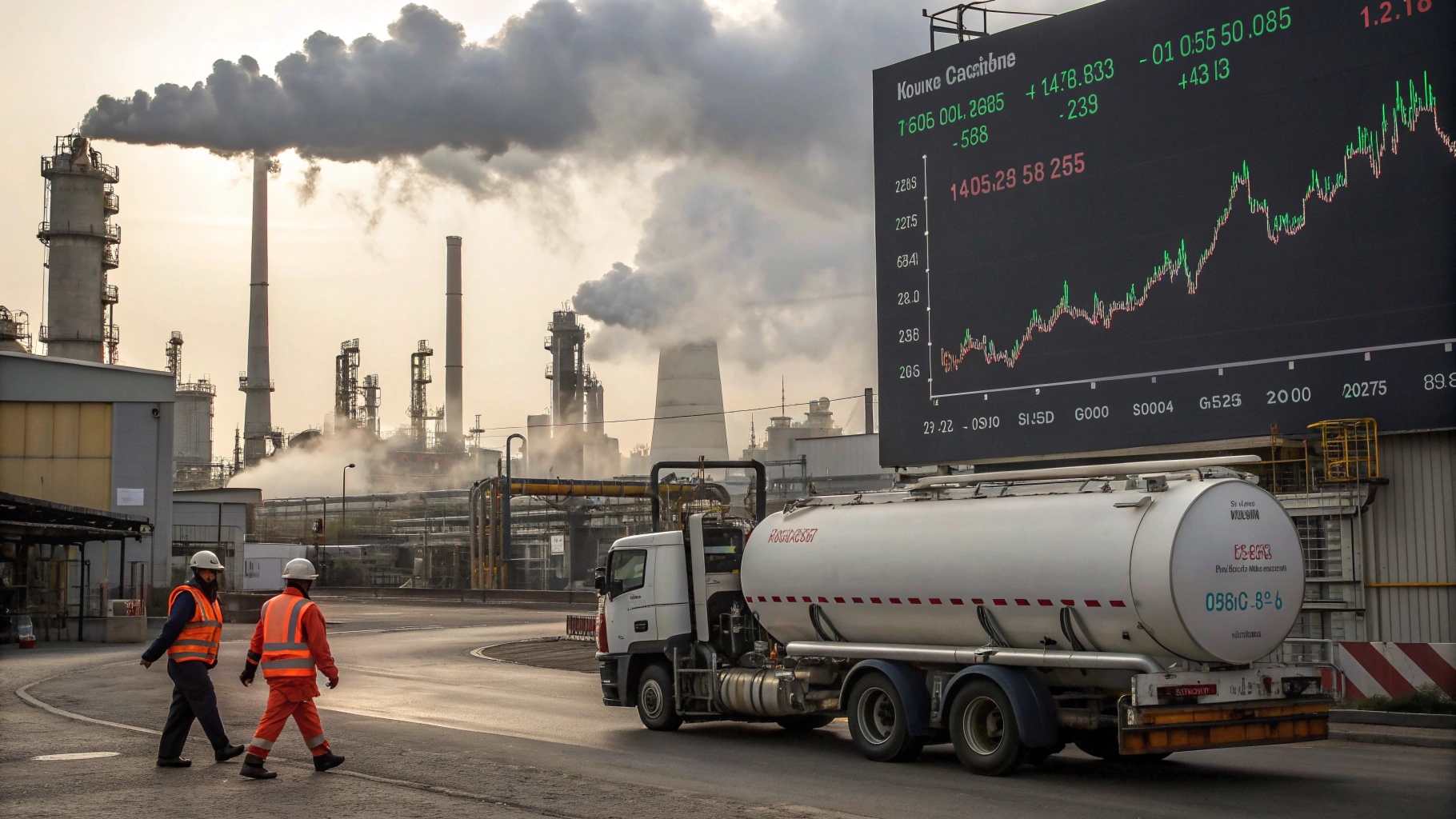
Global Energy Supply Crisis Takes Center Stage in G7 Discussions.
The global energy supply crisis now dominates international economic discussions as leaders of the Group of Seven (G7) say they are ready to take “necessary measures” to stabilize global energy markets. Finance ministers made the statement after holding emergency talks to address rising oil prices, geopolitical tensions, and growing concerns over energy security.
Escalating tensions in the Middle East and a sharp oil price surge linked to regional conflicts have pushed global oil markets into volatility. As a result, energy prices have surged sharply, increasing concerns about inflation, economic growth, and supply security across the world.
The G7 — which includes the United States, Canada, the United Kingdom, Germany, France, Italy, and Japan — is now closely monitoring the situation and coordinating with international institutions to prevent further instability in global energy markets.
Energy markets have experienced dramatic volatility in recent weeks. Brent crude oil prices surged past $100 per barrel, marking the highest level seen since 2022. The spike has largely been driven by geopolitical tensions and fears that key supply routes may be disrupted.
Shipping routes in strategic locations such as the Strait of Hormuz have become a major concern for global energy traders. Any disruption in this region could significantly impact oil exports from the Middle East, which supplies a large portion of the world’s crude oil.
The situation has been closely watched by financial markets as well. Currency and stock markets have shown increased volatility, reflecting investor concerns about prolonged energy shortages and economic slowdown.
During the emergency meeting, G7 finance ministers discussed potential strategies to stabilize the global energy supply crisis, including coordinated responses with international partners.
One of the key options discussed during the G7 meeting involves the potential release of strategic petroleum reserves. These reserves are maintained by major economies to respond to supply shocks and stabilize markets during energy emergencies.
Officials confirmed that the possibility of releasing oil stockpiles has been actively considered as a way to boost global supply if shortages worsen.
In a joint statement, the G7 ministers emphasized that they “stand ready to take necessary measures” to support global energy supplies, including the release of strategic reserves if required.
Energy analysts believe that a coordinated release from international reserves could significantly calm markets and prevent a prolonged energy crisis.
The International Energy Agency (IEA) also joined the discussions on stabilizing global energy supplies. Experts say IEA member countries collectively hold more than 1.2 billion barrels of emergency oil reserves, which they can release if severe supply disruptions occur in global energy markets.
The current global energy supply crisis has been intensified by geopolitical tensions in the Middle East. Conflicts in the region have raised fears of supply disruptions, particularly as several major oil producers are located there.
Recent developments have already shown how oil prices jumped and global markets reacted to geopolitical conflict, highlighting the fragile state of global energy markets. At one point, Brent crude prices briefly approached $120 per barrel before stabilizing slightly as governments began discussing potential interventions.
Energy experts warn that if tensions escalate further, oil prices could continue to climb, potentially triggering inflation across many economies.
Higher energy costs can quickly translate into increased transportation expenses, higher manufacturing costs, and rising consumer prices.
The energy crisis is not only an energy issue — it is also a major economic challenge. Economists warn that sustained high oil prices could slow global economic growth.
Many industries rely heavily on stable energy supplies, including transportation, manufacturing, aviation, and logistics. When energy costs rise rapidly, companies often pass those costs on to consumers.
There are also concerns that prolonged energy shortages could trigger stagflation, a dangerous economic condition where inflation rises while economic growth slows.
Financial institutions such as the International Monetary Fund (IMF) and the World Bank have been monitoring the situation closely. Representatives from both organizations participated in the G7 discussions to assess the potential economic consequences.
The response to the global energy supply crisis is expected to involve cooperation between multiple international organizations.
During the emergency meeting, officials from the IMF, World Bank, Organisation for Economic Co-operation and Development (OECD), and the International Energy Agency participated in the discussions.
Their involvement highlights the global scale of the problem and the need for coordinated international action.
G7 leaders emphasized that communication between governments and international institutions will remain active as the situation develops.
Officials also stated that further meetings may be held to evaluate the energy market situation and coordinate policy responses if necessary.
Energy security has now become one of the top priorities for governments worldwide. The current crisis has demonstrated how quickly geopolitical tensions can disrupt global supply chains.
Many countries are already reviewing their energy policies to reduce dependence on unstable supply routes. Investments in renewable energy, alternative fuels, and diversified energy sources are expected to increase in the coming years.
At the same time, strategic oil reserves remain a critical tool for governments to respond to sudden supply shocks.
Experts believe that coordinated action among major economies could prevent the current situation from escalating into a full-scale energy crisis.
For now, the G7 has not yet confirmed an immediate release of oil reserves. However, officials have emphasized that the option remains on the table.
Energy ministers from the G7 countries are expected to continue discussions and assess whether intervention in energy markets will be required.
If oil prices continue to rise or supply disruptions worsen, coordinated action could be taken quickly.
Until then, governments and financial markets will continue to monitor the global energy supply crisis closely, as the outcome could shape the future of energy markets and the global economy.