Australia missiles to UAE has become a major geopolitical development as Canberra steps up its support for Gulf nations facing rising regional tensions. The Australian government announced that advanced air-to-air missiles will be supplied to the United Arab Emirates, while a high-tech surveillance aircraft will be deployed to monitor the region’s airspace.
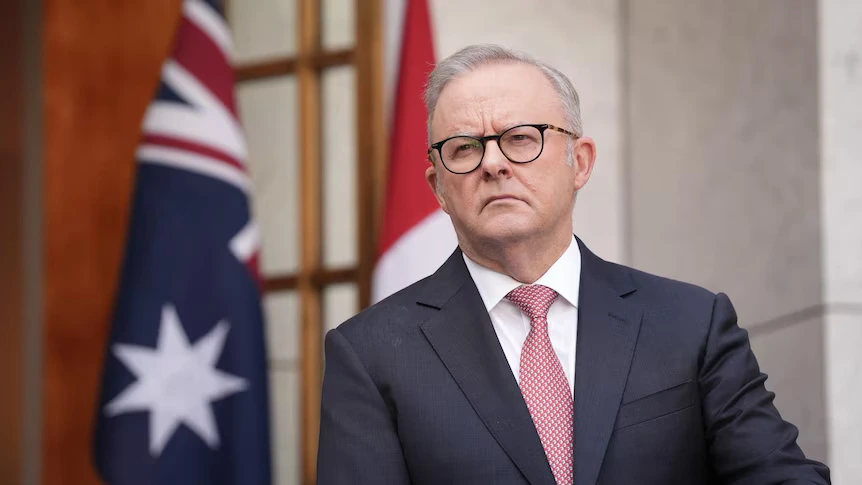
The move was confirmed by Australian Prime Minister Anthony Albanese, who stressed that the mission is strictly defensive and aimed at protecting civilians and regional stability. Military support is being provided after a request from the UAE as the Middle East faces escalating missile and drone attacks linked to the ongoing regional conflict.
Australia’s decision to provide missiles and a surveillance aircraft marks one of the most significant defence deployments by the country in the Gulf region in recent years.
According to official statements, the Australian Defence Force will send an advanced E-7A Wedgetail airborne early warning and control aircraft to the Middle East. The aircraft will help monitor airspace across the Gulf and provide intelligence to allied forces operating in the region.
At the same time, medium-range air-to-air missiles will be supplied to the UAE to strengthen its defensive capabilities against potential aerial threats.
The aircraft is expected to operate in the region for an initial period of four weeks. During this time, about 85 Australian defence personnel will support the mission, ensuring that surveillance operations run smoothly and effectively.
Officials said the deployment is designed to help secure airspace above the Gulf while protecting civilians and international infrastructure.
The decision to send Australia missiles to UAE comes amid growing security challenges in the Middle East. Recent missile and drone attacks have targeted several Gulf states, raising concerns about regional stability and the safety of civilians.
Iran has been accused of launching multiple missile and drone attacks toward neighbouring countries as tensions escalate following military strikes involving global powers.
Reports indicate that hundreds of drones and missiles have been launched toward Gulf targets, although most have been intercepted by regional defence systems. However, debris from interceptions and occasional strikes have still caused damage in cities such as Abu Dhabi and Dubai.
Because of these developments, Gulf countries have sought stronger defensive cooperation with international partners, including Australia.
One of the most important elements of the deployment is the Boeing E-7A Wedgetail, often referred to as a “flying radar.”
This advanced surveillance aircraft is equipped with a powerful radar system that can detect airborne threats hundreds of kilometres away. The plane can track multiple targets simultaneously and coordinate fighter jets and defence systems during operations.
In modern warfare, airborne early warning aircraft like the Wedgetail play a critical role.
They act as airborne command centres, allowing military forces to monitor large areas of airspace in real time. The aircraft also helps identify potential threats before they reach populated areas or military bases.
The Wedgetail has already been used in several international missions, including support operations in Europe and the Middle East.
Australian officials have repeatedly emphasized that the deployment is not intended to involve the country in direct combat.
Prime Minister Albanese stated that Australia’s role will remain limited to defensive assistance and surveillance operations, rather than offensive military actions.
No Australian ground troops will be sent to Iran or other conflict zones as part of the operation.
Instead, the focus will remain on protecting airspace, assisting allied forces, and ensuring the safety of civilians and international personnel working in the region.
Another major reason behind the deployment is the presence of Australian citizens across the Gulf region.
At the start of the recent conflict, around 115,000 Australians were believed to be living or working in the Middle East, including thousands in the UAE.
By strengthening regional air defence systems and surveillance capabilities, Australia hopes to ensure that evacuation routes and civilian infrastructure remain protected.
Authorities say several thousand Australians have already returned home using commercial flights since tensions escalated.
The latest move highlights the growing defence cooperation between Australia and Middle Eastern allies.
In recent years, Australia has expanded its security partnerships beyond the Indo-Pacific region, working more closely with NATO partners and Gulf nations.
Military analysts say the deployment demonstrates Australia’s willingness to contribute to global security operations, especially when civilian safety and international stability are at risk.
At the same time, the operation sends a strategic signal that democratic allies are prepared to support regional defence systems in times of crisis.
The Gulf region plays a crucial role in global energy supply and international trade.
One of the world’s most important maritime routes, the Strait of Hormuz, passes through the region and carries a large portion of global oil and gas shipments.
Any major disruption in Gulf security could affect energy prices, international trade routes, and economic stability around the world.
Because of this, international cooperation to maintain stability in the region has become a priority for many countries.
The announcement that Australia missiles to UAE will be delivered alongside a powerful surveillance aircraft signals a new phase of defence cooperation between Canberra and Gulf nations.
While the deployment is limited to defensive support, it demonstrates how global alliances are evolving in response to emerging security threats.
With advanced radar aircraft monitoring the skies and missiles strengthening regional defence systems, Australia hopes its contribution will help protect civilians, stabilize Gulf airspace, and prevent further escalation of the ongoing Middle East crisis.