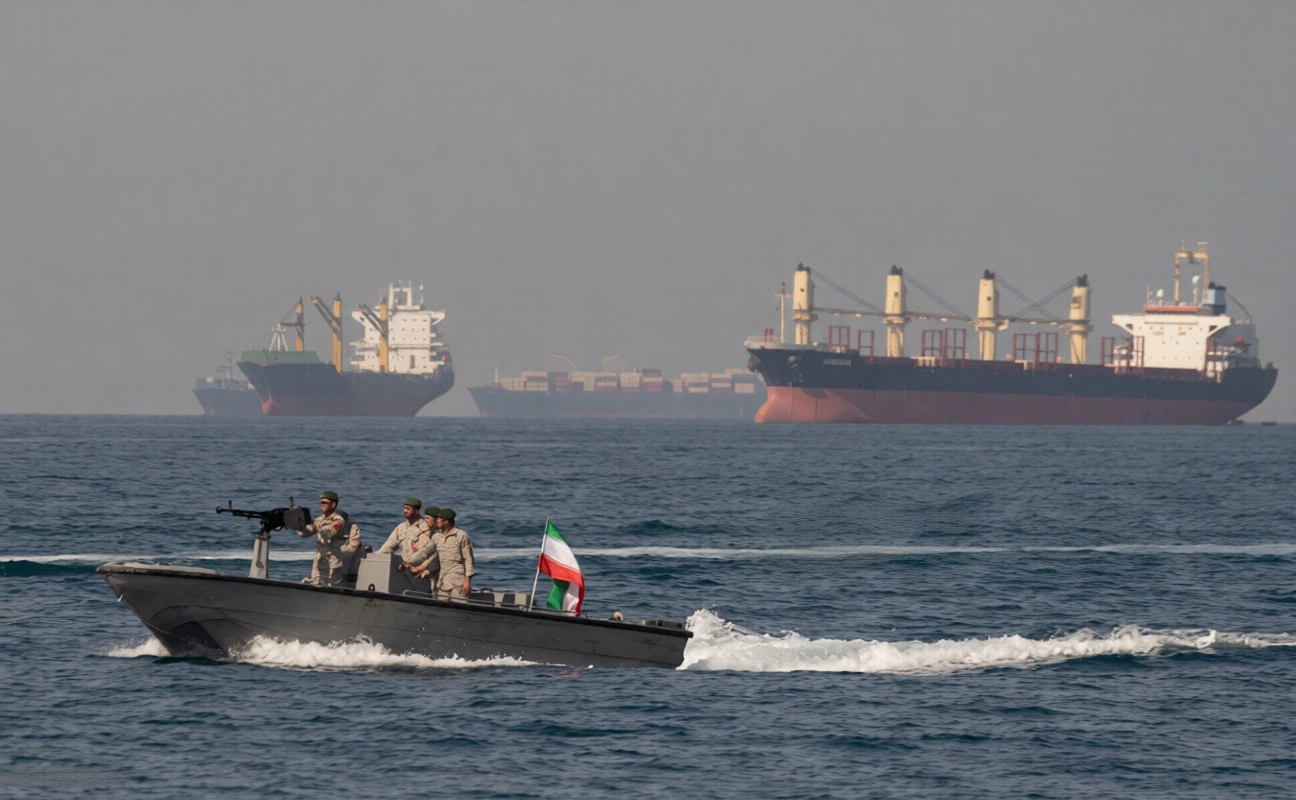
The Iran war oil crisis is rapidly intensifying across West Asia. New strikes, naval clashes, and refinery shutdowns are disrupting one of the world’s most critical energy corridors.
In the latest escalation, Iran launched fresh attacks on regional infrastructure and US-aligned interests across the Gulf. The United States responded by striking Iranian vessels suspected of laying naval mines in the Strait of Hormuz, a key global oil shipping route.
Energy analysts warn that the conflict has already forced the shutdown of around 1.9 million barrels per day (bpd) of refining capacity in the Gulf. This disruption has raised fears of a broader shock to global oil supplies.
Iran Launches New Strikes Across Gulf Allies
Regional tensions surged after Iran carried out new military strikes across West Asia. These attacks were launched in response to earlier operations by the United States and Israel.
Several strategic facilities in Gulf states were reportedly targeted during the latest wave of retaliation. Explosions were reported near energy infrastructure in multiple locations.
Some of the affected areas are linked to Saudi oil production and logistics networks. Security officials said missile and drone activity has intensified since the war entered its second week.
Iranian authorities have repeatedly warned that energy infrastructure belonging to countries supporting Washington or Tel Aviv could become legitimate targets.
These developments have raised concerns among global analysts. The conflict could expand beyond Iran and Israel and pull more Gulf states into direct confrontation.
US Strikes Iranian Mine-Laying Boats in Hormuz
At sea, the United States has increased its military operations in the Strait of Hormuz. Intelligence reports suggested that Iranian forces were deploying naval mines in the area.
American naval forces destroyed 16 Iranian mine-laying vessels in targeted strikes. The operation was carried out to protect shipping routes and prevent disruption to oil transport.
The Strait of Hormuz is one of the world’s most important energy chokepoints. Nearly 20% of global oil shipments normally pass through the strait every day.
Shipping traffic has been severely disrupted since the conflict escalated. Many oil tankers are now avoiding the area due to security risks.
Analysts say the closure or restriction of this route could trigger a major global energy crisis.
Nearly 1.9 Million bpd of Gulf Refining Capacity Shut
The war has already started affecting the region’s refining industry. According to energy consultancy IIR, around 1.9 million barrels per day of oil refining capacity in the Gulf has been shut down.
The disruption spans several major oil-producing countries, including:
- Saudi Arabia
- Kuwait
- Iraq
- Qatar
- Bahrain
- United Arab Emirates
Several refineries have reduced operations or halted processing completely. Safety concerns, logistical challenges, and storage shortages are among the main reasons.
Energy researchers say more facilities could be forced offline if the conflict continues. Export routes may also remain blocked if naval tensions escalate further.
Drone Attacks and Refinery Shutdowns
The regional energy network has also been shaken by drone attacks. Several oil facilities were targeted in recent days.
In the United Arab Emirates, a fire broke out in the industrial complex housing the Ruwais refinery. The national oil company ADNOC shut down operations at the facility as a precaution.
Meanwhile, Saudi Arabia’s Ras Tanura refinery has also faced disruptions. Drone attacks and emergency maintenance have affected operations at the site.
These incidents have forced oil producers to reconsider supply routes. Security around key installations has also been increased.
Global Oil Markets Face Major Shock
The Iran war oil crisis has already shaken global energy markets.
Oil prices surged sharply when the conflict escalated. Benchmark crude briefly climbed above $110 per barrel, the highest level in several years.
Prices later retreated slightly amid speculation about diplomatic efforts. However, analysts warn that the situation remains volatile.
Saudi energy giant Aramco has warned that the crisis could have “catastrophic consequences” for the global oil market.
This could happen if the Strait of Hormuz remains blocked for an extended period.
To reduce risks, the company has started rerouting some shipments. Several cargoes are now moving through pipelines connected to the Red Sea.
Strategic Oil Reserves May Be Released
In response to the worsening supply disruption, the International Energy Agency (IEA) is considering emergency measures.
Officials have discussed the possibility of releasing strategic oil reserves to stabilize the market.
These reserves are stored by several member countries for emergency situations.
If the crisis continues to disrupt supply chains, millions of barrels could be released into the market.
Similar actions were taken during past geopolitical crises. Governments released oil stockpiles to calm markets and prevent extreme price spikes.
A Conflict Reshaping Global Energy Security
The Iran war oil crisis has quickly become one of the most serious threats to global energy security in recent years.
The Strait of Hormuz remains at the center of the confrontation. At the same time, several key refining facilities have already been affected.
This situation highlights the fragile nature of the global oil supply network.
Experts say the disruption could rival previous energy crises if attacks continue. Shipping lanes and energy infrastructure remain vulnerable.
For now, international markets are watching the Gulf region closely. Any further escalation could send shockwaves across global economies.