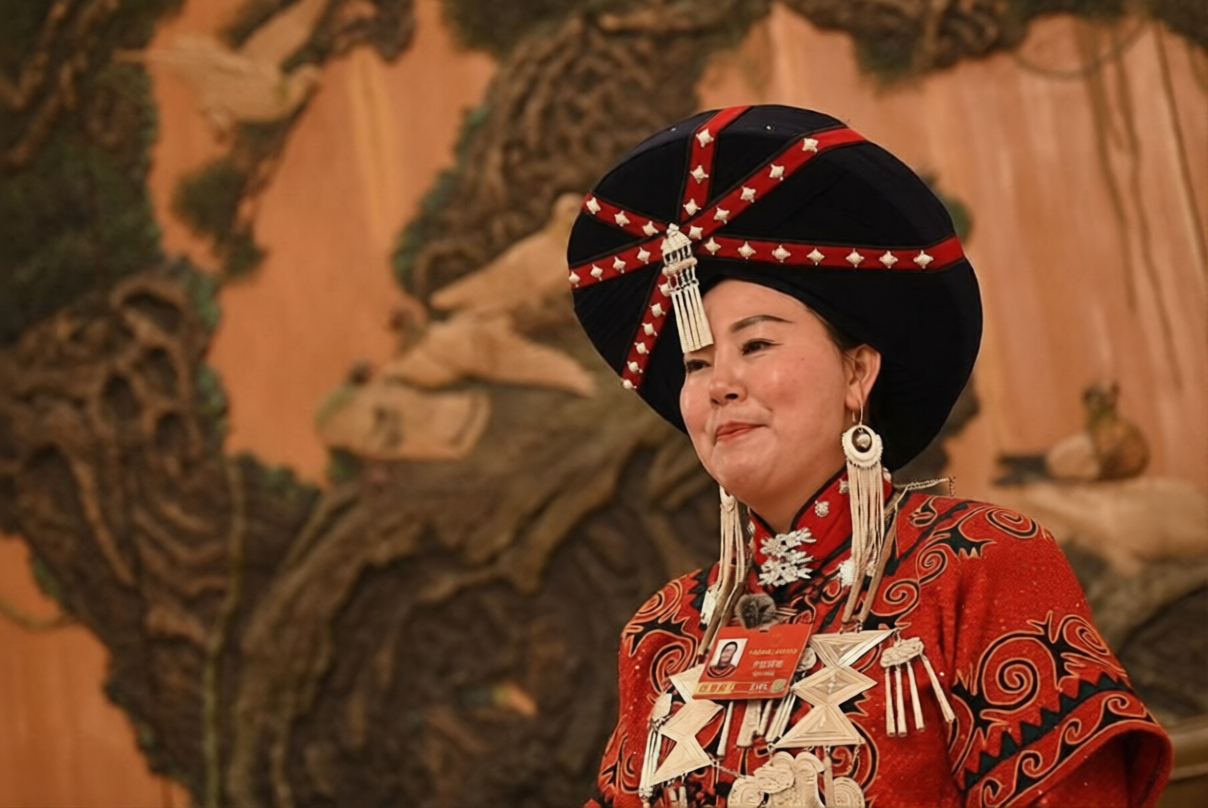
China has approved a controversial new ethnic unity law that requires ethnic minority groups across the country to prioritize Mandarin Chinese in education and public life. Authorities say the policy will strengthen national unity. However, critics warn that it could weaken cultural diversity among minority communities.
The legislation, officially called the Law on Promoting Ethnic Unity and Progress, was passed by the National People’s Congress during its annual session in Beijing. The law is part of a broader effort by the Chinese government to promote a shared national identity among the country’s many ethnic groups.
China officially recognizes 56 ethnic groups. The majority are Han Chinese, while the remaining groups include Tibetans, Uyghurs, Mongolians, and Hui Muslims. The new legislation puts stronger emphasis on Mandarin as the dominant language in schools and official communication.
The China ethnic unity law sets up a legal framework aimed at promoting what officials describe as a “shared consciousness of the Chinese nation.” Authorities argue that the policy will strengthen social cohesion and reinforce national identity across different regions.
Under the law, public institutions, schools, businesses, and community organizations must promote ethnic unity through education programs and cultural activities. Some organizations may also introduce social integration initiatives designed to encourage cooperation among different communities.
Officials say the law will help reduce divisions that could threaten national stability. Government representatives also note that the legislation reflects China’s long-standing policy of maintaining unity among diverse communities. At the same time, authorities say the policy will support economic development in minority regions.
One of the most significant elements of the legislation is its strong focus on Mandarin Chinese. The government wants Mandarin to become the primary language of instruction in schools across minority regions.
According to policy guidelines, schools in minority areas must teach core subjects in Mandarin instead of local languages. Minority languages may still be taught as separate subjects. However, they will no longer serve as the main language of instruction in most classrooms.
In some areas, children may start learning Mandarin before kindergarten. This early education approach aims to make Mandarin the main language used throughout their academic life.
Supporters of the law argue that Mandarin proficiency is essential for economic opportunity. They say strong language skills will help minority students access higher education and better jobs. Officials also believe that a shared language can improve communication across the country.
China has promoted Mandarin for decades through national language policies. These efforts aim to improve communication among the country’s vast population. Standard Chinese has been the country’s official language for many years.
Despite these explanations, the China ethnic unity law has triggered criticism from international human rights groups and academic experts.
Critics argue that the policy could accelerate cultural assimilation. They fear that minority languages and traditions may gradually weaken if Mandarin dominates the education system.
Human rights advocates say language plays a key role in cultural identity. Limiting minority languages in schools could reduce opportunities for younger generations to preserve their heritage.
Some analysts also believe the law continues earlier integration policies. These policies aim to bring minority communities closer to mainstream Han Chinese society.
Observers point to earlier education reforms in regions such as Inner Mongolia. In those areas, local languages were gradually replaced by Mandarin in many schools.
Chinese authorities strongly defend the legislation. Officials say the law aims to promote stability, unity, and national development.
Government representatives insist that the policy does not eliminate minority cultures. Instead, they say it encourages interaction and cooperation among ethnic groups.
According to officials, the goal is to build a stronger sense of belonging within the Chinese nation. At the same time, they claim the government will continue to respect cultural diversity.
Authorities also believe that Mandarin education will expand opportunities for young people from minority communities. Improved language skills could help them enter universities and compete in the national job market.
From Beijing’s perspective, a shared language can improve economic integration. Officials also argue that it may reduce regional inequalities.
The impact of the China ethnic unity law will likely be most visible in regions with large minority populations. These areas include Xinjiang, Tibet, and Inner Mongolia.
In Xinjiang, millions of Uyghurs live under policies that have already drawn global attention. Language and cultural regulations in the region have been widely debated in recent years.
Similarly, Tibetan communities in Tibet have traditionally used their own language in schools and religious institutions.
Under the new law, Mandarin may gain an even stronger role in these regions. This shift could affect education systems and public administration.
Experts believe minority languages will continue to exist in cultural and private settings. However, their influence in official institutions may decline over time.
The law has sparked debate among governments, scholars, and human rights organizations around the world.
Critics argue that the policy could undermine cultural rights. They also warn that minority communities may face stronger pressure to assimilate into the dominant national culture.
Some international observers compare the legislation to other controversial policies aimed at strengthening national unity in sensitive regions.
Supporters of China’s approach present a different argument. They say many countries promote a national language to build social cohesion and national identity.
As the law begins to take effect, analysts will closely watch how it is implemented across China’s diverse regions.
The China ethnic unity law represents one of the most significant policy steps in recent years regarding ethnic relations and language policy in China.
Beijing views the legislation as a way to strengthen national unity and economic integration. Critics, however, fear that it could accelerate the decline of minority languages and cultural traditions.
As the policy moves into practice across schools and public institutions, its long-term effects will likely remain a subject of global debate.