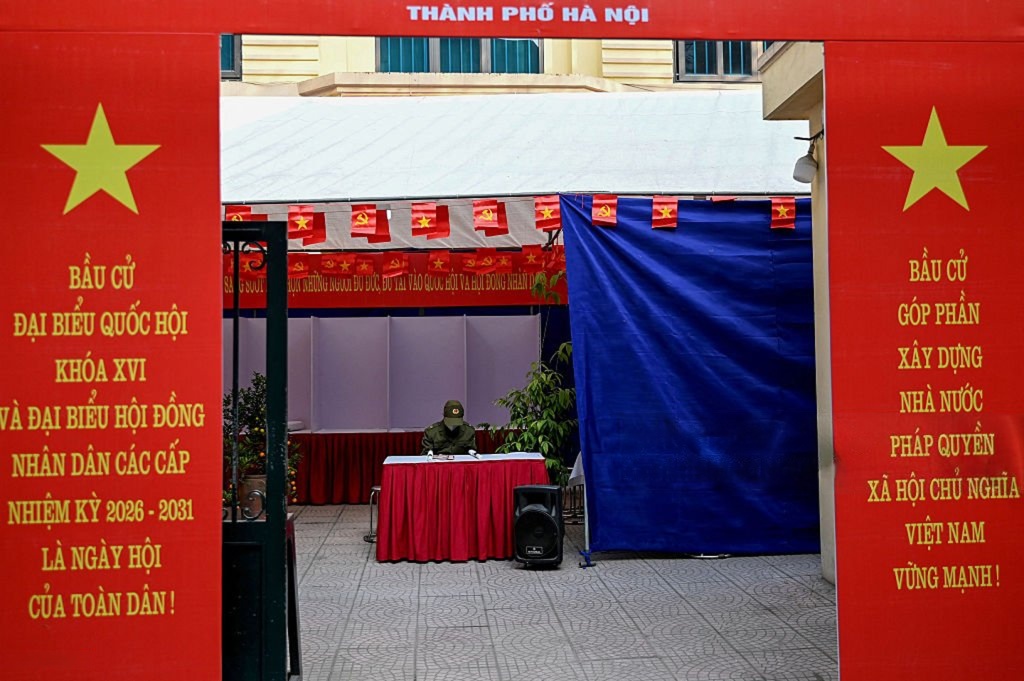
HANOI (March 15, 2026) — Vietnam 2026 election saw tens of millions of Vietnamese head to the polls on Sunday. Officials called it a landmark exercise of civic participation, though the process is heavily shaped by the nation’s longstanding political system.
The parliamentary elections, held every five years, select 500 members of the National Assembly and local representatives nationwide. This year, the vote again showcased the overwhelming influence of the Communist Party of Vietnam (CPV), which fielded nearly 93% of all candidates. Only a small fraction went to independent candidates.
Voter turnout in past elections has often exceeded 90%. State media reported that millions participated from early morning to late afternoon. While official 2026 turnout numbers are not yet available, observers said public engagement reflects both institutional expectations and citizens’ belief in shaping the country’s future — even under a one‑party system.
Vietnam’s political structure is a socialist one‑party state, with the CPV controlling nearly all political, legislative, and administrative bodies. Its influence spans national policymaking to grassroots governance. The 2026 election reinforces this dominance.
Independent candidates made up around 7.5% of the total this year. Despite their presence, the CPV’s grip on power remains nearly unchallenged. In the previous assembly, the party held over 97% of seats. Analysts expect similar results once the official outcomes are announced later this month.
Although the National Assembly has constitutional authority to draft and amend laws, real political power stems from the CPV leadership. The legislature usually endorses strategic priorities set by party leaders rather than acting as an independent check on executive authority.
After the election, the newly formed National Assembly will convene in April to confirm appointments to top state positions. One key expected decision is the formal confirmation of General Secretary Tô Lâm as president. This would align Vietnam’s leadership with China’s model, where the top party leader also serves as head of state.
Tô Lâm was confirmed as CPV General Secretary in January 2026. Analysts say consolidating party and state roles could streamline governance and ensure policy continuity.
Government statements emphasize ongoing priorities such as economic growth, infrastructure development, and high‑technology investment. Vietnam aims to leverage its status as a global manufacturing hub, especially in electronics and textiles, to attract foreign capital despite global uncertainties.
Voter reactions were mixed. Many expressed optimism about the country’s direction. Some praised the government’s economic achievements and its role in maintaining political stability — an important factor for investors and planners.
International observers, however, caution that Vietnam’s elections offer limited political choice. Candidate nominations remain tightly controlled, and genuine opposition parties are not registered under current law. Independent voices are allowed only within narrow parameters.
Experts note that Vietnam’s system differs from multi‑party democracies. Academic assessments should consider the country’s unique historical and cultural context when evaluating its electoral process.