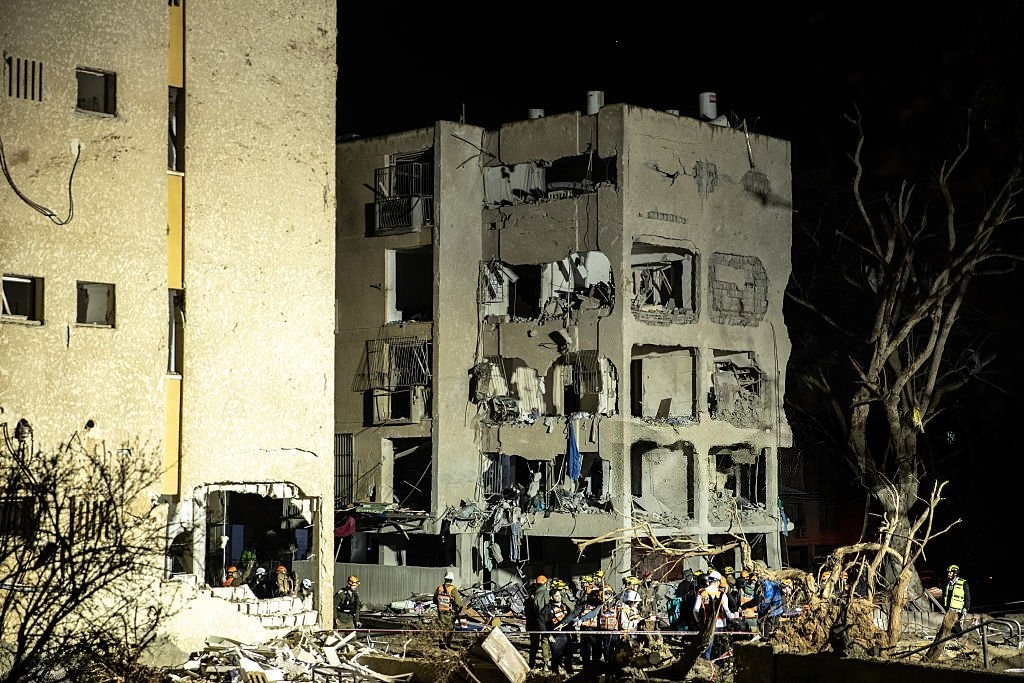
Tel Aviv, Israel — Iranian forces launched a barrage of ballistic missiles late Saturday night, hitting Israeli towns near a nuclear research facility. At least 160 civilians were injured, including children and elderly residents.
The missiles struck Dimona and Arad, causing widespread damage to homes and infrastructure. Emergency services rushed to the scene to treat blast injuries, burns, and trauma. Dimona, home to the Shimon Peres Negev Nuclear Research Center, experienced multiple direct hits in residential areas while families slept.
Residents described terrifying scenes as explosions shook the towns, shattering windows and sending smoke into the night sky. Children were pulled from rubble, and hospitals treated dozens of serious injuries. One Dimona witness said, “It felt like the ground itself was torn apart.”
Although the Israeli military reported that the nuclear facility remained intact and radiation levels were normal, the strike deeply unsettled residents and international observers.
Israeli officials stated that the strikes came in retaliation for a recent Israeli and U.S.-led air operation targeting Iranian nuclear and military sites, including Natanz. Tehran called the Israeli strikes “aggressive sabotage” and promised to respond.
Iran’s state media framed the attack as a calculated reprisal to show its readiness to counter escalating Israeli actions. Iranian officials said it was “necessary to protect national sovereignty.”
Israel’s Iron Dome defense system intercepted many missiles, but several still reached populated areas. Prime Minister Benjamin Netanyahu prayed for the injured and called the attack a “blatant act of terrorism.” He said Israel would continue operations to degrade Iranian missile capabilities and prevent future attacks.
Israeli health services confirmed at least 160 injured. Many victims, including children as young as five, required urgent medical care. Hospitals in Beersheba received patients with shrapnel wounds, broken bones, and blast trauma. Psychological support was also provided to those affected by the explosions and displacement.
World leaders expressed concern. The United Nations called for immediate de-escalation. European Union diplomats urged both nations to return to negotiations. The U.S. Department of State condemned the strike while advocating restraint to avoid wider conflict. Analysts warned that repeated attacks could spark full-scale war involving regional powers.
This attack highlights Middle East volatility, where proxy conflicts, nuclear threats, and territorial disputes intersect. Analysts noted that Iran’s missile capabilities have improved, allowing strikes deep into Israeli territory, which alarms Western defense officials.
Several countries repositioned troops and strengthened defense partnerships to deter escalation. Others called for renewed international mediation. Experts fear ongoing retaliation could destabilize the entire region.
Survivors in Dimona and Arad now face rebuilding their homes and communities. Israel vowed to protect its citizens, while Iran insisted its actions were justified. The world watches closely, hoping cooler heads prevent further widespread violence.