Russia has launched one of the most intense aerial assaults since the beginning of the war, firing nearly 1,000 drones and missiles at Ukraine within just 24 hours. This massive attack marks a serious escalation in the ongoing conflict and raises new concerns about regional and global security.
According to Ukrainian officials, the attack began overnight and continued into the daytime, which is unusual compared to Russia’s previous strategies. Reports suggest that around 900 to 1,000 drones, including Iranian-designed Shahed drones, were launched along with several missiles targeting multiple regions.
This is one of the largest coordinated aerial attacks since the war began. Notably, a large number of drones were used during daylight hours, indicating a possible shift in Russia’s military tactics.
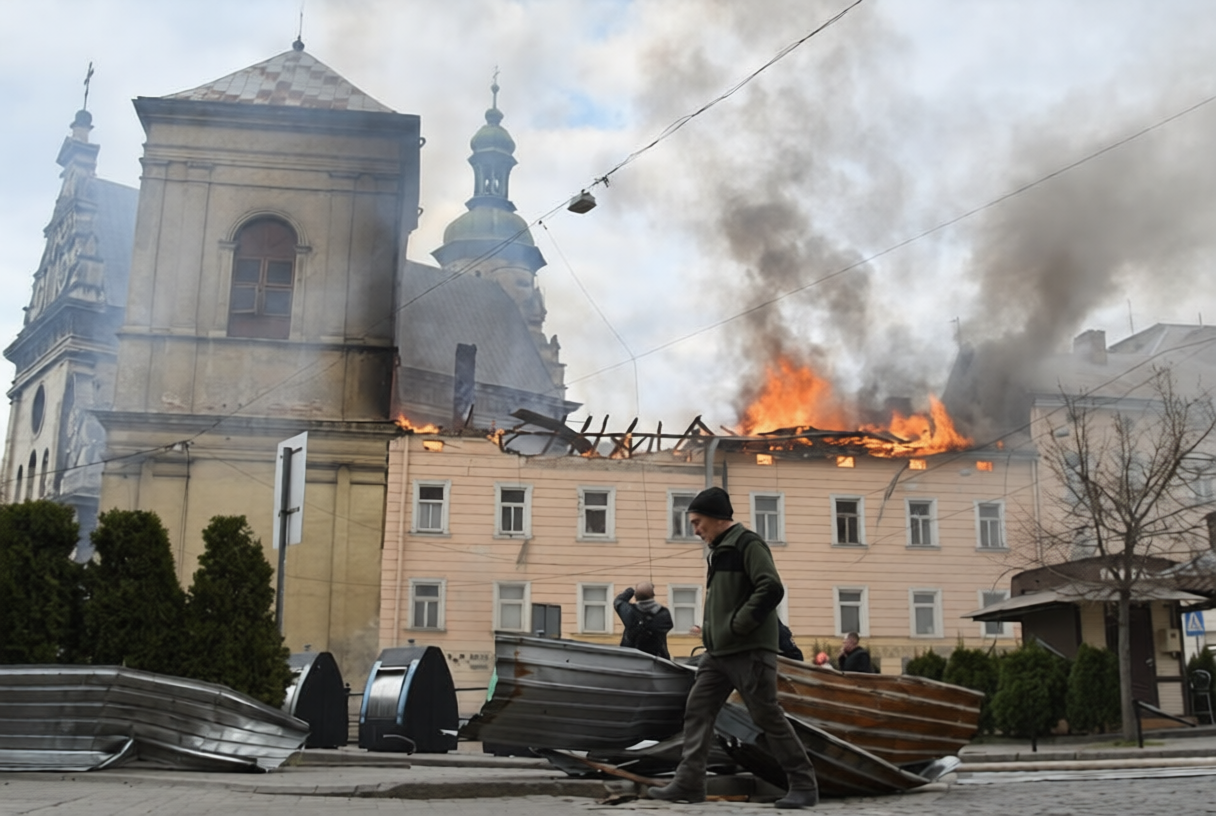
The attacks affected several key cities, including Kyiv, Lviv, and Dnipro. Western Ukraine, which was once considered relatively safer, also experienced significant damage.
In Lviv, historic buildings and residential areas were hit. Several homes were destroyed, and important infrastructure was damaged. Emergency services rushed to the affected areas to rescue trapped civilians and control fires.
At least several people were killed, and many others were injured, including children. Power outages were reported in multiple regions as energy facilities came under attack.
Despite the scale of the attack, Ukraine’s air defense systems managed to intercept a large number of incoming drones. Officials reported that a high percentage of the drones were successfully destroyed before reaching their targets.
Ukraine used a combination of air defense missiles, electronic warfare systems, and mobile defense units to counter the attack. However, authorities warn that continuous large-scale attacks like this could eventually overwhelm their defense capabilities.
This attack highlights the growing importance of drones in modern warfare. Both Russia and Ukraine have been increasing their use of unmanned aerial vehicles in recent years.
Russia appears to be using large numbers of relatively low-cost drones to put pressure on Ukraine’s air defenses. This strategy can exhaust resources and create constant fear among civilians.
At the same time, Ukraine has also been using drones to strike targets beyond its borders, showing how technology is changing the nature of war.
Ukrainian President Volodymyr Zelenskyy strongly condemned the attack and called for increased international support. He urged allies to provide more advanced air defense systems to protect civilians.
Global leaders have expressed concern over the scale of the assault. Many countries see this as a dangerous escalation that could further destabilize the region.
There are also concerns about the impact on neighboring countries, especially in terms of energy security and regional stability.
Beyond the numbers and military strategies, the human impact of the attack is devastating. Families have lost their homes, and many people are living in fear of further strikes.
Rescue workers, volunteers, and local communities are working together to help those affected. However, repeated attacks are taking a serious psychological toll on civilians, especially children.
The launch of nearly 1,000 drones and missiles marks a major turning point in the Russia-Ukraine war. It reflects a shift toward large-scale drone warfare and raises urgent questions about the future of the conflict.
As tensions continue to rise, the need for international cooperation and diplomatic efforts becomes more important than ever. Until then, millions of people remain at risk in a war that shows no clear end.