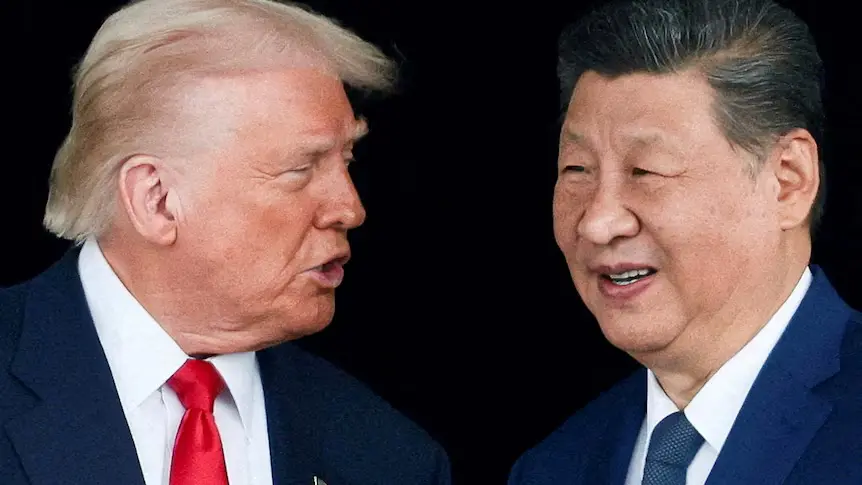
The escalating US‑Iran conflict is reshaping the Middle East’s security and global geopolitics. Washington is deeply engaged militarily, while Beijing observes with calculated restraint. Analysts say this may give China’s strategic advantage from the US‑Iran conflict, especially as a Trump-Xi summit has been postponed.
Global conflicts can create cascading effects, not only regionally but also in how nations negotiate power.
Earlier this year, the U.S. and its allies launched a military campaign against Iran. The conflict drew global attention and resources. It affected oil markets and regional security, with the Strait of Hormuz becoming a critical flashpoint.
With the U.S. focused on the conflict, Beijing has emphasized diplomacy and strategic restraint. China has remained largely neutral, preserving relationships while avoiding military involvement.
This contrasts with the U.S.’s forceful approach. Experts suggest China may benefit by reinforcing its image as a stabilizing force globally.
The conflict delayed a summit between Trump and Xi Jinping. Originally planned for late March in Beijing, the talks were postponed as the U.S. focused on the Middle East.
For China, the delay may be advantageous. Analysts say it gives Beijing time to strengthen diplomatic ties and promote a foreign policy rooted in stability and measured diplomacy. This contrasts with the U.S.’s military-first strategy in Iran.
Jon Czin from the Brookings Institution notes that China’s leadership watches from the sidelines. This aligns with Beijing’s long-term strategic goals before high-stakes negotiations with Washington.
Beijing also considers economic factors. China depends heavily on stable global oil supplies. Instead of supporting one side openly, it advocates for peace and cautious neutrality.
China’s long-term trade ties and partnerships with Iran make it important to prevent a wider conflict that could harm its interests.
The restrained approach serves multiple purposes. It avoids alienating partners, preserves China’s mediator role, and allows negotiation from a position of impartiality.
China’s messaging also affects global perception. By condemning escalation but avoiding military action, China appears responsible and pragmatic. In contrast, U.S. actions face criticism, particularly in the Global South, where many view military engagement as unnecessary.
This strategy positions China as a “responsible great power” that prefers negotiation and economic cooperation over military action. While practical results remain uncertain, it aligns with Beijing’s goal of expanding influence through soft power.
For the U.S., the conflict creates a dual challenge. It must deter Iran while maintaining global priorities like the Indo-Pacific. Some Asian allies worry that the U.S.’s focus on Iran could weaken regional defenses amid China’s growing influence.
This situation complicates Washington’s foreign policy, raising questions about balancing immediate security with long-term strategic competition.
Diplomatic talks are being rescheduled, and experts emphasize no simple resolution is in sight. The postponed Trump-Xi summit is more than a delay; it reflects a recalibration of power.
While the U.S. pursues Middle East goals, China allows events to support its strategic narrative. Advantages in negotiations will depend on regional stability and global economic trends.
For now, the Iran conflict tests U.S. resolve and gives China an opportunity to show patience and strategic skill on the global stage.