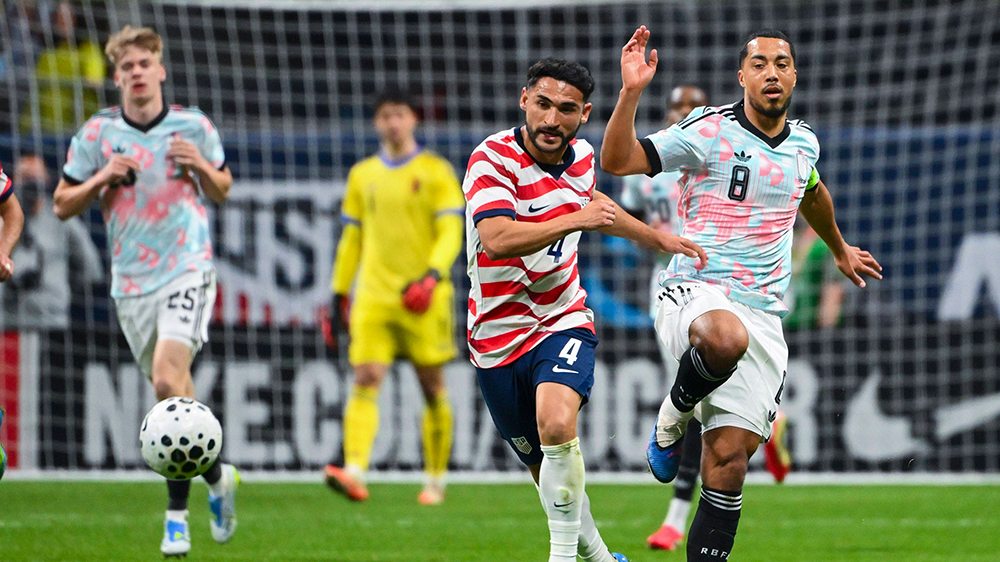
In a highly anticipated friendly ahead of the 2026 FIFA World Cup, Belgium delivered a commanding performance over the United States, winning 5‑2 at Mercedes‑Benz Stadium in Atlanta. The match served as a crucial test for both teams as they prepare for the global tournament later this year.
Belgium’s attacking flair and tactical cohesion came to the forefront in the second half, overturning an early lead for the USA and scoring four unanswered goals to secure a decisive triumph.
The United States started brightly, with Weston McKennie finding the back of the net shortly before halftime to put the hosts ahead. However, Belgium responded immediately through Zeno Debast, and the momentum shifted dramatically in the second half.
Belgian goals from Amadou Onana, Charles De Ketelaere (penalty), and a brace by Dodi Lukebakio highlighted the visitors’ attacking threat, leaving the USMNT defense struggling to contain their fluid offense.
Belgium’s dominant performance boosted their confidence, while USA head coach Mauricio Pochettino faces serious questions about his team’s defensive organization and tactical consistency. The Americans had entered the match unbeaten in five games, but the heavy defeat shows that they need to improve before the World Cup begins.
On the positive side, substitute Patrick Agyemang netted a late goal to offer a brief spark of hope, yet the overall performance raised concerns regarding the team’s ability to handle elite European opponents.
The match also drew attention off the scoreline, as fans and commentators criticized the clash of kit colours between the two teams. Both the USA and Belgium ended up in largely light‑toned uniforms, leading to visibility issues for players and viewers alike.
This unexpected problem became a talking point on social media and among football analysts, with calls for better coordination ahead of major tournaments.
For Belgium, this victory underscores their strong attacking identity and signals promise ahead of the World Cup later this year. For the United States, however, it represents a wake‑up call—a reminder that improvements are needed in defence, organisation, and match management before the competition begins on home soil.