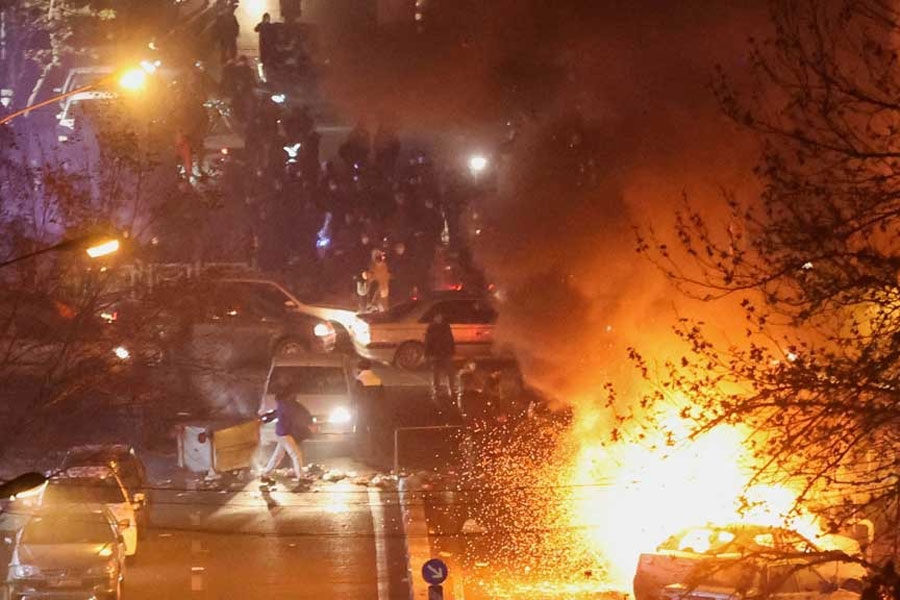
Northwest Kurdish regions reported as the hardest hit, while human rights groups report lower figures and tens of thousands of arrests.
Iranian authorities have officially confirmed that at least 5,000 people have died in connection with ongoing nationwide protests, including around 500 security personnel. The announcement, made by an unnamed official due to the sensitivity of the matter, represents the first public acknowledgment of the scale of fatalities since demonstrations erupted in late December.
The official attributed the casualties primarily to what were described as “terrorists and armed rioters,” accusing them of targeting innocent civilians. The northwest Kurdish regions, which have historically experienced unrest linked to separatist movements, reportedly witnessed some of the heaviest clashes and the highest number of fatalities.
Despite the staggering figures, the official suggested that the death toll is not expected to rise sharply in the coming weeks. The statement also included accusations that Israel and armed groups abroad had supported and supplied protestors, a narrative frequently cited by Iranian authorities to frame domestic unrest as influenced by foreign adversaries.
Human rights organizations, however, report markedly different figures. The US-based HRANA group, which tracks protest-related casualties in Iran, listed 3,308 confirmed deaths and an additional 4,382 under review. The organization also reported that more than 24,000 people had been arrested since the protests began. Meanwhile, the Norwegian-based Hengaw group confirmed that the Kurdish regions in the northwest were among the hardest hit, highlighting both the intensity of the clashes and the vulnerability of local populations.
Experts say the discrepancy between government-reported and NGO figures is not unusual in situations of mass unrest. “In any high-conflict environment, official counts often reflect political considerations,” said Dr. Samira Kamali, a researcher on Middle Eastern politics. “Independent human rights organizations typically provide more cautious estimates but face challenges in verifying data in real time.”
The protests in Iran began as a wave of public dissent against the government, with many citizens demanding reforms and accountability in response to longstanding political and social grievances. Over the weeks, demonstrations have spread across multiple provinces, and heavy-handed crackdowns by security forces have contributed to escalating tensions.
Analysts suggest that the government’s public acknowledgment of fatalities may signal a shift in strategy, aiming to frame the unrest as a law-and-order issue rather than purely political dissent. “By highlighting the role of armed rioters and foreign influence, authorities are justifying security operations while attempting to control the narrative,” Dr. Kamali added.
The human cost of the unrest has drawn international attention, with several countries and organizations calling for restraint and for authorities to ensure accountability. Meanwhile, Iranian citizens continue to navigate a climate of fear, uncertainty, and restrictions on civil liberties, with some communities experiencing daily disruptions to public life and economic activity.
As both government and NGO figures continue to emerge, experts emphasize the importance of independent monitoring and transparency to accurately assess the scale of casualties and ensure that victims and families receive recognition. The coming weeks may reveal further insights into the patterns of unrest and the Iranian government’s response, which remains closely watched by the international community.