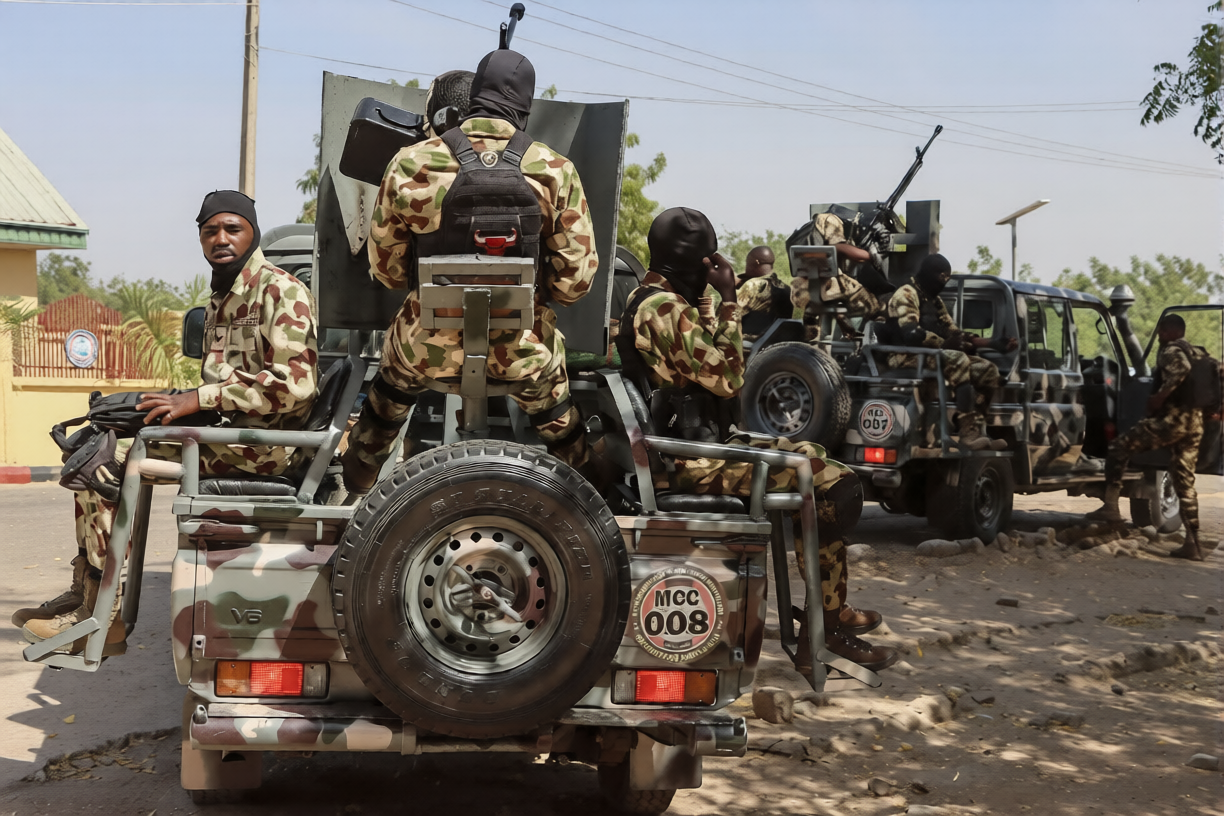
At Least 38 People Killed in Jihadist Attacks in Nigeria
Recent violence in northeast Nigeria has left at least 38 people dead in a series of brutal assaults by suspected jihadist fighters. Anti‑extremist militias and local residents told AFP that the victims were targeted in forested areas and rural settlements, sparking deep concern about the expanding insurgency.
According to witness accounts, Islamist militants — believed to be fighters affiliated with the Islamic State West Africa Province (ISWAP) and Boko Haram splinter factions — ambushed woodcutters in the forests outside Mafa, a town in Borno state, on Tuesday. In the attack, 27 people were killed outright and 18 others were abducted, with their fate still unknown.
Militia members described horrific scenes in which victims were killed with extreme violence. Many of the dead were forest workers, farmers, or civilians simply collecting firewood when militants struck without warning.
Violence Beyond the Forest: Village Raids and Displacement
In a separate incident on Monday, jihadist fighters reportedly raided Kautikari village near Chibok, killing 11 people and burning homes, local community leaders confirmed to AFP. The attackers fled into the Sambisa Forest — a longstanding hideout for extremist groups — after the assault.
The Chibok area is still haunted by the memory of the 2014 mass abduction of schoolgirls, an event that drew global attention and the “Bring Back Our Girls” campaign. Some girls were rescued over the years, but many remain missing.
The combination of forest ambushes and village raids underlines a worrying trend: jihadist militants are expanding operations beyond traditional strongholds, targeting both agricultural workers and entire rural communities.
Broader Context: Rising Islamist Violence in Nigeria
Nigeria has endured a deadly Islamist insurgency for more than a decade, initially led by Boko Haram and later involving other groups like ISWAP. These extremist organizations are responsible for tens of thousands of deaths and have displaced millions from their homes, particularly across the northeast.
Attacks have diversified in method and location, including forest ambushes, village raids, home invasions, and abductions. Militants often accuse civilians of collaborating with military forces or resist pressure to adopt extremist interpretations of religious law.
Recent militant operations have also drawn international attention, as governments and human rights observers warn that violence has not only persisted but also spread into previously more stable areas.
Impact on Civilians and the Path Forward
The human toll of these attacks goes beyond fatalities. Families have been shattered, homes burned, and entire communities forced into displacement. Survivors and humanitarian groups say consistent protection and effective military responses are necessary to restore safety.
Local leaders and security analysts stress the importance of improved governance and stronger security presence in vulnerable regions. Without this, extremist groups may continue to exploit weakly governed spaces and terrorize civilians with impunity.
Frequently Asked Questions (FAQ)
Why are jihadist attacks increasing in Nigeria?
Militants linked to Boko Haram and ISWAP are exploiting security gaps, porous borders, and socio‑economic grievances to expand operations in rural and forested areas.
Who are the main groups involved?
The primary extremist actors are the Islamic State West Africa Province (ISWAP) and factions of Boko Haram. Both have long histories of violence in Nigeria’s northeast.
Which regions are most affected?
Borno state, around the Sambisa Forest and areas like Mafa and Chibok, remain hotspots, but violence has also been seen across central and northern Nigeria.