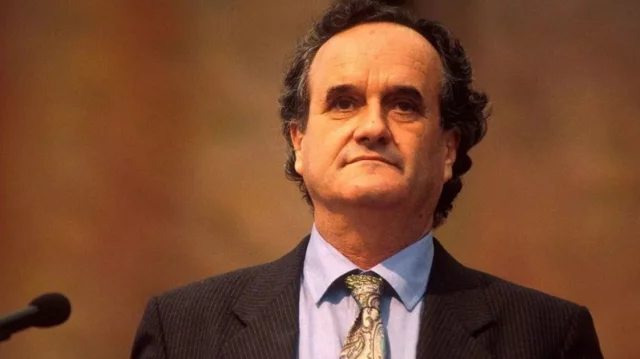
Veteran journalist Sir Mark Tully, widely admired for chronicling Bangladesh’s Liberation War in 1971 with depth and authenticity, has passed away at an Indian hospital in New Delhi at the age of 90. His death marks the end of a distinguished career that helped bring the realities of one of South Asia’s defining conflicts to global audiences.
Sir Mark Tully was best known for his role as a BBC correspondent during the war for Bangladesh’s independence from Pakistan in 1971. At a time when wartime censorship and propaganda dominated official channels, his reporting provided many listeners with reliable accounts of events on the ground. His calm, authoritative voice on BBC radio became a trusted source of information not only in Britain but across South Asia during the nine-month long struggle that transformed the region.
Tully’s coverage of the conflict, including accounts of atrocities, mass displacement and the resilience of freedom fighters, helped shape international understanding of the brutal war that led to the birth of Bangladesh. At a time when many media outlets were constrained, his commitment to factual, humane reporting stood out.
In 2012, the Government of Bangladesh honoured Sir Mark Tully with the title “Foreign Friend of Bangladesh” in recognition of his role in telling the world the truth about the Liberation War. His work was not limited to war coverage; he reported widely on South Asian affairs for decades, earning respect for his balanced, insightful journalism.
During his long tenure with the BBC, Tully served as bureau chief in New Delhi and covered a wide range of events, including famines, riots, and political turmoil across the subcontinent. His reputation rested on his ability to combine deep regional knowledge with engaging storytelling.
Beyond broadcast journalism, Tully was also an accomplished writer. His books and essays explored South Asian society, politics and culture, often with a focus on the human dimension of historical events. Colleagues remember him not just as a reporter but as a principled storyteller who believed strongly in journalism’s role in serving the public interest.
For many in Bangladesh, Tully’s work remains part of the historical record that helped document the suffering and sacrifices of 1971. The Liberation War saw widespread violence, including the execution of intellectuals and journalists by the Pakistan Army and its collaborators—an event commemorated annually on Martyred Intellectuals Day on 14 December.
Bangladesh’s struggle for independence witnessed immense challenges, including mass killings, civilian targeting, and extensive hardships for freedom fighters and ordinary citizens alike. Journalists who risked their lives to report these realities, whether local or foreign, contributed to preserving the truth of that turbulent period for future generations.
Following news of his death, tributes poured in from journalists, academics and public figures who praised Tully’s integrity and the clarity of his reporting. Many noted that his work not only informed but inspired generations of journalists and readers to pursue truth with courage in the face of adversity.
As Bangladesh reflects on the loss of Sir Mark Tully, his contributions to documenting the country’s birth and the struggles of its people will remain part of the historical memory of the nation. His legacy as a chronicler of truth — especially in the context of the 1971 Liberation War — is unlikely to fade.