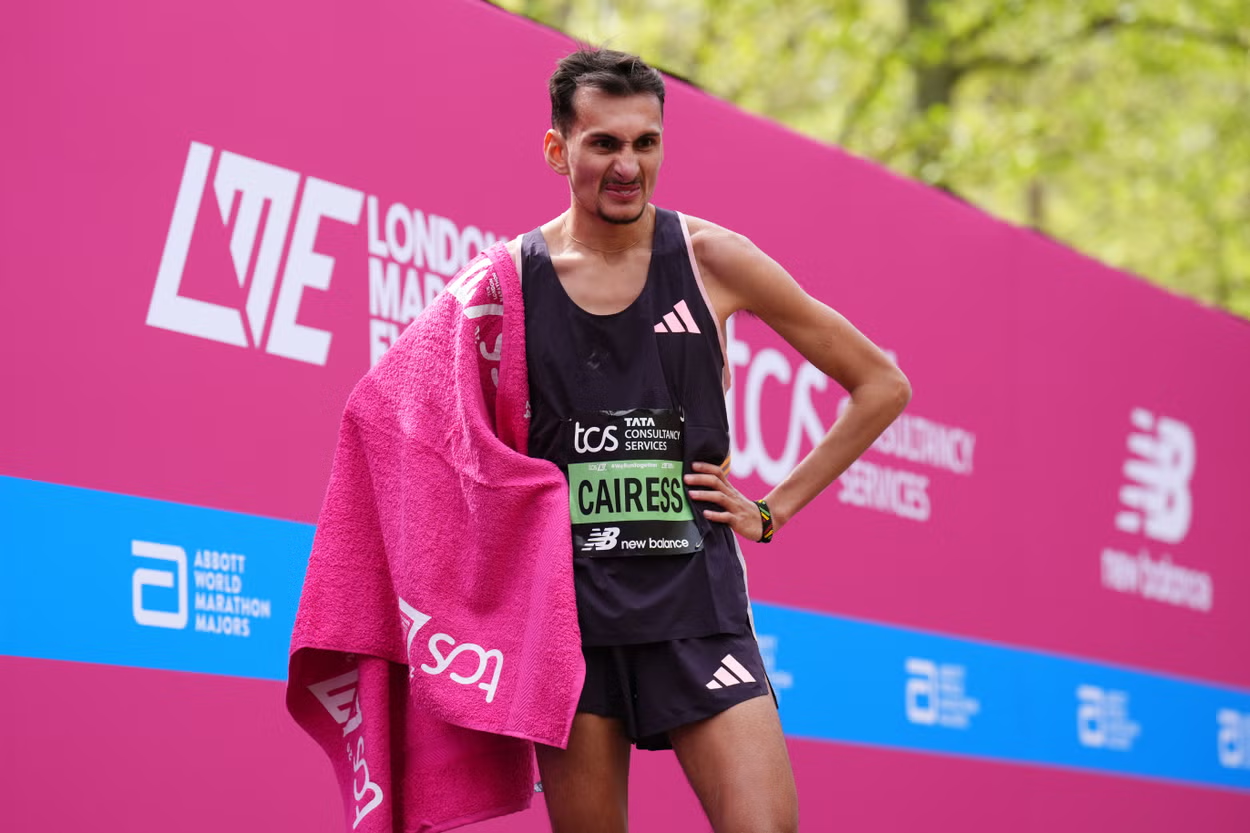
British marathon runner Emile Cairess believes a growing sense of confidence and belief among athletes is playing a key role in Britain’s improving performances in elite distance running.
Cairess, who finished fourth in the marathon at the Paris Olympics, said British runners are now approaching major competitions with a stronger mindset, backed by recent results and improved preparation. According to him, belief — both individually and as a group — has become a major factor in Britain’s steady rise on the international stage.
Speaking after recent competitions, Cairess pointed to a series of strong performances by British runners over the past few seasons as evidence of progress. He said consistent top-level results have helped change expectations, both within the team and among supporters.
“When athletes see others from the same system performing well, it raises belief across the group,” Cairess said. “You start to feel that competing with the best in the world is realistic, not just hopeful.”
British distance running has seen renewed momentum, with athletes regularly finishing inside the top fields at major championships and World Marathon Majors.
Cairess also highlighted improvements in training structures and athlete support as reasons behind the progress. He said access to better coaching, sports science and race planning has helped British runners compete more effectively over long distances.
According to Cairess, marathon running is as much mental as physical. The confidence to stick to race plans, handle pressure and respond to challenges during competition often separates strong finishes from average ones.
“Belief allows you to take calculated risks and trust your preparation,” he explained. “That mindset makes a huge difference over 26 miles.”
For years, Britain was more strongly associated with middle-distance success than marathon running. However, recent results suggest that perception is shifting, with British athletes increasingly visible among the world’s leading long-distance runners.
Cairess said the change has encouraged younger athletes to view the marathon as a realistic pathway rather than a late-career option.
“There’s more ambition now,” he said. “Younger runners see that competing at the top level is possible if you commit to the distance.”
Looking ahead, Cairess believes Britain can continue to close the gap on traditional marathon powerhouses if the current momentum is maintained. He stressed that patience remains important, as marathon development takes time and careful planning.
“The key is not rushing things,” he said. “If belief stays high and preparation remains strong, there’s no reason Britain can’t keep progressing.”
With major international championships on the horizon, British runners will aim to build on recent success and turn confidence into podium-level performances.
Ultimately, Cairess believes the biggest change has been cultural. A stronger sense of belief, shared across athletes, coaches and support staff, has helped redefine expectations for British marathon running.
“Once belief grows, everything else starts to follow,” he said.