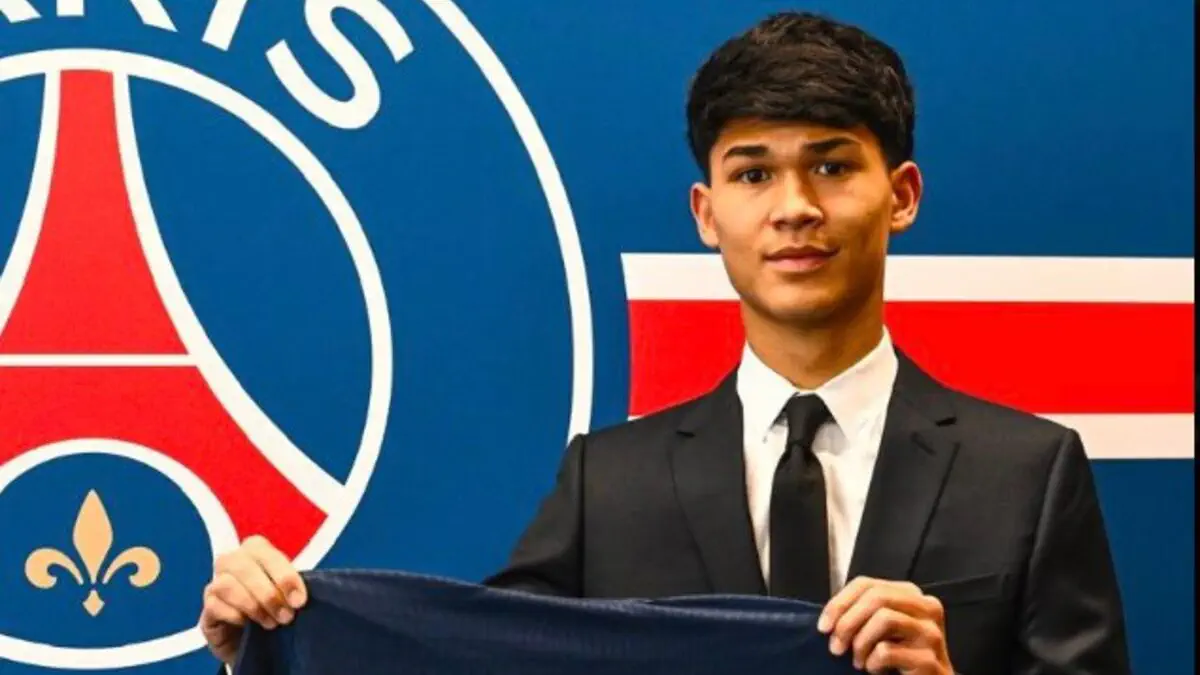
Laporta calls the teenager’s exit “unpleasant” while warning of growing pressure on La Masia prospects
The Fernandez PSG transfer has triggered frustration inside Barcelona, with club president Joan Laporta openly admitting his disappointment over the teenager’s decision to leave Camp Nou for Paris Saint-Germain. The 18-year-old midfielder’s move has once again highlighted the growing difficulty elite clubs face in holding on to their brightest academy products.
Speaking to local media, Laporta described the situation as “unpleasant,” stressing that Barcelona had hoped Fernandez would continue his development at the club where he was nurtured. The president acknowledged that modern football presents young players with complex choices shaped by money, opportunity, and long-term career planning.
Fernandez joined Barcelona’s famed La Masia academy in 2022 and quickly rose through the ranks. Coaches praised his technical ability, vision, and maturity beyond his years. His progress earned him training time with the senior squad and limited first-team appearances, which raised expectations that he would become part of Barcelona’s future core.
However, the Fernandez PSG transfer underlines how Europe’s wealthiest clubs now aggressively target young talents, often offering faster first-team exposure and stronger financial packages. PSG, backed by significant resources, positioned the move as a clear pathway to top-level competition under manager Luis Enrique.
Barcelona head coach Hansi Flick also addressed the situation, choosing his words carefully while reinforcing the club’s philosophy. Flick noted that La Masia is built not only on talent but also on commitment to the club’s identity. He stressed that players promoted to the first team are expected to fully embrace Barcelona’s values and long-term vision.
PSG confirmed Fernandez’s signing earlier this week, stating that the midfielder will be gradually integrated into the first-team setup. Club officials believe Ligue 1 and European competitions will provide the teenager with consistent high-level exposure, accelerating his development.
For Barcelona, the departure adds to a broader challenge. Financial constraints, strict salary limits, and competition from richer clubs have made youth retention increasingly difficult. While La Masia remains one of world football’s most respected academies, keeping hold of its top prospects has become far more complex than in the past.
Despite his frustration, Laporta insisted that Barcelona will not abandon its youth-focused model. He reaffirmed the club’s commitment to developing homegrown players and maintaining its footballing identity. “Our focus remains on training and promoting young talent,” he said, emphasizing that La Masia will continue to be central to Barcelona’s future.
The Fernandez PSG transfer may sting in the short term, but it also serves as a reality check for Barcelona and other traditional giants. In today’s football economy, nurturing talent is only half the battle—the other half is convincing young stars that patience and loyalty still pay off.