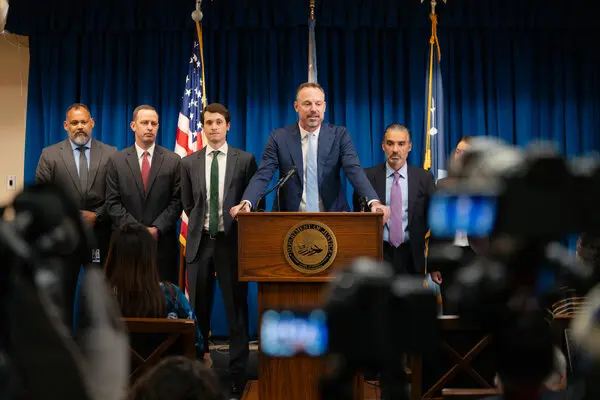
Local prosecutors say Washington intervened after the investigation began
Federal prosecutors in Minnesota began investigating the killing of Renee Good, a 37-year-old Minneapolis woman fatally shot by a U.S. Immigration and Customs Enforcement (ICE) agent, but were reportedly told by Justice Department officials in Washington to stop the civil rights inquiry, leading to multiple high-level resignations and widespread concern among legal experts and local leaders.
Good was killed on January 7 during a federal immigration enforcement operation in south Minneapolis, an incident that has sparked protests, legal challenges and intense political debate. Federal authorities have maintained that the ICE agent acted in self-defense, while family members, local officials and community advocates have questioned that explanation.
As outrage grew, several prosecutors from the U.S. Attorney’s Office in Minnesota voiced alarm over how the case was being handled. At least three federal prosecutors resigned, expressing discomfort with directives from senior Justice Department leadership that scaled back the initial civil rights investigation in Good’s death.
Investigation Blocked After Early Action
Prosecutors had initially begun probing whether civil rights violations occurred when the ICE agent fired into Good’s vehicle, but Justice Department officials told them not to pursue that line of inquiry and instead encouraged a focus on other aspects of the case, according to people familiar with the matter.
Reports indicate that an FBI supervisor and others who sought to pursue a traditional civil rights review ultimately resigned after facing internal pressure to discontinue that investigation. These departures underscore deep frustration within federal law enforcement over the handling of the case and restrictions placed on investigative efforts.
This abrupt shift stands in contrast to previous practices in similar cases, where the Department of Justice’s Civil Rights Division typically reviews shootings by law enforcement officers to determine whether constitutional or civil rights violations occurred.
Challenges to Local Involvement and Transparency
State and local law enforcement authorities have also encountered obstacles. The Minnesota Bureau of Criminal Apprehension (BCA), which was initially slated to investigate Good’s death alongside the FBI, was later informed it would no longer have access to key evidence, interviews or materials, effectively limiting its role in any independent review.
Hennepin County Attorney Mary Moriarty publicly appealed to members of the public to share video, photos or other evidence directly with her office, noting concerns that the federal investigation may not fully incorporate all available information.
“Minnesota authorities have jurisdiction,” Moriarty said, indicating that local officials remain committed to pursuing accountability even amid federal restrictions.
Family Seeks Independent Review
Good’s family has taken independent legal steps as well. They have hired the Romanucci & Blandin law firm, the same legal firm involved in representing the family of George Floyd, to investigate the shooting and press for transparency and accountability around the circumstances of her death. The firm has vowed to release findings and advocate for answers over time.
Relatives have said they want Good remembered not as a controversial figure but as “an agent of peace,” and have expressed frustration that federal actions have limited the scope of official investigation.
Public Reaction and Political Tension
Good’s death and the subsequent decisions by federal authorities have ignited protests in Minneapolis and other cities across the United States. Demonstrators have called for justice, transparency and independent review of the shooting, citing concerns over how law enforcement uses force and whether civil rights protections are being upheld.
Local leaders in Minnesota, including state officials and civil rights advocates, have criticized the decision to block broader investigations, arguing that limiting access to evidence and restricting local participation undermines public trust in law enforcement and judicial processes.
At the same time, federal authorities have defended their approach. Officials including the Department of Homeland Security have reiterated their position that the ICE agent was justified in using force and have emphasized that a separate FBI probe remains ongoing.
Broader Implications for Accountability
Legal experts say the controversy highlights a broader debate over federal oversight, local cooperation and the role of civil rights reviews in cases involving law enforcement shootings. Many question whether current procedures sufficiently protect constitutional rights when federal agents are involved, particularly in high-profile incidents that draw intense public scrutiny.
The resignations by federal prosecutors and FBI agents lend weight to worries that internal political pressures can interfere with independent investigations, raising issues about accountability mechanisms at the highest levels of government.
Good’s killing has also become a flashpoint in the larger national conversation about immigration enforcement practices and their impact on civil liberties. Observers say the case may have lasting implications for how such incidents are investigated and how federal and local authorities collaborate in the future.