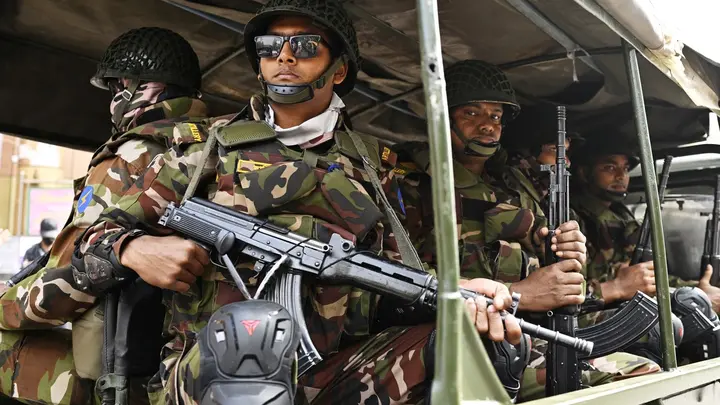
With thousands of polling centres marked high-risk and record security deployment nationwide, voters cast ballots in a pivotal election aimed at restoring democratic stability.
Dhaka, Bangladesh — Bangladesh has stepped into a historic moment, holding its first national election since the mass 2024 student-led uprising that ousted long-time prime minister Sheikh Hasina, amid an unprecedented security operation and political uncertainty. Read More
Voters across the country headed to the polls on Thursday in what many see as a test of Bangladesh’s fractured democratic landscape — a test shaped by violent protests, political bans and hopes for national reform.
Record Security as Tensions Simmer
Authorities tightened security across Bangladesh, deploying a massive contingent of law enforcement personnel to protect polling stations and quell potential unrest. According to official assessments, more than half of the country’s nearly 43,000 polling centres were marked as “risk-prone” due to past clashes and ongoing political rivalry.
Officials said that 90% of these centres will be under CCTV surveillance, and body-worn cameras will be used by officers for the first time ahead of the crucial vote.
Inspector General of Police Baharul Alam outlined a three-tier security plan designed to maintain order. He said that over 187,000 police personnel have been deployed nationwide, with mobile patrol units and standby forces ready to respond to emergencies on election day.
“This nationwide security deployment is the largest in Bangladesh’s electoral history,” said an election official who spoke on condition of anonymity. “Our aim is to ensure every voter can vote freely and safely.”
To further support poll security, thousands of additional personnel from the army, navy, air force, Border Guard Bangladesh (BGB), Rapid Action Battalion (RAB), Ansar and Village Defence Party were mobilised, a sign of the government’s determination to prevent violence or disruption.
Legacy of the 2024 Uprising
The election follows the landmark 2024 uprising, which began as a student movement and quickly escalated into widespread protests against alleged election rigging and government authoritarianism. Former prime minister Sheikh Hasina’s Awami League government was forced out in August 2024 after intense street struggles that left hundreds dead and thousands injured. Her party remains banned from contesting the current elections.
The interim government, led by Nobel laureate Muhammad Yunus, promised a free, fair and peaceful voting process, aiming to restore faith in democratic institutions. Analysts say this election — along with an accompanying referendum on political reforms like term limits and checks on executive power — could redefine Bangladesh’s political trajectory.
Before the Vote: Violence and Polarisation
Despite the heightened security, election season was marked by episodes of violence. Police headquarters recorded at least 411 election-related incidents, including clashes between rival party supporters, attacks on campaign offices and arrests of activists, raising concerns about voter safety.
Rights groups reported even higher figures. Transparency International Bangladesh documented dozens of deaths and hundreds of injuries during pre-election clashes, far exceeding government counts and highlighting a persistent gap in official transparency.
Disinformation campaigns on social media also posed challenges, with the Election Commission flagging tens of thousands of suspected fake or AI-generated posts aimed at inflaming tensions ahead of the vote.
Political Contest and Public Sentiment
The main contest features the Bangladesh Nationalist Party (BNP) — led by Tarique Rahman, who returned from 17 years in exile — and a coalition including the Jamaat-e-Islami party. The BNP is currently viewed as the frontrunner in many polls, though Jamaat’s growing support has raised concerns among civil rights activists, especially over women’s rights and minority protections.
Many young voters — who make up a significant portion of the electorate — expressed cautious optimism. Nearly 44% of Bangladesh’s 128 million eligible voters are between 18 and 37, underscoring the influence of a new generation seeking change in the political order.
“It feels like we are voting for our future,” said a 25-year-old Dhaka resident who came out early on election day. “We’ve seen so much turmoil — we want stability and jobs.”
Economic and Social Stakes
Beyond political symbolism, many voters are focused on practical concerns. Bangladesh’s economy has felt pressure from declining garment exports, rising inflation and labour unrest — issues that both major blocs have promised to address. Industry leaders have said only a stable democratic government can drive sustained recovery and investment.
The garment sector — key to Bangladesh’s economic base — hopes that the elections will bring clarity and policy direction to reverse months of export decline tied to global tariffs and local instability.
International Observers and Democratic Hope
International organisations, including an EU Election Observation Mission, have deployed observers to monitor the process. They described the electoral environment as “very positive,” despite lingering tensions, and emphasised the importance of peaceful participation and transparency.
Observers noted signs of competitive campaigning compared with previous contested elections that were widely criticised for lack of fairness. Both major parties actively engaged voters at the grassroots level, visiting door-to-door and holding public rallies under the watchful eyes of security forces.
Looking Forward
As Bangladesh voters cast their ballots, the nation stands at a crossroads between its tumultuous past and a fragile but hopeful democratic future. Many analysts believe that the success of this election — in terms of turnout, fairness and peaceful conduct — could lay the foundation for a more inclusive political culture in the years ahead.