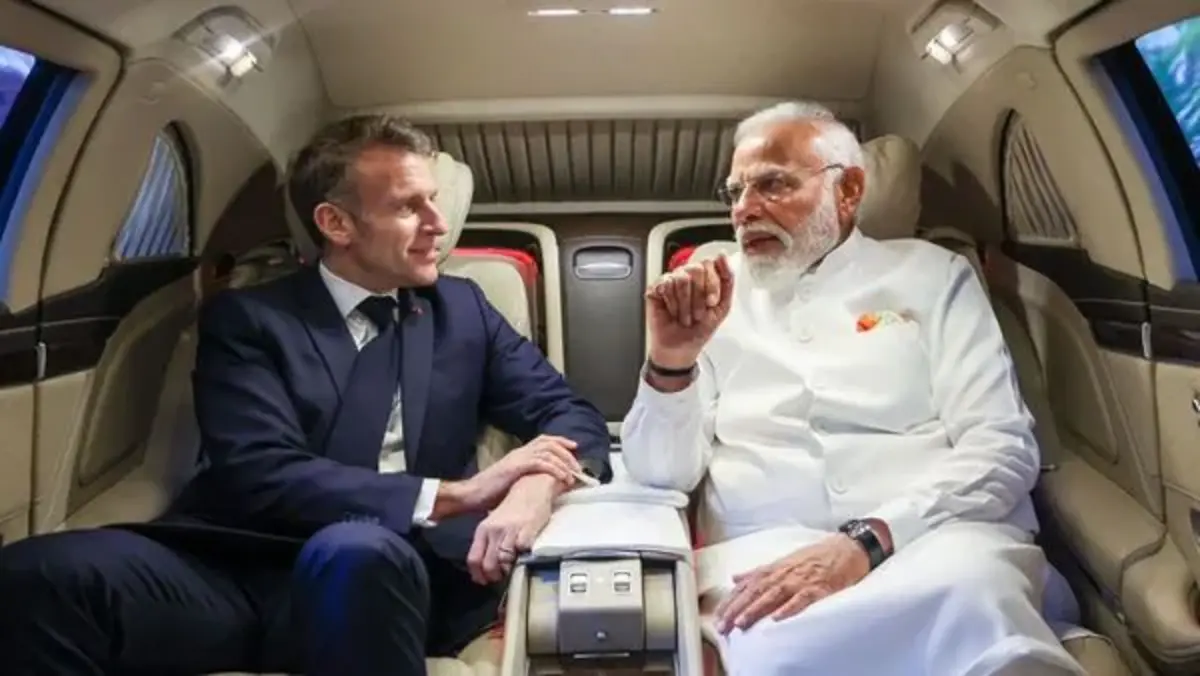
Macron and Modi discuss multibillion-dollar Rafale jet deal during India visit.
French President Emmanuel Macron began a key three-day visit to India on Tuesday, focused on strengthening economic and defence cooperation between Paris and New Delhi. The visit comes as both governments edge closer to a potential multibillion-dollar contract for 114 Dassault Rafale fighter jets — one of the largest defence procurements in India’s history.
Macron and Indian Prime Minister Narendra Modi held extensive talks in Mumbai, emphasising the expanding strategic partnership between the two nations. While neither leader publicly confirmed the final details of the Rafale agreement, officials expressed strong optimism that a deal could be finalised during or shortly after the visit.
The Rafale negotiations form part of a broader agenda that also includes collaboration on aerospace, artificial intelligence, energy, and trade. France is positioning itself as one of India’s most reliable defence and economic partners amid rising global uncertainties.
India’s Defence Acquisition Council has already granted clearance in principle for the purchase of 114 additional Rafale jets, with the estimated value of the deal around €30 billion ($35 billion). If concluded, it would be India’s largest single defence import and a milestone for French aerospace manufacturer Dassault Aviation.
The jets would be procured and fielded to enhance the Indian Air Force’s combat capabilities at a time when it is seeking to fill gaps in its fighter squadrons. The majority of these aircraft are expected to be assembled locally under the “Make in India” initiative — a move that aligns with New Delhi’s long-term aim to bolster indigenous defence manufacturing and reduce reliance on imports.
Local production would involve collaboration between Dassault and Indian partners. French companies such as Safran, which produces the M-88 engines used by Rafales, have indicated their readiness to set up assembly and component production lines in India. This is seen as a significant boost to India’s aerospace ecosystem and jobs creation.
Beyond fighter jets, the visit underscores India’s efforts to diversify defence suppliers. For decades, India depended heavily on Russian military hardware. However, geopolitical shifts and evolving security priorities have encouraged New Delhi to broaden its strategic partnerships with Western countries, including France.
Macron and Modi also inaugurated India’s first private helicopter assembly line in Karnataka, a joint venture between Tata Group and Airbus. The facility will manufacture Airbus H125 helicopters, highlighting cooperation in aeronautics beyond fighter jets.
France is one of India’s largest European defence partners, with bilateral trade valued at around €15 billion annually. The two countries have also agreed to expand collaboration into high-technology sectors, including artificial intelligence and space cooperation.
While political momentum is high, several technical and commercial details still need resolution before the Rafale contract can be finalised. Sources say price negotiations, local production terms, technology transfer agreements, and long-term maintenance commitments are among the key issues under review by officials in both capitals.
Indian Defence Minister Rajnath Singh has urged France to increase the share of India-made components in the jets, potentially up to 50 per cent, to maximise local economic benefits. This reflects a broader push by New Delhi to expand domestic production under the Make in India initiative.
Experts describe the potential agreement as a “contract of the century.” It would add to previous orders: India has already inducted 36 Rafale jets and ordered 26 naval variants for its air arm. The new acquisition would significantly enlarge India’s combat aviation force.
The proposed deal comes amid rising security concerns in South Asia and the Indo-Pacific region. India’s air force is operating with fewer than its authorised squadron strength, prompting analysts to call for urgent upgrades. The addition of modern Rafale fighters is expected to improve aerial deterrence and strike capabilities across multiple theatres.
The partnership also signals a shared commitment to strategic autonomy. Both France and India have emphasised that their cooperation is grounded in mutual respect and a desire for a multipolar global order. France’s broader engagement includes support for economic stability, trade links, and collaboration on global security challenges.
Additionally, analysts believe the deal will strengthen France’s defence industrial base by securing major exports, while offering India advanced technology and reduced dependence on a single supplier. This dual-benefit is seen as a foundation for deeper future cooperation.
Beyond defence, the visit is expected to yield deals in technology, space, and energy sectors. Macron and Modi discussed cooperation in nuclear energy and rare earth material supply chains — areas critical for future industrial growth. The leaders also reaffirmed their commitment to free trade and economic integration between India and the European Union.
In its statement, the French presidency highlighted the importance of economic diversification and resilience amid global uncertainty. It described the India-France partnership as “stable and predictable,” offering opportunities for mutual growth and innovation.
Officials from both governments will now work to conclude technical negotiations. Once details are finalised, the full contract could be signed during Macron’s visit or shortly after. The first aircraft deliveries and local production rollout are expected to begin soon after formal approval.
Observers suggest the deal could reshape India’s defence landscape for decades, supporting its broader push toward technological self-reliance while reinforcing strategic bonds with Western allies.