Mexico violence after El Mencho killed drives national unrest and security fears.
Violence has surged across Mexico after security forces killed Nemesio Rubén Oseguera Cervantes, known as “El Mencho.” He led the Jalisco New Generation Cartel (CJNG), one of the country’s most powerful drug trafficking groups. His death has triggered unrest in several states. It has disrupted daily life and raised fresh security concerns nationwide.
The military carried out the operation in Tapalpa, Jalisco. Officials described it as a major victory against organized crime. However, cartel loyalists quickly retaliated. Armed groups spread violence beyond the original raid location.
El Mencho headed the CJNG for years. Many analysts considered the cartel one of Mexico’s most aggressive criminal networks. The group operated mainly from Jalisco. It controlled major drug trafficking routes. It also shipped fentanyl and methamphetamine into the United States.
The cartel expanded beyond narcotics. It ran extortion rings and kidnapping networks. Members stole fuel and controlled other illegal businesses. The U.S. State Department had offered a $15 million reward for information leading to his capture. That reward reflected his global criminal profile.
Authorities see his death as one of the biggest blows to Mexican cartels in recent years. Many compare it to the capture of Joaquín “El Chapo” Guzmán.
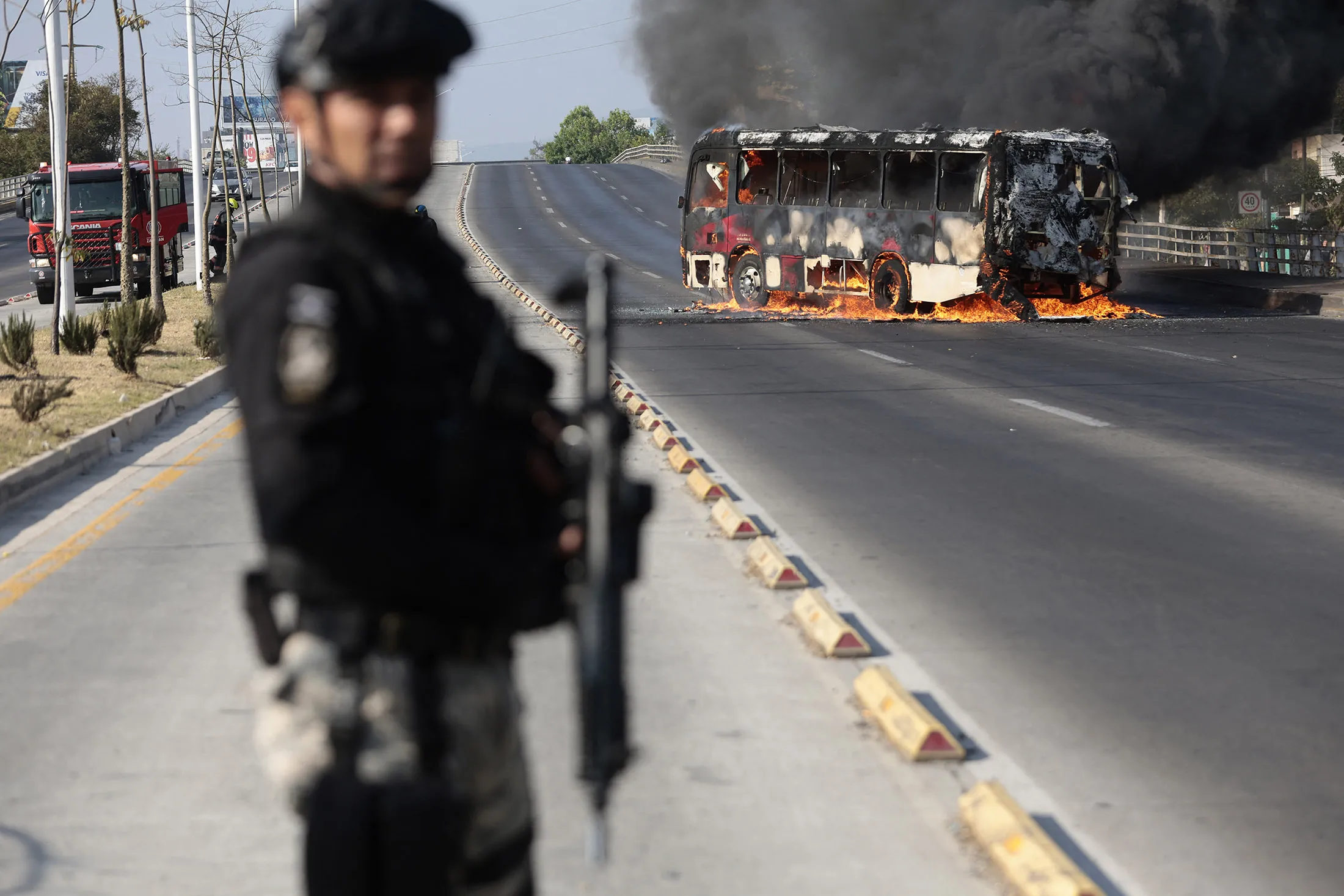
Within hours of the announcement, violence erupted in at least 20 Mexican states. CJNG supporters burned vehicles and buildings. They blocked highways with buses and trucks. Gunmen exchanged fire with security forces.
Violence hit Jalisco, Colima, Guanajuato, Michoacán, and Tamaulipas. Officials responded with urgent security alerts. They also issued travel advisories for residents and visitors.
In Jalisco, witnesses reported scenes of chaos. Burning buses blocked major roads. Smoke rose from city streets. Highways became impassable due to barricades. Airlines such as Air Canada and Aeromexico suspended flights. Unrest affected areas near airports and tourist zones, including Puerto Vallarta.
State authorities activated emergency protocols. Some regions suspended public transport and school classes. Officials urged people to stay indoors. They advised residents to avoid high-risk areas until stability returns.
The Mexican Defense Ministry confirmed that the raid killed several cartel members. Troops also seized heavy weapons and armored vehicles. The operation injured three members of the armed forces. Doctors are treating them in hospital.
President Claudia Sheinbaum addressed the nation. She acknowledged the unrest but said most of the country remains stable. She stressed that daily activities continue in the majority of regions.
The U.S. Department of State issued a security alert. It warned American citizens to shelter in place in affected areas. The alert cited ongoing violence and blocked infrastructure.
Guatemala strengthened border security. Officials there fear possible spillover effects from the unrest.
International observers are monitoring the situation closely. They note that removing a cartel leader can weaken command structures. However, it can also trigger internal power struggles. Rival factions may compete for control. That competition often fuels further instability.
The violence has disrupted more than public safety. It has also affected commerce and tourism. Blocked highways have delayed shipments. Suspended flights have hurt local businesses. Many residents now face uncertainty about when normal life will resume.
Guadalajara experienced widespread closures. Residents stayed home to avoid potential clashes. Local markets and small businesses reported losses.
Security experts warn about possible cartel recruitment. Younger members may try to fill the leadership vacuum. Power struggles could prolong the conflict. Analysts say strong economic and social programs are essential. Without them, violence may continue.
The government now faces a critical policy decision. It can continue focusing on kingpin targeting. That strategy has weakened major figures before. However, it has also caused cartel fragmentation. Smaller groups often become more unpredictable.
Some analysts urge a broader security strategy. They recommend strengthening institutions and community programs. They also support law enforcement reform and anti-corruption measures.
Long-term stability may require regional cooperation. U.S.–Mexico collaboration remains central to anti-narcotics efforts. Policymakers may also review current drug control strategies.
Whether violence decreases or intensifies, authorities must act carefully. They need firm security operations. At the same time, they must invest in social development. Economic opportunity and justice reform remain key. Only a balanced approach can reduce cartel influence and restore public trust.