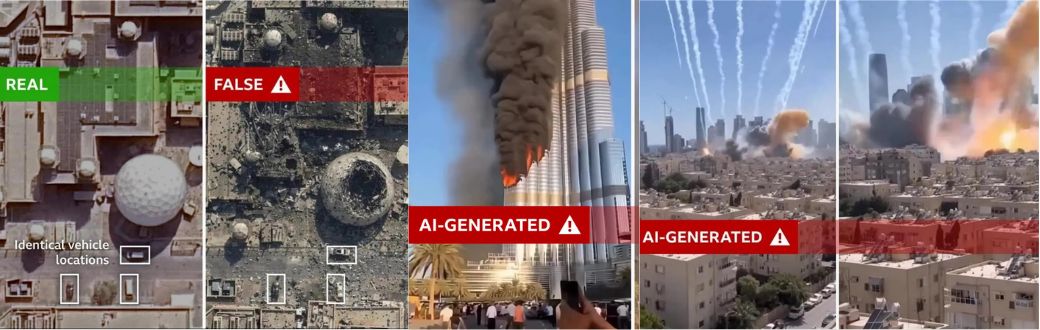
The rapid spread of AI Iran war videos misinformation is raising serious concerns among analysts and technology experts. As tensions around Iran escalate, social media platforms are seeing a flood of AI-generated videos that appear to show dramatic missile strikes, explosions, and battlefield scenes.
Many of these clips look realistic. But investigators say a large number of them are fabricated using advanced generative AI tools. Some creators post these videos to gain millions of views and profit from platform monetization programs.
Experts warn that the trend is blurring the line between real war reporting and digital fiction.
In the past, creating convincing war footage required cameras, editing teams, and access to conflict zones. Today, AI technology allows anyone with a computer to generate highly realistic battle scenes within minutes.
Modern tools can produce synthetic explosions, military vehicles, and aerial attacks with just a text prompt. Platforms such as video generation models and AI image tools make it easier than ever to create viral content.
Digital media researcher Timothy Graham says the scale of misinformation has expanded rapidly with the rise of generative AI. What once required professional production resources can now be done quickly with AI systems. According to researchers studying online misinformation, these tools have effectively turned the internet into a new battleground for information.
Some creators post AI-generated war videos mainly to earn advertising revenue and platform payouts. Viral clips can reach millions of impressions within hours, especially when shared on short-video platforms and major social networks. Several platforms reward creators based on engagement levels, and analysts estimate that some monetization programs pay roughly $8 to $12 for every million views. This financial incentive makes viral misinformation increasingly attractive for content producers seeking quick profits.
Experts say such systems can unintentionally encourage users to prioritize attention over accuracy. Once a dramatic clip begins trending, it often spreads rapidly across multiple platforms including short-video apps, social networks and messaging groups. By the time fact-checkers identify the footage as fake, millions of users may already have watched or shared it.
Researchers have also uncovered organized efforts to amplify synthetic war footage online. Investigators studying activity on X discovered a network of 31 hacked accounts that shared AI-generated videos during the conflict. The accounts changed their names to variations of “Iran War Monitor” and pushed dramatic combat clips across timelines in order to gain attention and visibility.
The discovery highlighted how easily coordinated networks can manipulate social media feeds. According to platform officials, many of these campaigns appear designed to maximize views and exploit monetization systems rather than promote a specific political message.
Technology companies have started responding to the surge of synthetic war content. X Corp. recently introduced new rules targeting creators who post AI-generated conflict videos without clearly labeling them as artificial. Under the updated policy, users who share undisclosed AI war footage may lose access to the platform’s revenue-sharing program for up to 90 days. Repeat violations could also lead to permanent removal from monetization features.
Platform officials say these measures aim to protect the authenticity of information during wartime. Company representatives have stressed that reliable information becomes especially important during international crises, when misinformation can quickly influence public opinion.
Many AI-generated clips mimic the style of real news footage. They often include dramatic camera angles, simulated satellite images and highly realistic explosions designed to resemble battlefield reporting. In some cases, creators combine AI imagery with genuine footage from previous conflicts, which makes the videos appear even more convincing to viewers.
Investigators have already identified several examples where fabricated visuals claiming to show major Iranian strikes circulated widely online. Later analysis revealed that some of the images were created from old satellite photos that had been digitally altered with AI tools. Such tactics make it increasingly difficult for ordinary users to distinguish real events from fabricated ones.
The rise of AI Iran war videos misinformation reflects a broader transformation in how wars unfold in the digital age. Conflict today no longer occurs only on physical battlefields; information campaigns now play a central role in shaping global perception. Governments, activists and independent creators all participate in the digital information environment surrounding modern conflicts.
Researchers say some state-linked networks also share manipulated content to exaggerate military success or create confusion about real events. At the same time, opportunistic creators often exploit trending war topics to attract views and followers, regardless of political motives.
The result is a chaotic online environment where authentic reporting competes with artificial content designed primarily for clicks and engagement. Journalists and analysts warn that this dynamic could undermine public trust in legitimate war coverage.
AI video generation technology is also improving at a rapid pace. New models can simulate lighting effects, realistic motion and handheld camera movement with remarkable accuracy. These advancements make traditional verification methods more challenging for investigators.
Journalists and digital forensics experts now rely on specialized tools that analyze pixel patterns, metadata and AI watermarks to detect synthetic media. Even with these methods, experts admit that the challenge will continue to grow as technology advances.
One digital security analyst noted that verification systems are struggling to keep pace with the speed of AI development. As new generation tools become more sophisticated, distinguishing real footage from artificial creations will become increasingly complex.
Experts recommend several steps for users who want to avoid falling for fake conflict footage. Viewers should first check whether the video appears on trusted news websites or credible media outlets. They should also look for official confirmations or reports from verified sources before believing dramatic claims.
Analysts also advise caution when encountering clips that appear on only a single account or spread through unknown pages. Visual errors, distorted objects or unnatural movements can sometimes indicate that AI technology produced the footage.
Most importantly, experts emphasize that users should avoid sharing unverified videos online. Every repost or share can help misinformation spread further across the internet.
The explosion of AI-generated war videos illustrates how rapidly technology is reshaping the global information landscape. While generative AI offers powerful creative possibilities, it also introduces serious risks during international conflicts.
Misleading images and videos can distort public understanding of events and complicate efforts to report accurately from conflict zones. For governments, journalists and technology companies, the challenge now lies in protecting reliable information without restricting legitimate digital expression.
As the Iran conflict continues to dominate global headlines, experts believe the fight against AI Iran war videos misinformation will remain a major issue for the international media ecosystem.