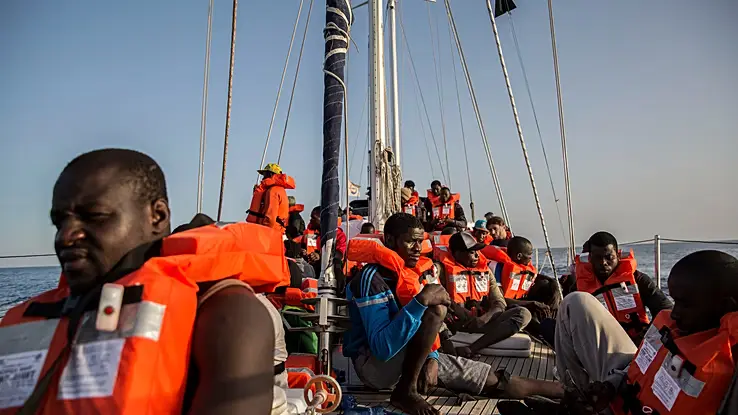
Rescue teams saved more than 50 African migrants from an overcrowded boat drifting in the central Mediterranean Sea. The incident again highlights the dangers people face when they try to reach Europe through one of the world’s deadliest migration routes.
Humanitarian rescue teams carried out the central Mediterranean migrant rescue in international waters between North Africa and southern Europe. Several children were among those rescued, which made the operation more urgent for the crews involved.
Humanitarian organizations and maritime rescue groups have repeatedly warned about this crisis. Many migrants still travel in overcrowded and poorly equipped boats. As a result, their lives remain at serious risk in the Mediterranean Sea.
The central Mediterranean route remains one of the most dangerous migration paths in the world. Every year, thousands of migrants attempt the risky journey. Many hope to reach European countries such as Italy or Malta in search of safety and better opportunities.
During the latest central Mediterranean migrant rescue, rescue crews spotted a small overcrowded boat in distress during the evening. The vessel struggled to stay stable in open waters. Rescue teams quickly responded after receiving emergency alerts and moved toward the location to help the migrants.
Search-and-rescue teams reported that the migrants had been travelling in extremely dangerous conditions. Many of the boats used for these journeys are small rubber dinghies or aging fishing vessels that are not designed for long sea voyages.
Such boats often lack basic safety equipment, life jackets, or sufficient fuel. As a result, they frequently become stranded in the Mediterranean Sea, leaving passengers vulnerable to dehydration, exposure, and drowning.
During the operation, rescue crews carefully approached the overcrowded boat and transferred the migrants to a safer vessel. The process was conducted in stages to ensure stability and avoid panic among passengers.
More than 50 migrants were successfully rescued during the mission. Authorities confirmed that nine of those rescued were children, underscoring the humanitarian urgency of the situation.
Rescuers reported that many migrants were exhausted after spending hours at sea. Some required immediate medical checks due to dehydration and fatigue.
The rescued migrants were later transported to a safer location where humanitarian assistance and medical care were provided. Aid workers also began registering passengers and assessing their individual needs.
According to rescue teams, the migrants on board the boat came from several African countries. These reportedly included Nigeria, Guinea-Bissau, Senegal, South Sudan, Guinea, Sudan, and The Gambia.
Many migrants attempting the Mediterranean crossing are fleeing conflict, political instability, economic hardship, or persecution in their home countries.
Human rights groups say that migrants often travel across the Sahara Desert to Libya or Tunisia before attempting the dangerous sea journey toward Europe.
Libya in particular has become a major departure point for migrant boats heading toward Italy’s southern islands such as Lampedusa.
Despite ongoing rescue operations, the Mediterranean Sea continues to claim many lives each year.
According to international organizations, hundreds of migrants have already died or gone missing in the Mediterranean since the start of 2026 alone.
Tragic incidents occur frequently when overloaded boats capsize or break apart during the journey.
In one recent case earlier this year, a rubber boat carrying migrants overturned near the Libyan coast, leaving 53 people dead or missing.
These tragedies highlight the extreme risks migrants face while attempting to reach Europe by sea.
Humanitarian groups have repeatedly called for expanded rescue operations and safer migration pathways to prevent further loss of life.
The issue of migration across the Mediterranean has become a major political and humanitarian challenge for Europe.
Countries such as Italy and Greece often serve as the first entry points for migrants arriving by sea. Rescue ships operated by governments and humanitarian organizations frequently patrol international waters to assist boats in distress.
However, the increasing number of migrants attempting the crossing continues to put pressure on European rescue systems and border authorities.
At the same time, human rights organizations argue that rescue missions are essential to prevent humanitarian disasters at sea.
They stress that migrants should not be left stranded in international waters, where overcrowded boats can quickly become life-threatening.
Following the latest central Mediterranean migrant rescue, humanitarian organizations once again urged governments to address the root causes of migration.
Experts say that wars, economic instability, climate challenges, and political unrest continue to push thousands of people toward dangerous migration routes.
Aid organizations argue that without legal and safe migration options, desperate migrants will continue relying on smugglers and unsafe boats.
As rescue missions continue across the Mediterranean, humanitarian groups stress that protecting human life at sea must remain the top priority.