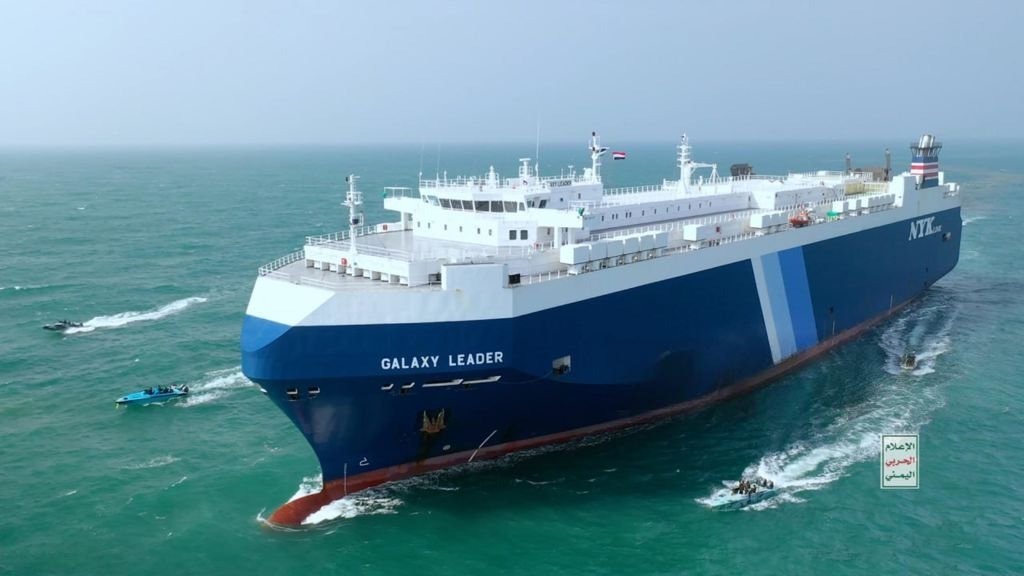
Yemen’s Iran‑backed Houthi rebels, who recently joined the broader Middle East conflict, have revived their threats to attack shipping in the Red Sea and Bab al‑Mandeb Strait, one of the world’s most vital maritime corridors for trade and energy transport. (read more about their first missile strike on Israel).
Analysts warn that renewed disruptions could force international shipping lines to avoid the Red Sea, rerouting vessels around Africa’s Cape of Good Hope — a change that adds weeks to journeys, inflates operational costs, and ripples through global markets.
Houthis had paused their maritime attacks after a 2025 ceasefire, but their recent missile strikes and expanded engagement in the Middle East conflict have revived fears of attacks on commercial vessels if hostilities escalate further.
The Red Sea and Bab al‑Mandeb Strait serve as a chokepoint connecting Asia, Europe, and the Middle East through the Suez Canal — a route accounting for a significant share of global container traffic and nearly 12 % of international trade.
Disruption in this narrow corridor isn’t just a regional issue — it has global consequences:
- Shipping delays: Vessels forced to detour around Africa increase journey times by up to 10–15 days.
- Higher freight costs: Longer routes and elevated risk premiums push up shipping costs, squeezing supply chains.
- Insurance spikes: War risk insurance premiums soar as vessels transit dangerous waters.
The strategic location of the Red Sea means any prolonged threat magnifies costs beyond the shipping sector itself. Recent industry assessments show:
- Container traffic through Red Sea routes significantly declined since early 2023 due to persistent Houthi attacks.
- Freight rates rose sharply as carriers diverted around Africa, contributing to higher costs for manufacturers and, eventually, consumers.
Extended transit routes also increase fuel consumption, crew time, and operational expenses — pushing global supply chains closer to bottlenecks and longer delivery windows.
The Red Sea is also critical for moving oil and liquefied natural gas (LNG) between producing regions and global markets. Disruptions here compound broader energy volatility already brought on by tension in the Strait of Hormuz — another key chokepoint that has seen intermittent attacks and threats amid the wider Iran‑U.S.‑Israel conflict.
Investors and traders are closely watching:
- Any closure or sustained threat could tighten global energy supply.
- Strategic reserves and alternate pipelines might be tapped, but markets would likely see price spikes, particularly in crude and refined products.
Supply Chain Disruption
Longer voyage times and higher costs have impacts across multiple sectors, including manufacturing, retail, and perishable goods logistics. Industries relying on just‑in‑time delivery are especially vulnerable to these delays and cost inflations.
Inflationary Pressure
Rising shipping and energy costs tend to trickle down to consumers, potentially contributing to broader inflationary trends — especially in regions heavily dependent on imported goods.
Investment and Insurance Markets
Shipping insurers have already raised premiums due to Houthi‑related risks, making Red Sea transits more expensive and discouraging shippers from using the corridor unless necessary.
Geopolitical Dimensions
Yemen’s Houthis have framed their threats as part of a broader alliance with Iran and other allied groups in the Middle East conflict, heightening diplomatic complexities.
Their renewed military engagement — along with potential attacks on commercial vessels — elevates the risk of the war spreading beyond traditional combat zones and affecting global economic arteries.
Experts agree that if Houthi threats continue or escalate, the Red Sea could remain a high‑risk zone for international shipping, with long‑term implications for global commerce. Key indicators to watch include:
- Frequency of maritime attacks or threats
- Decisions by major shipping lines to resume or avoid trans‑Red Sea routes
- Movements in freight, insurance, and oil markets
- Diplomatic or military efforts to secure the corridor
A sustained return to safe passage through the Red Sea would help ease costs and risks, but confidence depends on stability and effective security agreements among regional and global powers.