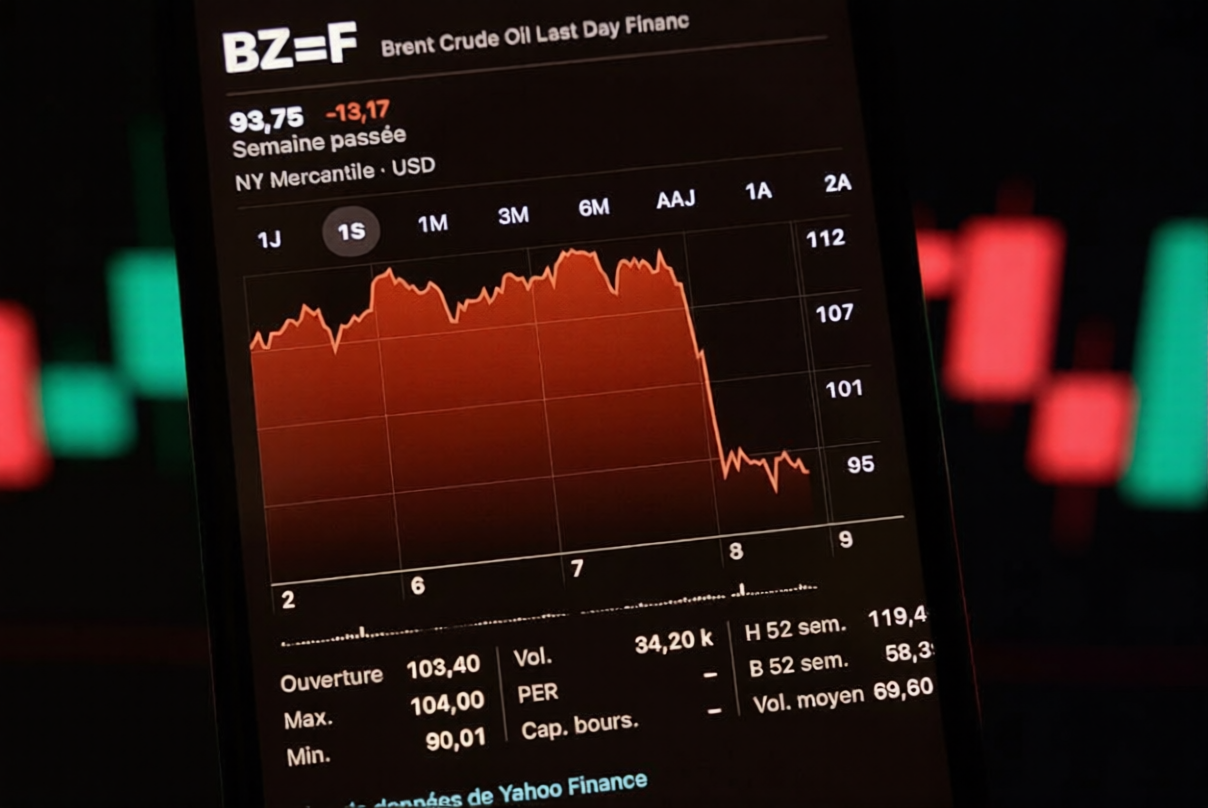
Iran ceasefire oil prices have taken center stage in global financial markets as crude benchmarks recorded one of their sharpest declines in years following a temporary truce between the United States and Iran. The announcement of a two-week ceasefire, which includes the reopening of the strategically vital Strait of Hormuz, immediately eased fears of supply disruptions and triggered a strong reaction across global markets.
Oil prices fell dramatically, with Brent crude dropping below $93 per barrel and U.S. crude also seeing steep losses, marking the biggest single-day percentage decline since 2020. This sudden fall reflects how heavily geopolitical risk had been priced into energy markets during weeks of escalating conflict. As tensions temporarily eased, that risk premium quickly evaporated, leading to a rapid correction.
At the same time, stock markets surged across multiple regions. Asian markets recorded strong gains, with major indices rising between 5% and 6%, while U.S. futures jumped significantly, signaling renewed investor confidence. The relief rally was driven largely by expectations that stable oil flows would reduce inflationary pressure and support economic growth.
However, despite the optimism, analysts caution that the situation remains fragile. The ceasefire is limited to just two weeks, and key issues between Washington and Tehran remain unresolved. Although shipping through the Strait of Hormuz is expected to resume, full normalization of trade and energy supply could take longer due to security concerns and logistical disruptions.
Moreover, oil prices, while falling sharply, are still significantly higher than pre-conflict levels. This suggests that markets are not fully convinced the crisis is over. Investors continue to factor in the possibility of renewed escalation, especially given the history of volatility in the region.
Another critical concern is that the ceasefire does not cover all regional actors, leaving room for indirect conflict or proxy involvement. Reports of continued tensions in parts of the Middle East highlight the complexity of achieving lasting peace. As a result, even minor developments could quickly reverse current market trends.
Economic experts also warn that the broader impact of the conflict may linger. Prolonged instability in global energy supply chains can influence inflation, interest rates, and long-term investment strategies. While the current market rally reflects relief, it may not necessarily signal a sustained recovery.
For now, the global response appears to be driven more by hope than certainty. The sharp drop in oil prices and the surge in equities underline how quickly sentiment can shift in response to geopolitical developments. Yet the underlying risks remain deeply embedded in the situation.
As the ceasefire period unfolds, attention will remain fixed on diplomatic progress and regional stability. Whether this marks the beginning of a longer-term resolution or merely a temporary pause in conflict will ultimately determine the direction of both energy markets and the global economy.