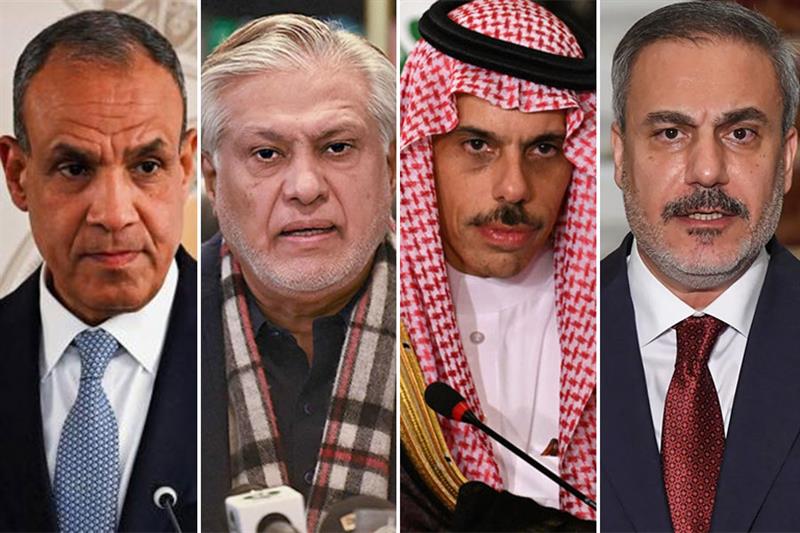
Diplomatic efforts to calm the ongoing Iran war have taken centre stage this week as Pakistan, Saudi Arabia, Türkiye and Egypt intensify their collaboration in Islamabad. The nations convened for high‑level discussions focused on Iran conflict de‑escalation talks — a nuanced attempt to create space for dialogue amid the hotly contested US‑Israel offensive targeting Iran.
Amid mounting regional tensions, this quartet of Muslim‑majority states is positioning itself as a back‑channel between Tehran and global powers. The goal is to restrain escalation that has already stretched far beyond Iran’s borders and threaten broader geopolitical and economic fallout.
Diplomats Meet in Pakistan
From March 29 to 30, foreign ministers from Saudi Arabia, Egypt, Türkiye, and Pakistan gathered at the invitation of Islamabad for what officials described as “in‑depth discussions” on the ongoing war in Iran.
While neither Iran nor the United States participated directly in the talks, the meeting signalled a shared regional interest in preventing the conflict from spiralling out of control. Pakistani officials reiterated that the discussions aim to open new avenues for diplomacy and consider constructive measures to lower the temperature in volatile parts of the Middle East.
Shared Concerns, Shared Stakes
These nations, though varied in political outlook and bilateral ties, share overlapping concerns about Iran conflict de‑escalation talks. They fear that unchecked fighting could:
- Threaten energy exports and disrupt global oil markets;
- Endanger regional trade routes, especially maritime passages like the Strait of Hormuz;
- Trigger broader military engagement with neighbouring states.
Foreign diplomats underscored that preventing further escalation is critical to safeguarding not just regional peace, but also economic stability in a world still recovering from pandemic disruptions.
According to reports, officials from Türkiye, Egypt and Pakistan have been actively relaying messages between the United States and Iran, a move analysts describe as a vital early effort in informal mediation. These back‑channels have helped keep lines of communication open — even though there’s no formal ceasefire agreement yet.
However, Tehran’s response to such efforts has been cautious. Iranian officials acknowledge diplomatic overtures but maintain their stance that Washington must address certain core grievances before negotiations can have substance.
Despite diplomatic eagerness from regional partners, Iran has not fully embraced external mediation. Tehran insists that direct negotiations with the United States should only occur on its own terms and that any attempts to involve third parties must respect its sovereignty and security concerns. For now, Iran remains reluctant to agree to talks that it perceives as one‑sided or influenced by Western strategic interests.
This cautious approach speaks to deeper tensions: Iran has been targeted by joint U.S. and Israeli strikes, prompting retaliatory actions against several Gulf states and stirring fears of a wider conflagration.
Economic Risks
Because the Middle East is central to global energy supply, any continuation or broadening of conflict directly affects markets worldwide. Traders have already factored war risks into commodities prices, and although hopes of diplomatic progress have eased some pressure, the absence of a definitive peace agreement keeps markets volatile.
For example, oil futures have reacted not just to battlefield developments but also to news of potential diplomatic openings — underscoring how de‑escalation prospects can quickly ripple through global markets.
Humanitarian and Strategic Concerns
Beyond economics, millions of civilians across neighbouring countries continue to grapple with displacement, supply chain disruptions, and strained health systems — a human toll frequently overshadowed by geopolitical headlines. Humanitarian organisations have repeatedly called for immediate ceasefires to allow critical aid access into conflict zones.
The recent phase of dialogue among Pakistan, Saudi Arabia, Türkiye and Egypt highlights a crucial turning point in the Iran conflict de‑escalation talks. While progress has been delicate and tentative, the initiative underscores a shared regional commitment to exploring diplomatic alternatives to military escalation.
Together, these nations are attempting to nurture not just a negotiation track, but a broader understanding that peace is in the collective interest — a realization that may eventually outlast the current cycle of violence.