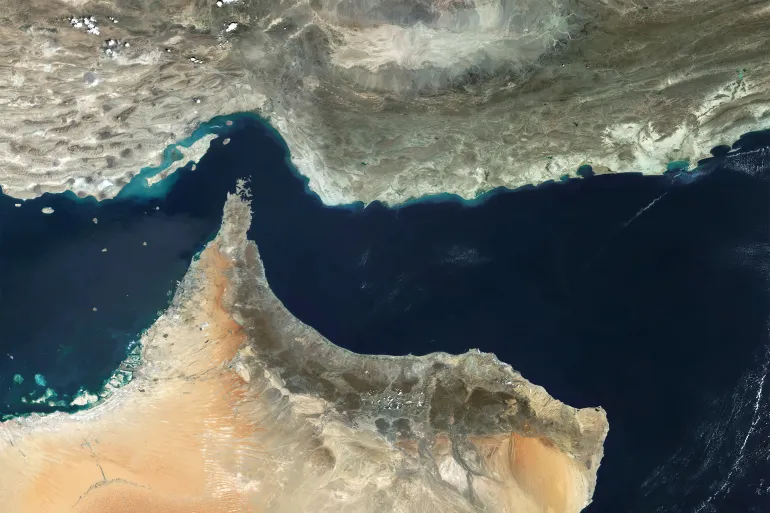
The Iran Strait of Hormuz crisis has rapidly evolved into one of the most serious international challenges in recent years. This narrow waterway, located between Iran and Oman, is responsible for transporting nearly 20% of the world’s oil supply.
However, recent military tensions and strategic decisions by Iran have severely disrupted shipping routes. As a result, global energy markets, trade systems, and political stability are now under immense pressure.
The Strait of Hormuz is not just another maritime route. Instead, it is one of the world’s most critical energy chokepoints. Every day, millions of barrels of oil pass through this narrow channel, connecting Middle Eastern producers to global markets.
Because of this, even a partial disruption can create massive consequences. In fact, experts warn that the current situation could remove up to 20 million barrels of oil per day from global supply, triggering price shocks worldwide.
Moreover, the crisis is not limited to oil alone. Liquefied natural gas (LNG), industrial materials, and essential goods also depend heavily on this route.
Since the escalation of conflict, maritime traffic through the strait has dropped significantly. Reports indicate that thousands of ships and crew members are stranded, while many others are avoiding the region altogether.
At the same time, Iran has introduced strict controls over which vessels can pass. Some ships are reportedly allowed safe transit only if they are not linked to countries considered hostile by Tehran.
Furthermore, incidents such as turning back vessels for “lack of permission” highlight the growing risks for global shipping companies.
Consequently, shipping costs have surged, insurance premiums have increased, and supply chains are facing severe delays.
The economic impact of the Iran Strait of Hormuz crisis is already visible. Oil prices have become highly volatile, with analysts predicting possible spikes up to $150–$180 per barrel if the situation worsens.
In addition, industries worldwide are feeling the pressure. For example:
- Manufacturing sectors are facing raw material shortages
- Energy-dependent economies are struggling with rising costs
- Inflation risks are increasing globally
Not only that, but the crisis is also affecting renewable energy projects. Some European wind energy developments have been delayed due to disrupted supply chains linked to the region.
Beyond economics, the crisis has significant geopolitical implications. The United States and its allies have discussed military options to secure the waterway. However, international cooperation remains uncertain.
Meanwhile, Iran has warned that it could fully close the strait if threats against its infrastructure continue.
This situation creates a dangerous cycle. On one hand, military intervention could escalate the conflict. On the other hand, inaction may allow prolonged disruption of global trade.
Therefore, diplomatic solutions are becoming increasingly urgent.
From a legal perspective, the situation raises serious questions. The Strait of Hormuz is considered an international waterway under global maritime law.
Blocking or restricting access may violate the United Nations Convention on the Law of the Sea (UNCLOS), which guarantees the right of transit passage.
As a result, international organizations such as the International Maritime Organization (IMO) are calling for coordinated global action to ensure safe navigation.
The future of the Iran Strait of Hormuz crisis remains uncertain. However, analysts suggest three possible scenarios:
- De-escalation – Shipping resumes and markets stabilize
- Partial disruption – Continued restrictions with moderate economic impact
- Full closure – Severe global recession risks and energy shortages
In the long term, many experts argue that the world must reduce dependence on this critical chokepoint. Investments in alternative pipelines and energy routes could provide a more stable solution.
While governments debate strategies, the real impact is being felt by ordinary people. Rising fuel prices affect transportation, food costs, and daily living expenses across the globe.
For workers in shipping, energy, and logistics sectors, the uncertainty is even more personal. Thousands of sailors remain stuck at sea, unsure of when they can return home.
Therefore, this crisis is not just about geopolitics—it is about real lives and global stability.
The Iran Strait of Hormuz crisis is more than a regional conflict. It is a global emergency with far-reaching consequences for energy, trade, and international security.
Although diplomatic efforts continue, the situation remains fragile. As tensions persist, the world faces a critical question:
Can global cooperation prevent a prolonged crisis, or is the world heading toward deeper economic and geopolitical instability?