At least one person has been killed and 11 injured at Dubai and Abu Dhabi airports after Iranian missiles and drones were launched across the Gulf, officials and state media reported, marking a sharp escalation in the Middle East conflict. The strikes disrupted one of the world’s busiest air corridors, grounding flights and prompting regional uncertainty as tensions surged following a major joint military operation by the United States and Israel.
In the United Arab Emirates, authorities confirmed that an incident at Zayed International Airport in Abu Dhabi resulted in the death of one person and injuries to seven others, according to aviation officials and local media sources. The fatality was identified as an Asian national, and most of the injuries were reported among airport staff and travellers.
Meanwhile, Dubai International Airport (DXB), one of the busiest airports globally, reported an “incident” at a concourse that injured four airport staff, according to a statement from Dubai’s media office. Emergency teams were deployed to secure the site, and the situation was brought under control without wider structural damage being immediately confirmed.
The airport incidents were part of a much larger pattern of Iranian attacks on Gulf states. Iranian forces fired hundreds of missiles and drones at targets across the United Arab Emirates and neighbouring countries, including Qatar, Bahrain and Kuwait, in what Tehran described as retaliation for strikes on its territory by US and Israeli forces earlier in the conflict.
Most of the incoming projectiles were intercepted by advanced air defence systems, according to defence officials in the UAE and other Gulf capitals. However, debris from those interceptions reportedly fell into populated areas and civil infrastructure, causing damage and casualties.
In Dubai, debris from intercepted drones and missiles also sparked a minor fire on the iconic Burj Al Arab hotel’s façade, while other debris caused a fire at a berth in Jebel Ali Port. These incidents, though not resulting in major structural collapse, underscored the widespread impact of the strikes beyond strictly military targets.
The strikes forced authorities to suspend thousands of flights to and from Dubai, Abu Dhabi and other Gulf aviation hubs, in one of the most significant disruptions to global air travel since the COVID-19 pandemic. Airlines including Emirates, Etihad and other carriers were compelled to halt operations as airspace over large parts of the region was closed as a precautionary measure.
Flight-tracking data showed near-empty skies over the Gulf as airlines rerouted services and passengers faced cancellations, delays and widespread logistical challenges. Hundreds of thousands of travellers were affected, with major diversions across Europe, Asia and Africa.
UAE authorities condemned the strikes as violations of national sovereignty and international law, calling for calm among residents and travellers while promising thorough investigation into the incidents. Defence officials highlighted the effectiveness of UAE air defences in intercepting the majority of threats, emphasising that civilian infrastructure was not the intended target.
Regional governments called for de-escalation and diplomatic solutions as the violence spread beyond military installations to civil sites in neutral countries. Travel advisories were updated by foreign ministries worldwide, advising citizens to shelter and reconsider travel plans in the Gulf region.
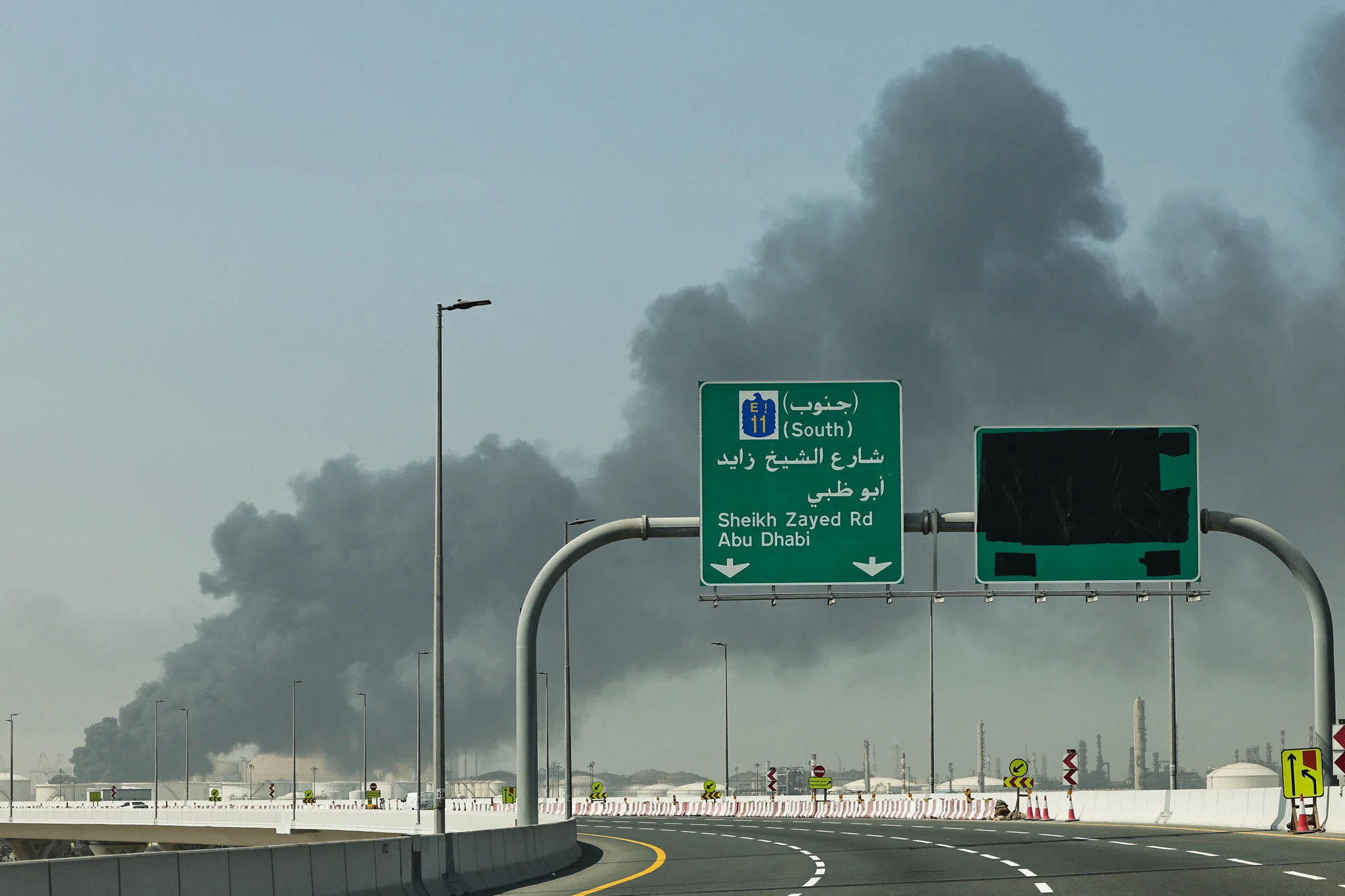
Residents and travellers across the UAE reported hearing explosions and seeing smoke rise over airport facilities, streets and city skylines as emergency services responded to the fallout of the attacks. Social media posts from passengers stranded at airports shared scenes of chaotic terminals, crowded lounges and families seeking updates amid flight cancellations.
While the UAE’s air defence systems absorbed most incoming threats, the sheer scale and range of the strikes heightened fears among civilians that civilian infrastructure could become collateral damage in wider geopolitical conflict.
The incidents drew global attention, with world leaders calling for restraint and immediate dialogue to prevent further escalation. The conflict’s spill-over into civilian transport hubs and non-combatant areas raised urgent questions about international security norms and the protection of essential infrastructure in times of heightened military tension.
Diplomatic missions in the region urged citizens to avoid travel and follow official updates, while organisations like the United Nations called for rapid de-escalation and protection of civilian life.
Authorities in the UAE continue to assess damage, coordinate civil defence efforts and restore air travel operations as soon as conditions allow. Investigations into the exact nature of each airport incident are ongoing, with officials indicating that detailed analyses of intercepted debris and strike patterns are underway.
As flights remain grounded and regional tensions stay high, global markets and passengers alike face continued uncertainty. The broader implications for Middle East stability, international travel, and diplomatic relations will depend on whether a diplomatic breakthrough can be achieved or if hostilities continue to spread.