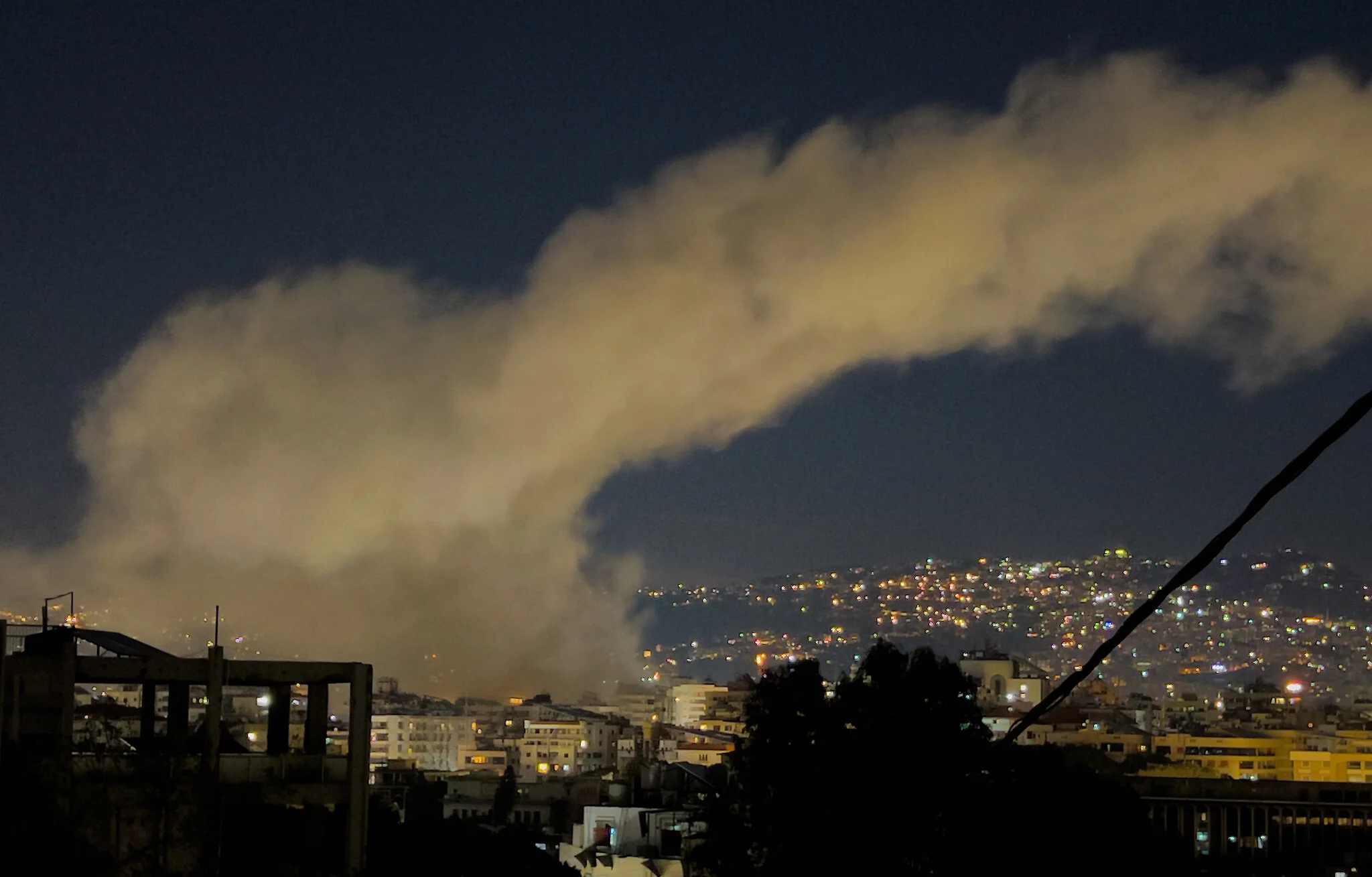
Israeli airstrikes hit multiple locations in Lebanon after Hezbollah launched rockets and drones toward Israel, marking one of the sharpest escalations in hostilities this year and resulting in dozens of deaths and widespread destruction. Regional and international leaders have expressed deep concern as the violence threatens to escalate further.
The escalation began when Hezbollah claimed responsibility for launching missiles and drones at Israeli territory, in what the group called retaliation for the killing of Iran’s Supreme Leader Ayatollah Ali Khamenei by joint US-Israeli strikes.
Following that attack, the Israel Defense Forces responded with intensive airstrikes on Hezbollah positions in southern Beirut, the Bekaa Valley and other areas of Lebanon, as well as additional southern Lebanese towns.
Lebanese health officials reported that at least 31 people were killed and more than 140 others wounded in the Israeli strikes, with casualties including both fighters and civilians, authorities said.
The Israeli military stated that a range of Hezbollah infrastructure was targeted during the retaliatory strikes, and said that senior Hezbollah figures and their command sites were among those struck, although specific details of the targets were not disclosed.
Local reports said air defenses and military units in Lebanon were also hit, raising concerns of damage to civilian areas amid the bombardment.
Simultaneously, residents and emergency services in southern suburbs of Beirut were seen dealing with rubble and smoke as schools and public facilities were disrupted by the escalation.
As part of the evolving conflict, the Israeli military issued warnings for civilians in more than 50 towns in southern and eastern Lebanon to evacuate areas near Hezbollah positions and stay clear of possible danger zones.
This order prompted mass movement of residents seeking safer areas, and gridlock on major highways was reported as populations moved away from conflict-prone regions.
Lebanese health officials and local authorities expressed grave concern about the rising toll of the hostilities, noting that medical facilities were straining to cope with the growing number of wounded.
Lebanese Prime Minister Nawaf Salam condemned the initial rocket and drone attacks by Hezbollah as “an irresponsible act that jeopardises Lebanon’s security and safety” and warned that the government would take necessary steps to prevent further escalation and protect the citizenry.
Israel’s command maintained that it is acting to neutralise threats posed by Hezbollah, emphasising that the militant group took part in hostilities that endangered northern Israeli communities following repeated cross-border fire.
International actors, including Western and Middle Eastern governments, cautioned against further escalation, stressing the need for diplomatic de-escalation even as military confrontations continued.
This latest exchange is part of a wider conflict that has expanded across the Middle East since significant US-Israeli strikes on Iran and other allied groups. Analysts have noted that the involvement of Hezbollah, Iran’s key proxy in Lebanon, represents a worrying expansion of hostilities beyond direct Iraq and Syria theatres.
For years, Hezbollah and Israel have engaged in periodic exchanges, often triggered by complex regional rivalries and alliances, including Iran’s influence and Tehran’s backing of Hezbollah as a core part of its strategy in the Levant.
The recent strikes constitute one of the most significant escalations since a truce was negotiated in 2024, raising fears among diplomats and policymakers that the conflict could spread further if not contained.
Hospitals in several Lebanese towns reported overwhelmed conditions, as increasing numbers of civilians sought treatment after strikes and rocket fire. Local volunteers and aid groups said that many civilians, including families and children, were displaced as towns near conflict zones faced ongoing bombardment.
The United Nations and leading humanitarian agencies issued statements urging all parties to comply with international humanitarian law and protect non-combatants in the midst of military actions.
With ongoing exchanges of fire and no immediate sign of ceasefire, military analysts expect tensions to remain high over the coming days. The potential for further escalation into a broader conflict involving neighbouring states and international actors continues to be a major concern for regional and global security.
Meanwhile, diplomats from several countries have intensified efforts to mediate and reduce hostilities through back-channel negotiations, although the complex geopolitical stakes make such outcomes uncertain.