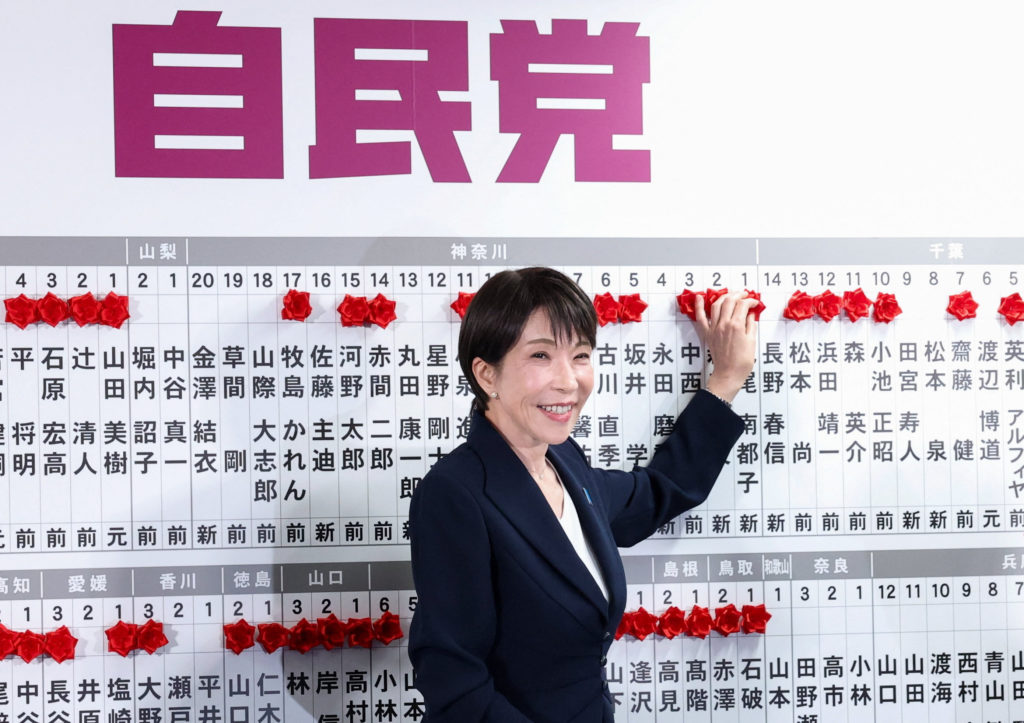
Markets respond positively as investors anticipate policy stability, reform momentum, and renewed economic confidence
Japanese stock markets recorded a strong rally following the historic election victory of Sanae Takaichi, marking a significant political turning point for the world’s third-largest economy. Takaichi’s win, which made her Japan’s first woman to secure the country’s top leadership role, sent a wave of optimism through financial markets, easing political uncertainty and reigniting investor confidence.
The benchmark Nikkei 225 index climbed sharply in early trading, while the broader Topix index followed suit, with gains spread across banking, technology, manufacturing, and export-oriented stocks. Market analysts noted that the rally was driven not only by the election result itself, but by what it symbolized: political clarity, policy continuity, and the prospect of focused economic leadership.
Investors had been closely watching Japan’s election outcome amid global economic uncertainty, rising interest rates in major economies, and geopolitical tensions in Asia. Takaichi’s victory removed fears of prolonged political instability or abrupt policy shifts—two factors markets typically dislike.
Known for her pro-growth stance, Takaichi has consistently supported fiscal stimulus, industrial competitiveness, and close coordination between government policy and the central bank. Her campaign emphasized strengthening domestic supply chains, supporting advanced manufacturing, and accelerating digital transformation—messages that resonated strongly with business leaders and investors alike.
“Markets are reacting to predictability,” said one Tokyo-based equity strategist. “Investors feel reassured that Japan’s economic direction will remain supportive of growth while addressing long-term structural challenges.”
The rally was not limited to a single sector. Financial institutions benefited from expectations of stable regulatory policies, while exporters gained from a slightly weaker yen, which improves overseas earnings when converted back into Japanese currency.
Technology firms and industrial manufacturers also posted gains, reflecting optimism around increased government support for innovation, semiconductors, and green technologies. Analysts believe these sectors stand to benefit most if Takaichi delivers on promises to modernize Japan’s economy and boost productivity.
Foreign investors, who had recently reduced exposure to Japanese equities due to uncertainty, appeared to return cautiously following the election result. Trading data showed increased overseas buying, particularly in large-cap and blue-chip stocks.
Beyond immediate market reactions, Takaichi’s election carries long-term symbolic and economic significance. Japan has long struggled with gender imbalance in leadership roles, particularly in politics and corporate governance. Her rise to power represents a cultural shift that could gradually influence workplace policies, labor participation, and leadership diversity.
Economists argue that greater diversity in leadership can enhance decision-making and improve global perceptions of Japan as a modern, adaptable economy. While such changes take time, global investors often factor leadership image and governance standards into long-term investment strategies.
“Symbolism matters in global finance,” noted an Asia-Pacific investment analyst. “It shapes perception, and perception influences capital flows.”
Despite the upbeat market response, experts caution that Japan still faces deep-rooted challenges. An aging population, declining birth rates, labor shortages, and mounting public debt continue to weigh on long-term growth prospects.
Takaichi has acknowledged these challenges, pledging to balance fiscal responsibility with targeted stimulus and structural reforms. However, analysts emphasize that execution—not rhetoric—will determine whether her leadership translates into sustainable economic progress.
Labor market reforms, immigration policy adjustments, and productivity improvements remain politically sensitive topics. Markets may stay optimistic in the short term, but confidence could fluctuate depending on how quickly and decisively reforms are implemented.
Japan’s political shift is being closely monitored beyond its borders. As a major global exporter and a key player in Asian supply chains, policy changes in Tokyo can influence trade flows, currency markets, and regional investment sentiment.
International funds and institutions have largely welcomed the election outcome, describing it as a stabilizing event during a period of global volatility. Some asset managers have already revised short-term outlooks for Japanese equities, citing improved political clarity and reform potential.
At the same time, global investors remain cautious, waiting for concrete policy announcements, cabinet appointments, and early legislative priorities.
As the initial market rally settles, attention will shift to Takaichi’s early leadership decisions. Investors are particularly focused on:
- Her approach to fiscal spending and stimulus
- Coordination with the Bank of Japan
- Support for innovation, technology, and green industries
- Measures to address demographic and labor challenges
The coming months will be crucial in determining whether the current optimism evolves into sustained market momentum.
Japanese stocks surged not merely because of an election win, but because of what it represents: stability after uncertainty, reform potential without disruption, and a historic shift in leadership. For now, markets appear willing to give Sanae Takaichi the benefit of the doubt.
Whether this confidence endures will depend on policy clarity, reform delivery, and Japan’s ability to navigate both domestic challenges and global economic pressures. For investors, the message is clear—Japan is once again firmly on the global market’s radar.