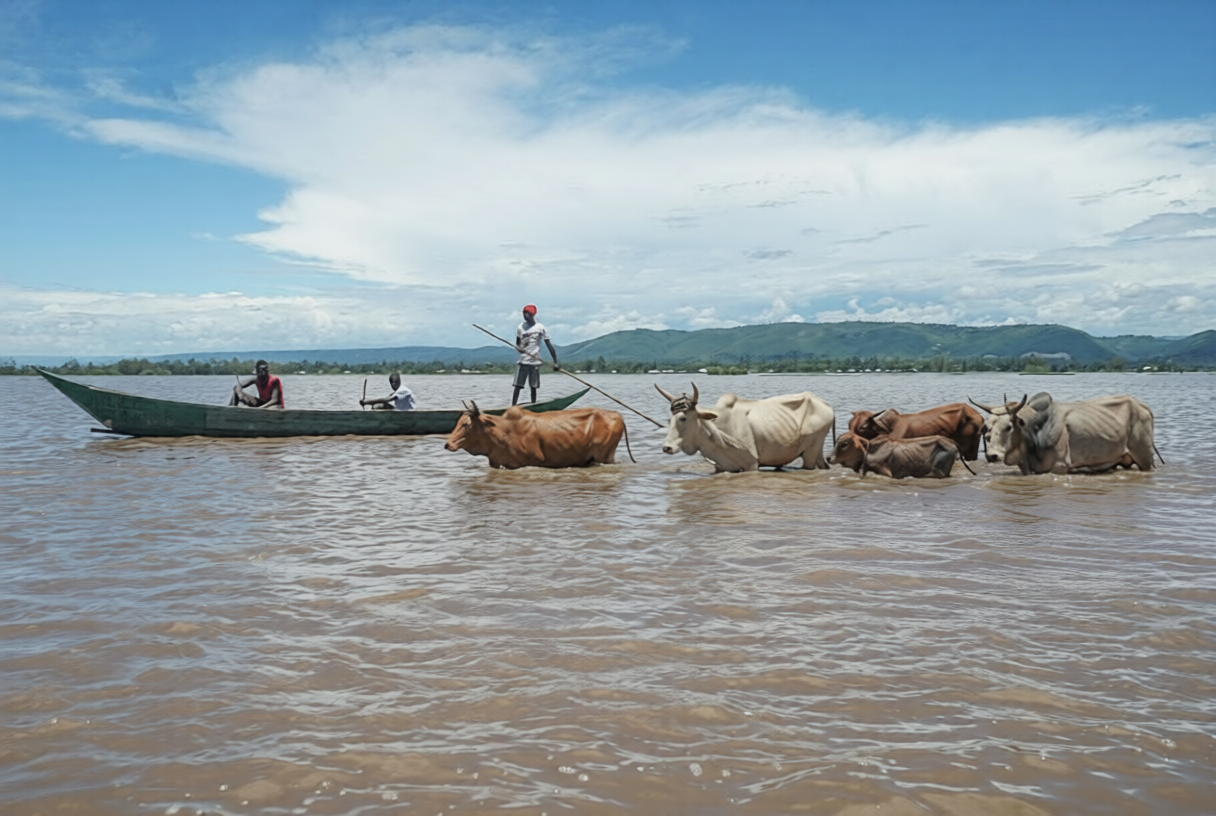
A growing Kenya flood disaster has claimed dozens of lives and caused massive destruction across several regions of Kenya. Heavy rainfall over the past few weeks has triggered widespread flooding, displacing thousands of people and damaging homes, roads, and vital infrastructure.
Local authorities confirmed that rising water levels swept away entire villages. Rescue teams are still searching for missing individuals. Many families have lost everything overnight, turning this crisis into one of the worst natural disasters in the country this year.
According to reports from BBC News and Al Jazeera, emergency services are struggling to reach remote areas because damaged roads and continuous rain have blocked access. As a result, rescue operations are moving slowly, and many affected communities remain isolated.
Meanwhile, the Kenya flood disaster has severely impacted the agricultural sector. In particular, large areas of farmland are now underwater, especially in rural regions where farming is the main source of income. Consequently, farmers are facing heavy losses, and food supply concerns are rising.
Farmers report losing crops such as maize, vegetables, and rice just weeks before harvest. This sudden loss is expected to create food shortages and push prices higher in local markets.
Experts warn that the damage could have long-term economic consequences. Agriculture plays a key role in Kenya’s economy, and such losses may affect both food security and national income.
The impact of the Kenya flood disaster goes beyond physical damage. Thousands of residents have been forced to leave their homes and seek shelter in temporary camps.
Many families now live without clean water, electricity, or proper sanitation. Health officials fear that these conditions may lead to outbreaks of diseases such as cholera and malaria.
Government agencies, along with humanitarian organizations like Red Cross, are working to provide emergency relief. However, resources remain limited, and more support is urgently needed.
Scientists link the increasing frequency of floods like this Kenya flood disaster directly to climate change. Rising global temperatures are causing more intense and unpredictable rainfall patterns across East Africa.
Experts believe that without proper climate adaptation strategies, such disasters will continue to occur. Flood control systems, better urban planning, and early warning systems are now more important than ever.
Countries across Africa are already experiencing the effects of extreme weather, and Kenya is among the most vulnerable.
The ongoing Kenya flood disaster could slow down economic growth in the region. Damage to roads, bridges, and farmland will require significant investment for recovery.
Small businesses and daily wage workers are also suffering due to disrupted activities. Many people have lost their income sources, making recovery even harder.
Authorities have urged international partners to step in with financial and humanitarian aid. Without quick action, the situation may worsen in the coming weeks.
Beyond the statistics, the Kenya flood disaster tells a deeply human story. Families are mourning loved ones, children are missing school, and communities are struggling to rebuild their lives.
One farmer described the situation as “losing years of hard work in a single night.” Such stories highlight the emotional toll of this disaster, not just the physical damage.
The Kenya flood disaster continues to unfold, with rising death tolls and widespread destruction. Immediate relief efforts are critical, but long-term solutions will be equally important to prevent future tragedies.
As the world watches, this crisis serves as a reminder of how vulnerable communities are to climate-related disasters.