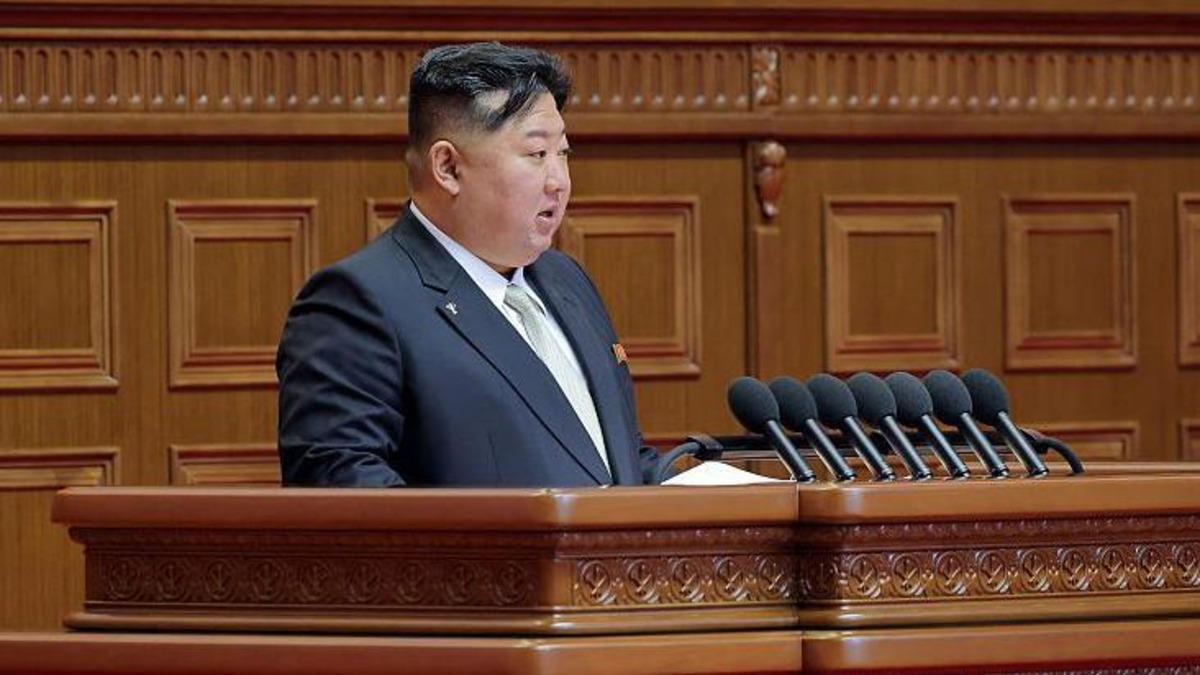
Kim Jong Un re-appointed leader of North Korea’s ruling party at Ninth Workers’ Party Congress.
North Korea’s Kim Jong Un has been re-appointed as the leader of the ruling Workers’ Party of Korea (WPK) during the Ninth Party Congress in Pyongyang, according to state media. This decision reinforces Kim’s control over the one-party state and sets priorities for domestic and foreign policy over the next five years.
The rare Workers’ Party Congress, the first in five years, gathered delegates from across the country. Reports indicate unanimous support for Kim’s leadership and pledges from members to work toward national prosperity and political stability.
According to the Korean Central News Agency (KCNA), Kim was re-appointed as general secretary on the fourth day of the congress. This platform typically outlines party goals and strategies. KCNA said the vote reflected an “unshakable will” of party members, soldiers, and citizens to maintain Kim’s leadership.
Delegates also approved revisions to internal rules and elected members to the Central Committee, although details remain undisclosed. Analysts say Kim’s re-appointment signals continuity in North Korea’s political system, not an immediate change in leadership style or governance. It also reflects the entrenched role of the Kim family dynasty.
State media highlighted Kim’s achievements, including strengthening North Korea’s international standing and military posture, especially nuclear deterrence. Reports noted that defense, including nuclear and missile programs, remains a key national security priority.
Kim praised the past five years’ accomplishments and outlined goals for the future. These include boosting economic growth, improving living standards, and reinforcing national defense.
Despite decades of international sanctions targeting North Korea’s weapons programs, the party framed the period as one of “optimism and confidence”, emphasizing self-reliant economic growth alongside military readiness.
Kim has led North Korea since 2011, following his father Kim Jong Il’s death. Over the years, he has consolidated power in the party and state, conducted multiple nuclear tests, and reinforced the regime’s ideological framework.
His re-appointment occurred amid speculation about succession, with observers noting the absence of his daughter, Kim Ju-ae, at the congress. Some reports suggest he may be grooming her for leadership, though Pyongyang has not confirmed this.
The announcement drew global attention. Neighboring countries and international governments are monitoring developments closely. Analysts say the re-appointment reinforces Pyongyang’s nuclear policy and highlights its influence in East Asian security. Ties with China and Russia, strained relations with the United States and South Korea, and ongoing sanctions make North Korea a key regional focus.
South Korea is observing the congress outcomes to gauge implications for inter-Korean relations and security cooperation. The United States and Japan are monitoring defense priorities and missile programs closely.
North Korea’s economy faces long-standing challenges, including limited foreign investment, sanctions, and resource scarcity. Despite these, the ruling party emphasizes economic stabilization and self-sufficiency, aiming to maintain domestic support.
State media also highlighted efforts to improve infrastructure and social welfare, although independent analysts note the difficulty of obtaining reliable data due to the closed society.
The Ninth Party Congress, concluding with Kim’s re-appointment, sets the stage for domestic and foreign policy over the next five years. Focus areas include economic initiatives, social welfare, and national defense. Observers will watch how Pyongyang balances strategic goals with external pressures and regional diplomacy.