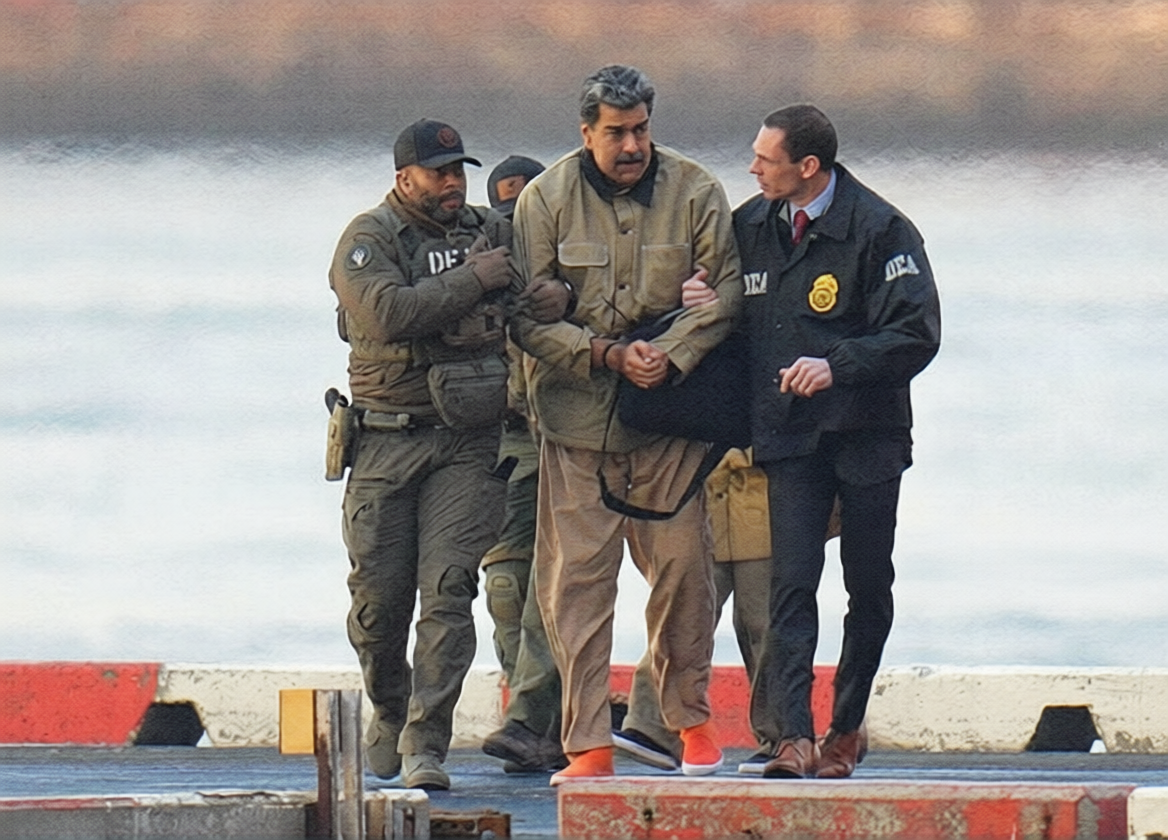
Nicolas Maduro, the former president of Venezuela, returned to a United States federal court this week. He argued that US authorities are actively blocking his access to legal defense funds. Maduro faces serious charges, including drug trafficking and narco-terrorism, that allegedly span more than 25 years. US special forces seized him and his wife Cilia Flores at their Caracas residence early in the morning, then flew them to New York to face federal charges in court.
Maduro’s legal team claims that restrictions on funding are preventing them from properly defending the case. His attorney, Barry Pollack, stated that he may be forced to withdraw if the US does not allow the Venezuelan government to pay legal fees. Initially, the Office of Foreign Assets Control (OFAC) issued a license permitting this payment. However, the license was revoked abruptly. Pollack described the revocation as a violation of Maduro’s constitutional right to legal representation. Flores de Maduro’s lawyer joined this motion. They requested the court either dismiss the case or hold a hearing to examine the government’s reasoning.
US prosecutors responded that the initial OFAC license had been an administrative error. They stated that the Maduros could still access their personal funds in Venezuela to cover legal expenses. However, prosecutors denied a request to use Venezuelan government-controlled funds. The Maduros and the Venezuelan government are both under US sanctions. Using a sanctioned entity’s money to pay attorneys’ fees for a sanctioned individual would violate US law.
Legal analysts suggest that Maduro faces significant challenges. Former prosecutor Duncan Levin noted that Maduro is no longer recognized as the legitimate head of Venezuela. The sanctions regime aims to cut him off from such resources. Levin said the court would likely deny Maduro access to government-controlled funds for legal fees.
Maduro retains full legal representation despite these restrictions. US law provides him with a court-appointed attorney, allowing him to exercise his right to a fair trial even amid sanctions and international disputes.
The Maduros have pleaded not guilty to conspiracy charges involving firearms and cocaine importation. Prosecutors allege that the criminal activity spans decades. Pollack has indicated that he will challenge the legality of Maduro’s arrest. He also plans to claim immunity for acts performed while Maduro was president.
Legal experts note that US courts have routinely moved forward with trials even when defendants entered the country under disputed conditions. International law scholar William Dodge argues that drug trafficking falls outside the scope of official acts, making it unlikely that Maduro will gain immunity based on his former role. Therefore, any argument claiming immunity is unlikely to succeed.
Maduro’s legal team also plans to challenge aspects of the case regarding access to evidence and timelines for legal motions. Judge Alvin Hellerstein initially set hearings to allow lawyers to review evidence and plan the schedule for motions. A trial date may be set following these reviews.
Maduro first assumed the presidency of Venezuela in 2013. Since the 2018 elections, the United States and several other nations have not recognized him as Venezuela’s legitimate leader. Earlier this year, the US recognized Delcy Rodríguez as the head of state. This recognition directly affects the sanctions regime. Legal experts argue that it also complicates Maduro’s attempts to use government-controlled funds for his defense.
Political analysts note that this trial represents a confluence of law and politics. It raises questions about the international community’s ability to prosecute former leaders while balancing diplomatic relations and sanctions enforcement. Experts emphasize that the case will likely set precedents in international law, especially concerning the prosecution of former state leaders and sanctioned entities.
Legal scholars have weighed in on the case, providing insight into potential outcomes. Professor Dodge emphasized that US courts rarely question the executive branch’s recognition of foreign leaders. A US court is unlikely to challenge the determination that Maduro is no longer the head of state.
However, he also noted that international law concerns arise from the method of Maduro’s capture. The United States carried out a direct military operation in Caracas without the Venezuelan government’s approval, triggering legal questions and global debate about the raid’s legitimacy. Nonetheless, he stressed that bringing Maduro into the US court system does not compromise jurisdiction.
Levin added that while Maduro’s legal challenges are notable, the sanctions framework makes accessing certain types of funding extremely difficult. Court-appointed counsel is available, but strategic challenges remain, particularly for funding an extensive legal defense in a complex criminal case.
The upcoming court hearings are crucial for determining whether funding restrictions violate Maduro’s rights. If the court rules in favor of the defense, the trial could be delayed or adjusted. Conversely, if the court rejects the arguments, proceedings will continue, potentially resulting in significant penalties for the Maduros.
Observers worldwide are monitoring the case closely. Beyond the courtroom, the trial has implications for international law, diplomatic relations, and sanctions enforcement. Experts believe the outcome may shape how courts handle future cases involving former political leaders. It may also shape policies regarding the intersection of criminal law, human rights, and international sanctions.
While legal frameworks and sanctions dominate the discussion, the human dimension cannot be ignored. The Maduros face years of allegations that could impact their freedom and legacy. Access to fair legal defense is central not only to the trial but also to broader perceptions of justice.
Critics and supporters alike emphasize the importance of procedural fairness. Even in politically charged cases, ensuring defendants can access proper counsel maintains credibility in the justice system.
The Maduro court case is one of the most politically and legally complex trials in recent history. Funding restrictions, sanctions, immunity claims, and questions of jurisdiction intertwine to create a high-stakes legal battle. As hearings continue, the world will watch how the US judicial system navigates the delicate balance of law, politics, and international relations.
The case underscores critical issues: the rights of defendants under US law, the enforcement of sanctions against former leaders, and the role of courts in politically sensitive international cases. For Maduro, every legal argument and funding decision could have long-lasting implications, not just for the trial, but for Venezuela’s political and diplomatic future.