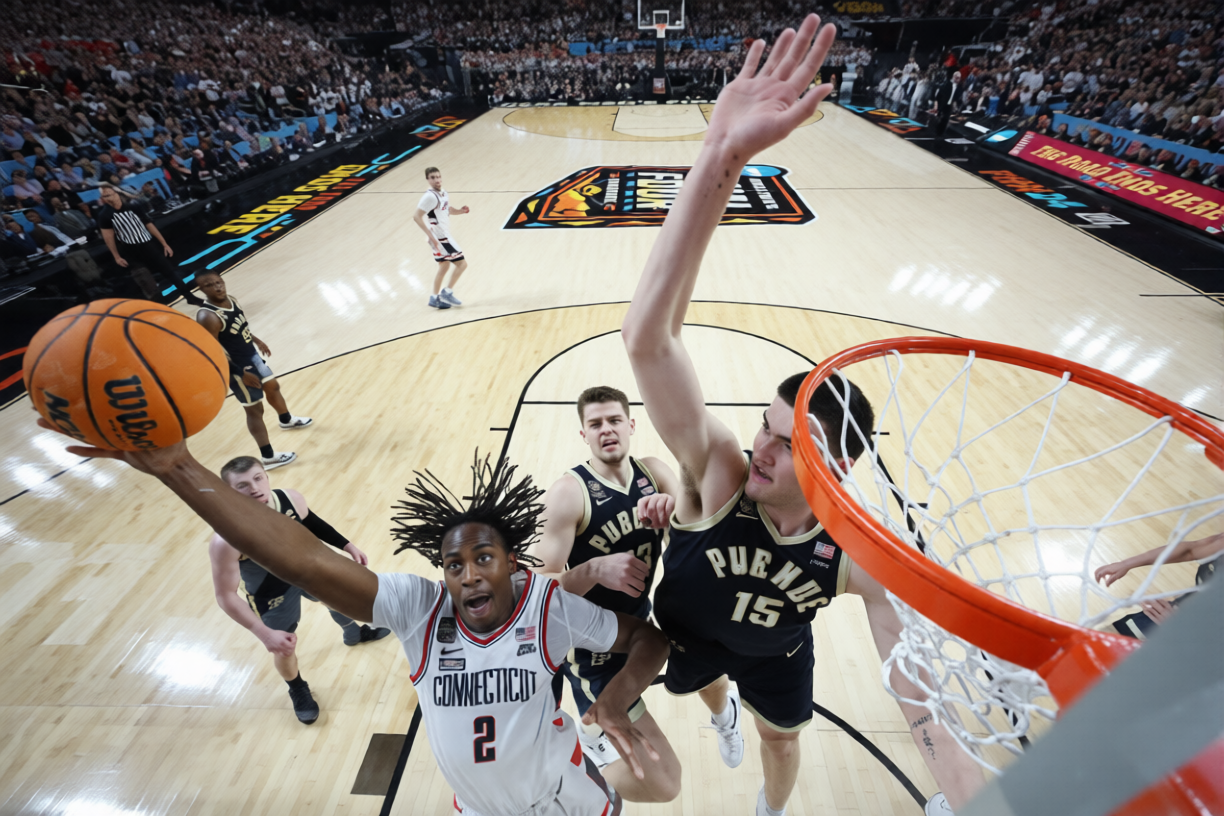
Every spring, the United States enters one of the most intense and unpredictable periods in sports. Known simply as March Madness, the annual college basketball championship organized by the National Collegiate Athletic Association transforms university teams into national sensations and turns ordinary games into dramatic sporting moments.
The March Madness NCAA Tournament is widely regarded as one of the most thrilling events in American sports. Over several weeks, 68 college basketball teams compete in a high-stakes single-elimination competition where a single defeat ends a team’s championship hopes.
The format produces a unique atmosphere rarely seen in other sports competitions. Top-ranked teams can fall to unknown underdogs, and last-second shots often determine whether a team advances or goes home. For fans, this unpredictability is precisely what makes March Madness so compelling.
Television networks broadcast the games nationwide, while millions of fans track every matchup, analyze statistics and fill out tournament brackets in hopes of predicting the eventual champion.
How the March Madness NCAA Tournament Works
At the heart of March Madness is a tournament structure designed to deliver nonstop drama.
The March Madness NCAA Tournament currently features 68 teams, all competing for the national championship. Teams qualify for the tournament in two ways.
First, every Division I college basketball conference hosts its own championship tournament. The winner automatically earns a place in the NCAA tournament. These teams are called automatic qualifiers.
Second, a selection committee evaluates the remaining teams based on season performance, strength of schedule, rankings and overall record. The committee then awards additional places known as at-large bids.
Once all 68 teams are chosen, they are placed into a bracket divided into four regional groups. Each region contains teams ranked from No. 1 to No. 16, with the highest-ranked teams receiving the top seeds.
Before the main tournament begins, eight teams compete in a preliminary round known as the First Four. The winners move into the main field of 64 teams.
From there, the competition unfolds through a series of rounds that have become famous in American sports culture:
- Round of 64
- Round of 32
- Sweet 16
- Elite Eight
- Final Four
- National Championship
Because the tournament is single elimination, every game is critical. A team must win six consecutive games to claim the national title.
Why March Madness Is Famous for Upsets
Perhaps the most defining feature of March Madness is its reputation for shocking results.
In many professional sports leagues, the strongest teams often dominate the competition. But the March Madness NCAA Tournament is different. Lower-seeded teams frequently defeat higher-ranked opponents, producing unexpected results that capture the attention of fans and media alike.
These surprise victories are commonly known as “Cinderella stories.” Smaller schools with limited resources sometimes defeat powerhouse programs from major universities, advancing deep into the tournament against all odds.
One reason for these surprises is the tournament’s single-game format. In professional playoff series, teams may have multiple games to prove their strength. In March Madness, however, one bad performance—or one extraordinary moment from an opponent—can instantly end a championship run.
Buzzer-beating shots, dramatic comebacks and emotional celebrations have become hallmarks of the tournament. These moments are replayed for years and often define the legacy of players and teams.
From Small Tournament to National Phenomenon
The NCAA men’s basketball tournament did not begin as the massive event it is today.
When the first tournament was held in 1939, only eight teams participated. At the time, the competition was relatively small and received limited national attention.
However, as college basketball grew in popularity, the tournament expanded. The field gradually increased to 16 teams, then 32 teams, and eventually reached 64 teams in 1985. Later adjustments introduced the First Four games, bringing the total to 68 teams, the format still used today.
Television played a major role in the tournament’s transformation. National broadcasts brought the excitement of college basketball to millions of homes, turning March Madness into a major media event.
Today, the tournament generates billions of dollars in broadcasting revenue and attracts massive audiences across television and digital platforms.
Beyond the financial impact, March Madness has also become a cultural tradition in the United States. Offices organize bracket competitions, sports analysts debate potential champions, and fans across the country follow the progress of their favorite teams.
The Bracket Challenge and Fan Obsession
One of the most popular traditions associated with March Madness is the tournament bracket challenge.
Before the first game begins, fans predict the outcome of every matchup in the tournament bracket. Participants try to guess which teams will advance through each round and eventually win the championship.
Millions of brackets are submitted each year through online platforms, office competitions and sports media contests.
However, predicting a perfect bracket is extremely difficult. Because of the tournament’s unpredictability and frequent upsets, correctly forecasting every game is considered nearly impossible.
Yet the challenge remains a central part of the March Madness experience, adding another layer of excitement to an already dramatic event.
A Tournament That Defines College Basketball
For college athletes, competing in the March Madness NCAA Tournament represents the pinnacle of their basketball careers.
Many players dream of performing on the national stage, where strong performances can capture the attention of professional scouts and basketball fans worldwide.
Universities also benefit from deep tournament runs. Successful teams receive increased national exposure, stronger recruiting opportunities and heightened school pride.
Even for fans who do not normally follow college basketball, March Madness provides weeks of high-intensity competition filled with unpredictable outcomes.
As each tournament unfolds, new stars emerge, underdog teams capture national attention and unforgettable sporting moments are created.
That combination of drama, unpredictability and emotional storytelling has ensured that March Madness remains one of the most beloved traditions in American sports.