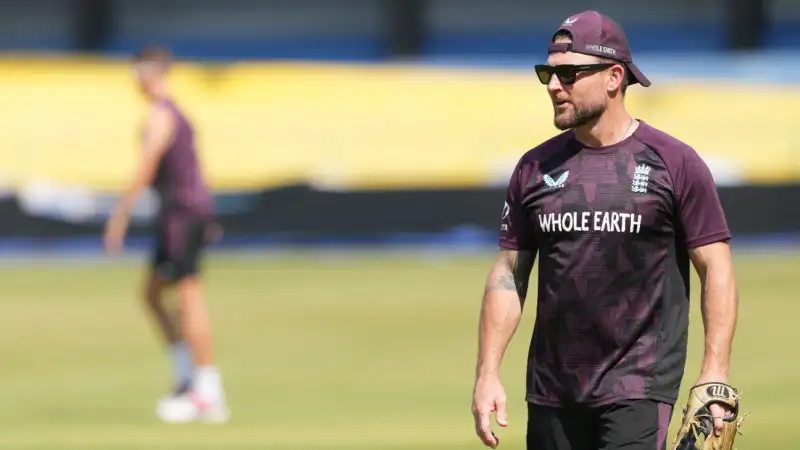
McCullum Backs Brook and Champions England’s Tactical Approach
England head coach Brendon McCullum has stood firmly behind white‑ball captain Harry Brook and defended his own leadership approach after a turbulent period for the national side. McCullum offered insight into the team’s strategy, his support for players and the challenges of leading a modern international cricket squad.
McCullum’s comments came as England prepared for the upcoming Men’s T20 World Cup, while also grappling with criticism following a disappointing Ashes tour loss in Australia and off‑field controversies involving senior players.
McCullum has been vocal in his support of Harry Brook, the 26‑year‑old who has faced intense scrutiny after a late‑night incident in New Zealand during England’s recent tour. Brook was fined £30,000 by the England and Wales Cricket Board (ECB) and given a warning for his conduct, which included a disagreement with a nightclub bouncer.
Despite this, Brook led England’s white‑ball side to success in Sri Lanka, finishing a 2‑1 ODI series win and a 3‑0 T20 clean sweep that boosted morale ahead of the global tournament. McCullum said Brook had shown tactical intelligence, resilience and leadership under pressure.
“I thought Brooky was sensational with his tactics throughout both series,” McCullum said after England’s victory in the final T20 match. “He’s had a hard time of late off the field, but he’s a tough lad to be able to put that aside and still lead these boys in the manner that he did.”
McCullum also rejected claims that Brook lacks cricketing brain, saying: “I do sometimes think that people think that Brooky’s not that clever. I couldn’t disagree with that more. He wears his intelligence lightly.”
The coach’s defence of Brook comes amid broader debate about his leadership and tactical approach, especially after England’s 4‑1 Ashes series defeat to Australia. Former players and pundits questioned whether McCullum’s methods have evolved or whether the team’s aggressive Bazball style needs adjustment.
McCullum responded to critics by stressing that he is not “rigid in beliefs” but remains committed to his philosophy if it gives the team the best chance of success. “I take offence to any suggestion I don’t want to evolve,” he told reporters. “I am not against evolution, I welcome it … but to throw everything out that has worked in pursuit of something unknown does not make sense.”
This defence of his methods suggests McCullum will not shy away from criticism, even if the results in key series have disappointed fans and former players alike.
McCullum acknowledged that England “got in our own way” during the Ashes, particularly during a stretch where results slipped and pressure mounted. Despite this, he believes there are valuable lessons to take from the experience.
He also stressed the importance of balance between aggression and tactical awareness, and accepted that some decisions could have been better timed. “With our talent and skill, and our ability, it’s only been the last two days we’ve actually competed,” he said, highlighting both progress and areas for improvement.
McCullum’s approach to squad management includes support for players beyond performance alone. He emphasised the need to protect players’ mental wellbeing, especially as they face year‑round schedules and intense expectations.
Beyond Brook, McCullum has repeatedly backed other senior players. For instance, he publicly supported batsman Zak Crawley after a run of low scores early in one series, expressing confidence in his abilities and potential to bounce back.
Meanwhile, former teammates like Joe Root have praised both Brook and McCullum. Root called Brook a “leader” who has learned from mistakes and described McCullum as a coach who has “improved my game tenfold”.
This backing from within the squad suggests that despite recent setbacks, the core group remains united behind McCullum’s vision and methods.
As England look ahead to the T20 World Cup, McCullum’s focus remains clear: develop a resilient, tactically astute squad that can compete across formats. He has signalled his belief that players can learn from past challenges but still excel on the global stage.
While critics will continue to debate his leadership style, McCullum’s consistent message is that cricket development goes beyond wins and losses. It involves tactical growth, mental strength and long‑term planning.