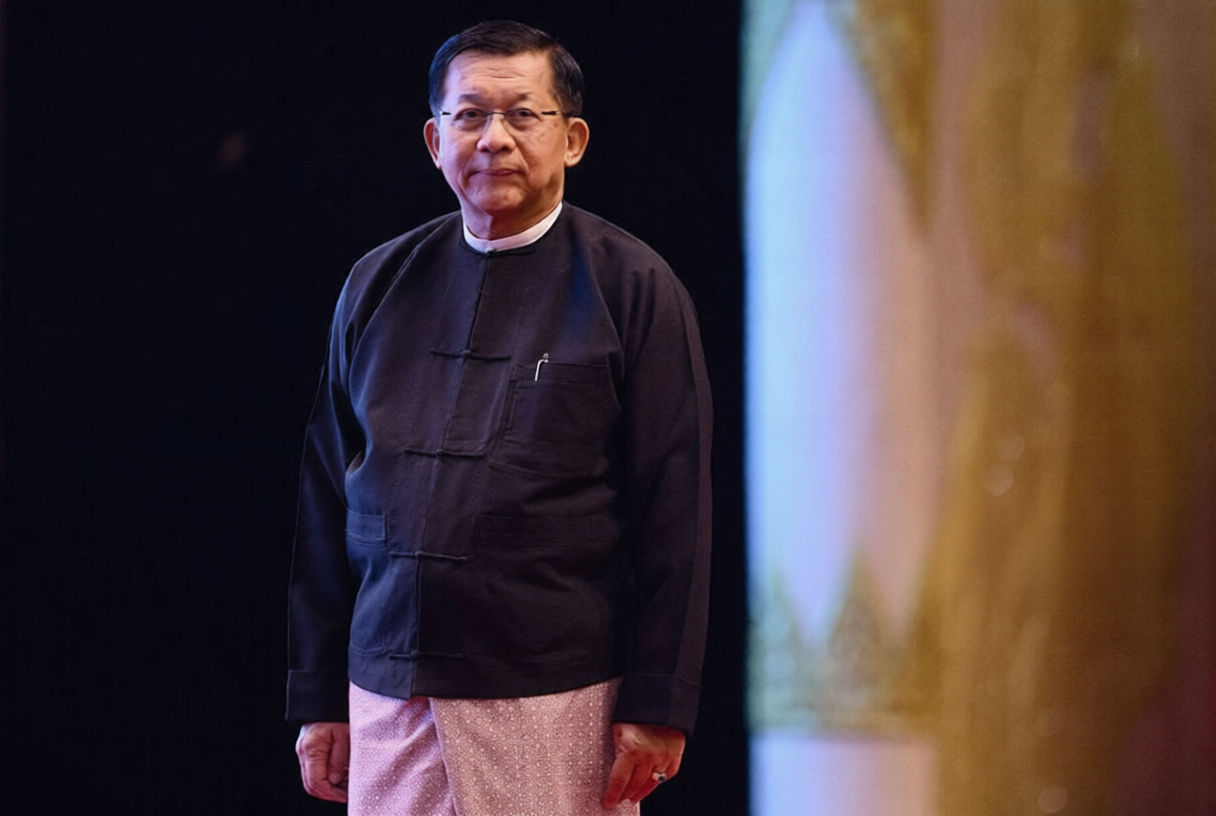
The Min Aung Hlaing president nomination has drawn widespread attention as Myanmar moves into a new and uncertain political phase. The military leader, who has ruled the country since the 2021 coup, is now stepping into a formal presidential process. As a result, many observers believe this move is designed to reshape the country’s political image while keeping military power intact.
According to reports from Reuters, Min Aung Hlaing has been nominated by lawmakers in Myanmar’s parliament, placing him among the top candidates for the presidency. This development comes at a time when the country is still facing internal conflict and international criticism.
The Min Aung Hlaing president nomination comes after elections that have been widely criticized by international communities. Many opposition parties were excluded, and voting took place only in selected regions under military control.
Consequently, global organizations, including the United Nations, have questioned the credibility of the electoral process. Reports from The Guardian suggest that the election may have been designed to legitimize military authority rather than reflect the will of the people.
Furthermore, several Western countries have expressed concern over the lack of transparency. They argue that such political developments could weaken democratic values not only in Myanmar but also across the region.
Even as Min Aung Hlaing moves toward the presidency, the military’s influence remains deeply rooted. In fact, he has already made key changes within the armed forces by transferring operational command to trusted allies.
This step ensures that the military structure stays loyal and stable. Therefore, analysts believe that the Min Aung Hlaing president nomination is part of a long-term plan to maintain centralized power under a different title.
Meanwhile, the situation on the ground remains critical. Since the 2021 coup, Myanmar has been facing ongoing conflict between military forces and resistance groups.
Thousands of people have reportedly lost their lives, while millions have been displaced. In addition, humanitarian conditions continue to worsen, with limited access to food, healthcare, and basic services in many areas.
As a result, many citizens remain skeptical about the political transition. They fear that leadership changes alone will not bring real peace or stability to the country.
Looking ahead, the presidential selection process will determine Myanmar’s next leader. Given the current political structure, Min Aung Hlaing is widely seen as the frontrunner.
However, the bigger question is whether this transition will lead to meaningful reform. On one hand, it could open the door to diplomatic engagement. On the other hand, it may reinforce military dominance under a civilian appearance.
Therefore, the outcome of the Min Aung Hlaing president nomination will play a crucial role in shaping Myanmar’s future.
The Min Aung Hlaing president nomination represents a critical moment in Myanmar’s history. While it suggests a move toward civilian governance, the underlying power structure tells a different story.
Ultimately, the world is watching closely. Whether this marks the beginning of democratic progress or simply a continuation of military control remains to be seen.