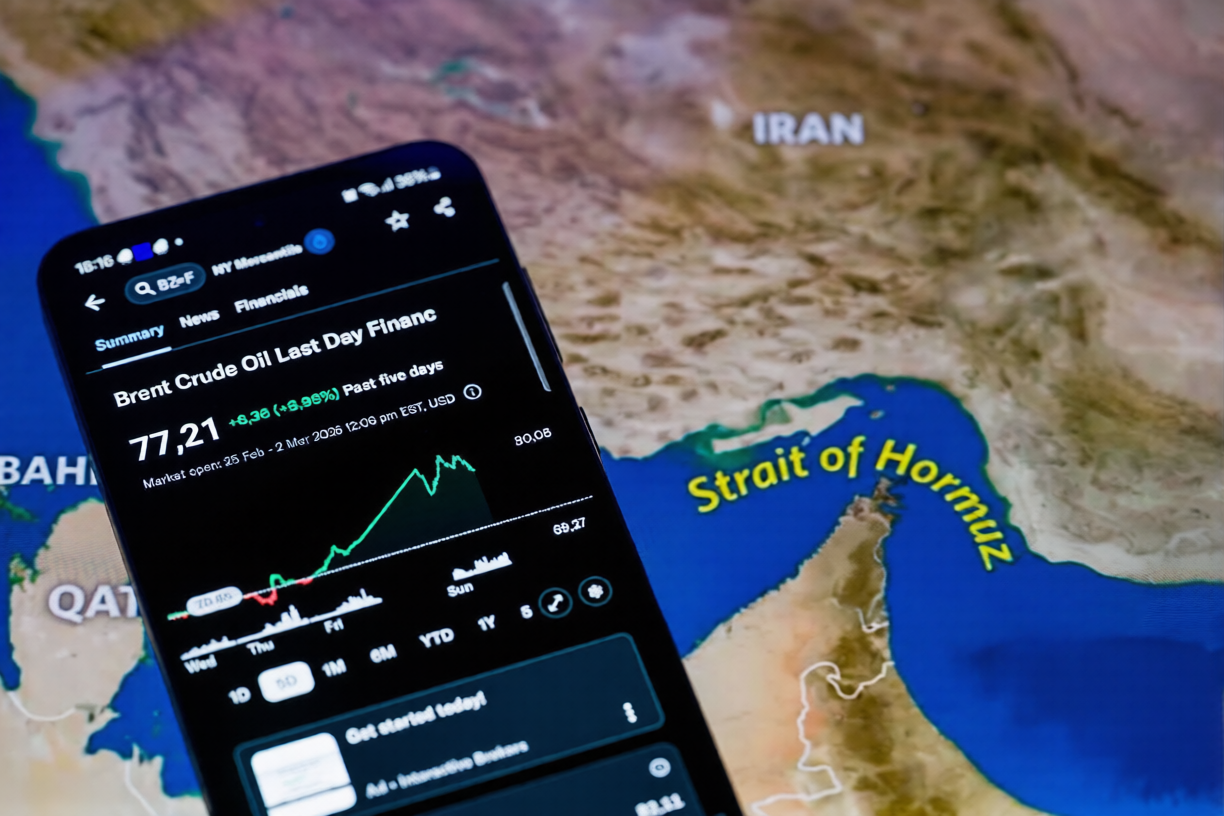
Global oil prices slid below $100 per barrel on April 1, 2026, after fresh geopolitical signals suggested that the prolonged Iran war — which has disrupted global energy markets for weeks — might be moving toward de‑escalation. The sudden drop in crude benchmarks sparked rallies in global financial markets, although analysts caution that volatility remains high due to ongoing supply risks and regional instability.
Asian and Western stock markets saw broad gains as investors reacted to increasing optimism that the conflict might be winding down. Major indices such as the S&P 500, Dow Jones Industrial Average, and Nasdaq enjoyed one of their strongest sessions in months. Asian bourses including South Korea’s Kospi and Japan’s Nikkei also posted significant advances.
Shares of Indian oil marketing companies saw notable gains, with firms like HPCL, BPCL, and IOC climbing up to around 4% as crude prices dipped. Lower oil costs can improve refining margins, boosting earnings sentiment among investors in the energy sector.
The immediate cause of the retreat in oil prices was renewed optimism that the U.S.–Iran conflict could be nearing its end. Statements from political leaders hinted at a potential drawdown in hostilities and even a possible end to U.S. attacks within weeks. This lowered the geopolitical risk premium that had been built into crude prices.
Before the dip, crude had surged sharply due to disruptions tied to the Middle East war, threatening supply routes through the strategic Strait of Hormuz, which normally handles around 20% of the global oil trade. Analysts noted that oil’s return below $100 reflects a complex tug‑of‑war between conflict fears and market hopes for resolution.
In addition to geopolitical optimism, speculative traders booked profits after significant runs in March, where Brent crude soared more than 60% month‑on‑month — its largest monthly gain in decades.
Despite current price declines, the underlying threat remains: the Strait of Hormuz — a chokepoint for global oil and LNG shipments — is still effectively closed or operating at minimal capacity due to regional tensions. Any real disruption could easily push prices sharply higher again.
Oil producers are cautious about adding new drilling or production capacity until prices stabilize, which means supply tightness could persist even if the conflict ends. Services firms in the energy sector are reportedly feeling the strain as drilling delays and cost pressures mount.
While crude prices fell, consumer fuel costs remain elevated in many regions. In the U.S., gasoline prices remain above $4 per gallon even as oil dips, a reflection of lagging downstream cost adjustments.
Persistently high energy costs, even at levels below March peaks, continue to exert inflationary pressure globally. Central banks may face renewed policy dilemmas if energy prices rise again, complicating inflation control and interest rate decisions.
Market commentators agree that oil prices are likely to remain volatile. A true de‑escalation of the Iran war could see sustained declines, but any renewed escalation or supply shock — such as attacks on energy infrastructure — could quickly send crude back above prior highs.