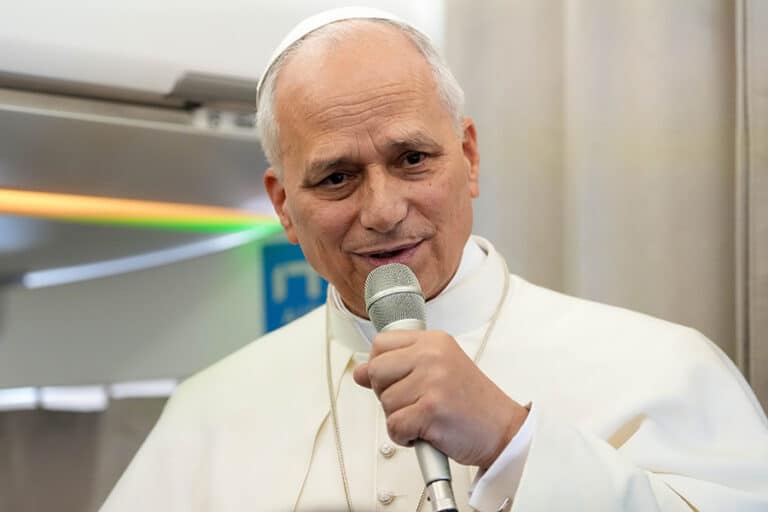
VATICAN CITY — Pope Leo has delivered a strong moral message to Christian political leaders involved in armed conflicts. He said those responsible for starting wars should examine their conscience and seek confession. The remark was made during a Vatican gathering focused on the spiritual practice of confession and reconciliation.
Speaking to priests and future confessors, the Pope raised an important question. He asked about the responsibility of Christian leaders involved in military conflicts. According to him, leaders who carry “grave responsibility in armed conflicts” should show humility. They should examine their actions and seek forgiveness through confession.
The statement has been widely interpreted as a broader call for moral accountability. It targets political figures who identify as Christians but support or initiate wars.
During his address, Pope Leo emphasized the deeper meaning of confession. He said confession is not only a religious ritual. It can also be a path toward peace and moral reflection.
According to the Pope, reconciliation with God and with others can help reduce violence. It can also prevent division within societies.
He also suggested that leaders who claim Christian faith must reflect deeply on their decisions. They should ask whether their actions follow the teachings of Jesus. The message of Jesus, he noted, is rooted in peace, compassion, and forgiveness.
The Pope did not mention any specific country, conflict, or political leader in his speech. However, his remarks came at a time when global tensions and military confrontations are rising in several regions.
The Pope’s comments come amid growing concern over international conflicts, including tensions related to the recent U.S.–Israeli military strikes on Iran that began in late February. These developments have sparked debate among religious leaders about the moral legitimacy of modern warfare.
Several Catholic figures have already questioned whether some of these military actions meet the traditional “just war” principles recognized within Catholic teaching. Those principles require strict moral conditions before war can be considered justified.
Pope Leo’s message is therefore seen as part of a broader effort by the Vatican to encourage dialogue, restraint, and spiritual accountability among world leaders.
The Pope also highlighted the spiritual meaning of confession within the Catholic faith. In the sacrament of confession, believers admit their sins to a priest and seek forgiveness from God.
According to the Pope, this practice can promote reconciliation not only within individuals but also within societies. He noted that a person who is reconciled with God and others is more capable of living peacefully and avoiding violence.
“Only a reconciled person is capable of living in an unarmed and disarming way,” the Pope explained, suggesting that inner moral reflection can influence political decisions and global peace efforts.
In recent weeks, Pope Leo has repeatedly called for peace and dialogue as conflicts escalate in different parts of the world. The Vatican has often warned that war brings humanitarian crises, displacement, and long-term instability.
The Pope’s latest remarks reinforce the Catholic Church’s long-standing emphasis on peace, reconciliation, and moral responsibility in political leadership.
While the message was directed broadly at Christian leaders, it also served as a reminder that religious belief carries ethical obligations — particularly when decisions involve war and human lives.