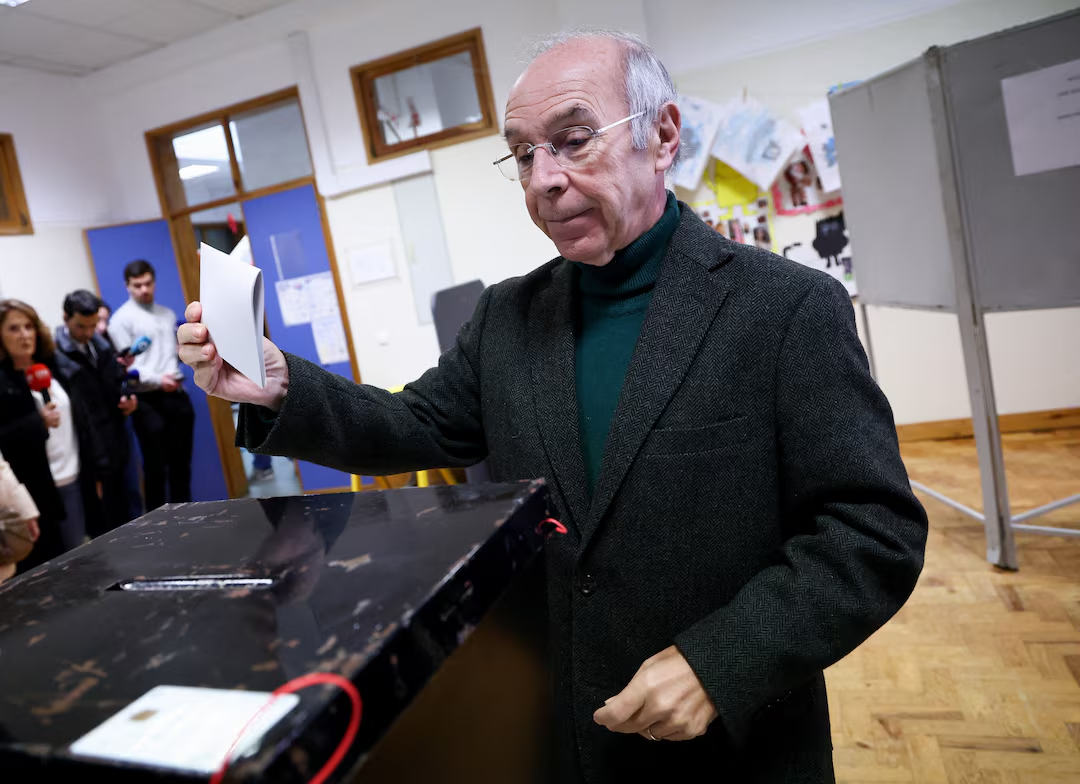
Tight contest reflects voter frustration and the growing influence of the far right
Portuguese voters went to the polls to choose their next president in what has become one of the most closely contested presidential elections since the country’s return to democracy. Pre-election surveys suggested a near three-way tie among the leading candidates, raising the strong possibility of a second-round runoff.
The tight race highlights a changing political landscape in Portugal, where voter dissatisfaction with traditional parties and the rise of newer political movements have reshaped electoral dynamics. Since the fall of the fascist dictatorship in 1974, only one presidential election — in 1986 — has required a runoff, making the current situation highly unusual.
Although the presidency in Portugal is largely ceremonial, the role carries significant constitutional powers. The president can dissolve parliament, call snap elections, and veto legislation, authority that becomes especially important during periods of political instability or weak governments.
Roughly 11 million voters were eligible to cast their ballots. Polling stations closed at 7:00 pm local time, with exit polls expected shortly afterward and official results anticipated later in the night.
According to the final pre-election survey conducted by polling firm Pitagórica, Socialist candidate António José Segundo held a narrow lead with 25.1 percent support. He was followed closely by André Ventura, leader of the far-right Chega party, with 23 percent, while João Cotrim de Figueiredo of the pro-business Liberal Initiative stood at 22.3 percent. The margins were slim enough to suggest that no candidate was likely to secure an outright majority in the first round.
The growing presence of the Chega party has become one of the defining features of this election. Founded just seven years ago, Chega has capitalised on public frustration over immigration, corruption, and the cost of living. In parliamentary elections held last May, the party emerged as the main opposition force after winning 22.8 percent of the vote, marking a major shift in Portuguese politics.
Political analysts say the rise of Chega reflects broader trends seen across Europe, where far-right parties have gained ground by positioning themselves as alternatives to established political elites. At the same time, Portugal’s traditionally moderate political culture has made the prospect of a far-right breakthrough particularly significant.
Beyond party politics, the election is also seen as a test of public confidence in democratic institutions. While turnout figures were still being compiled, officials expressed hope that strong participation would reinforce the legitimacy of the result, regardless of whether a runoff becomes necessary.
If no candidate secures more than 50 percent of the vote, the top two contenders will face each other in a second round later this month. Such an outcome would extend political uncertainty and keep Portugal’s future leadership firmly in the spotlight, both at home and across Europe.