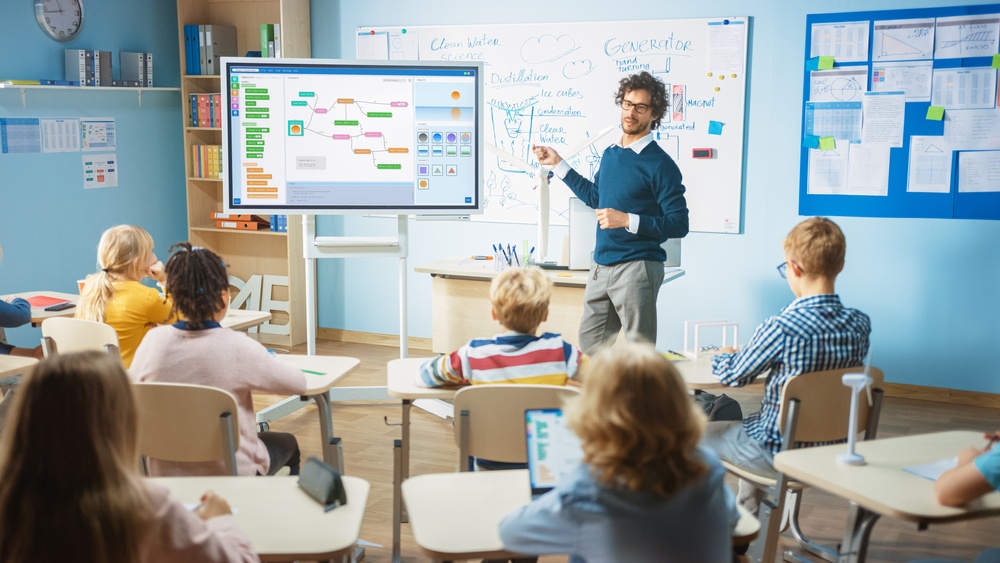
Global Education Systems Under Growing Pressure.
The future of global education stands at a crossroads. Rapid technological advancements, social inequality and changing labor markets have forced educators, policymakers and nations to rethink how education works, who it serves and what learning should look like in the 21st century. In particular, developing countries face a dual challenge: catching up with innovation while tackling persistent quality and access issues that have long hindered progress.
UNESCO’s Futures of Education initiative emphasizes a shift away from the traditional, one-size-fits-all model towards diverse, learner-centered approaches. The initiative argues that education must adapt to global changes like climate risk, digital transformation and widening inequality. It calls for a new “social contract” focused on human rights, dignity and equitable opportunity across all societies.
This vision recognizes that the world’s economic and ecological landscape is shifting faster than curricula, teacher training and institutional structures can keep up. Education should not only impart skills but also nurture creativity, critical thinking, empathy and resilience — capacities that matter in an unpredictable future.
While high-income countries explore digital classrooms and personalized AI-driven instruction, many developing nations struggle with basic learning outcomes. The global “learning crisis” — where millions of children attend school but fail to acquire foundational skills like literacy and numeracy — continues to depress human potential. A World Bank report found that more than half of children in low- and middle-income countries cannot read and understand a simple story by the end of primary school.
This stark reality shows that access alone is not enough; access must lead to real learning. Inequities in family income, school resources, teacher quality and educational infrastructure all contribute to uneven outcomes. In some regions, geopolitical instability, poverty and social barriers further widen the divide.
Digital technology offers enormous potential to transform how students learn. Artificial intelligence, virtual reality and adaptive platforms can make learning more engaging, personalized and accessible — even across geographic and resource gaps.
However, this transformation comes with risks. Unless guided by careful policy and ethics, technology may deepen existing inequalities. Not all students have equal access to devices, internet or trained instructors. The digital divide can leave the most vulnerable further behind — especially in low-income settings where infrastructure remains weak.
In many developing nations, complex structural challenges persist:
- Teacher shortages and quality gaps — Many schools lack trained teachers or resources to offer effective instruction.
- Socio-economic barriers — Poverty, conflict and cultural norms continue to prevent many children from completing schooling.
- Resource imbalances — Urban schools often have better facilities than rural counterparts, leading to unequal learning environments.
For example, countries like South Sudan face crippling obstacles — including limited funding, ongoing violence and severe shortages of qualified teachers — leaving education systems unable to meet basic learning needs.
Yet progress is possible. Nations that invest in targeted reforms, community engagement and teacher empowerment see improvements. In China, efforts to narrow gaps between urban and rural schools have gradually reduced disparities in foundational education over time.
What the Future Could Look Like
For the future of global education to be equitable and meaningful, several transformative approaches must take root:
1. Curriculum Redesign
Learning should reflect real-world needs, incorporating critical thinking, problem-solving, digital literacy and creativity. This requires moving beyond rote memorization toward competency-based assessment.
2. Digital Inclusion
Technology must not be a luxury but a tool accessible to all. Investments in infrastructure, teacher training and affordable connectivity are essential.
3. Teacher Support and Training
Teachers remain the backbone of education. Supporting them with ongoing professional development, fair compensation and modern pedagogical tools is critical for long-term system success.
4. Inclusive Policy and Funding
Education budgets should focus not only on access but also on quality, equity and learning outcomes. Policies should prioritize marginalized communities, gender equity and lifelong learning opportunities.
Why Education Matters for Society
Education empowers individuals, promotes social mobility and drives economic growth. It plays a central role in reducing inequality, fostering civic engagement and preparing future generations for complex challenges. Ineffective education systems trap societies in cycles of poverty and limited opportunity.
The future of global education must therefore be a shared priority — rooted in equity, innovation and commitment to human dignity. Only through inclusive investment, forward-looking policy and community engagement can nations build education systems that prepare learners not just for jobs of today, but for the unpredictable world of tomorrow.