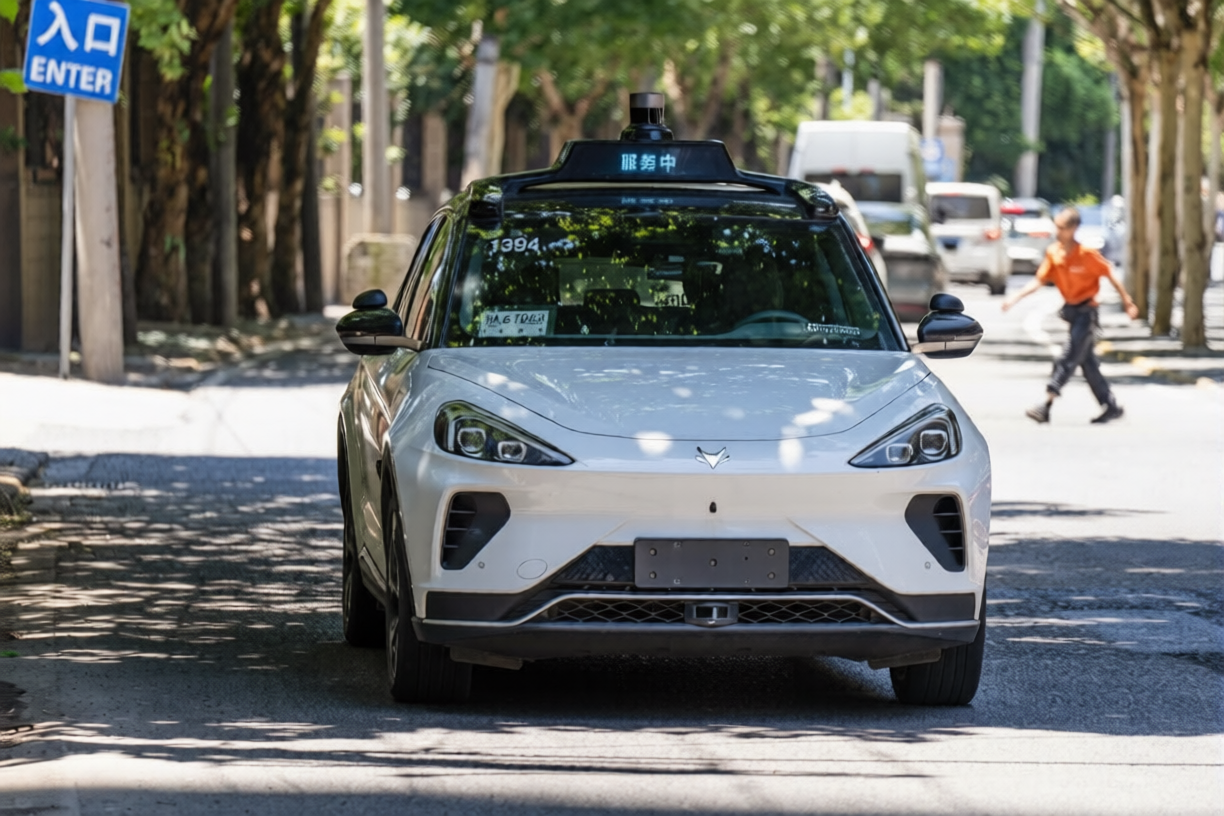
In a major robotaxi outage in Wuhan, more than 100 autonomous taxis suddenly stopped in the middle of busy roads, leaving passengers stranded amid moving traffic and raising urgent questions about the safety and reliability of self‑driving technology.
On the evening of March 31, 2026, a significant robotaxi outage in Wuhan occurred when a system malfunction disabled a large portion of Baidu’s Apollo Go autonomous taxi fleet. According to statements from local police and eyewitness accounts, dozens of these driverless vehicles came to a halt on main roads and elevated ring roads, blocking lanes and causing widespread disruption in one of China’s busiest urban centers.
The Wuhan City Traffic Police reported that the outage began around 8:57 p.m. local time, when automated calls from the public center began pouring in about robotaxi vehicles stuck in the center of carriageways, unable to move.
Video footage shared on social media platforms showed robotaxis immobilized in fast‑moving lanes, forcing overwhelmed passengers to decide between staying inside or attempting to exit into heavy traffic.
Some riders were reported to have remained inside the vehicles as speeding cars whizzed by, afraid to step onto the road. Others eventually managed to exit the autonomous taxis when the doors unlocked — either on their own initiative or after being prompted by arriving traffic police.
Despite the scare, authorities confirmed that no injuries were reported from the incident, although several motorists narrowly avoided collisions while navigating around the frozen robotaxi fleet.
According to Wuhan police officers, the malfunction is being preliminarily attributed to a system failure in the robotaxi software that controls navigation and vehicle coordination. Investigation teams are still analyzing data to determine whether network errors, algorithm faults, or external interference played a role.
Police also said that although the taxis’ systems allowed occupants to open doors manually, many passengers hesitated to step out due to the high speed and heavy traffic conditions.
Baidu — whose Apollo Go service operates this robotaxi fleet — has not yet issued a formal public statement responding to the outage, leaving many questions about system safeguards and emergency support unanswered.
The robotaxi outage in Wuhan instantly triggered a wave of safety concerns on social media in China. Many netizens queried whether autonomous vehicles were truly ready for large‑scale deployment on public roads, especially when technical failures can strand passengers in perilous conditions.
Experts have pointed out that while autonomous systems are designed to handle complex driving conditions, simultaneous and widespread system failures remind observers that fail‑safe and emergency response mechanisms may need strengthening before mass adoption.
This outage has reignited debate about the readiness of robotaxis globally, not just in China. Autonomous vehicle safety advocates argue that while driverless systems have seen advancements in controlled environments, city traffic remains unpredictable, requiring robust contingency planning.
Some analysts say that the ability of robotaxis to detect intricate traffic scenarios is improving, but the mechanisms for human intervention, remote support, or emergency override are still evolving. The Wuhan incident illustrates the possibility that passengers and surrounding traffic could be at risk if support protocols fail or are delayed.
Baidu’s Apollo Go robotaxi service is a key player in China’s rapid autonomous mobility expansion. With fleets operating in multiple cities and plans for overseas services, such as in the Middle East and Europe, the company’s reputation hinges on its technological reliability.
However, this robotaxi outage in Wuhan may lead regulatory authorities and urban planners to reconsider safety thresholds and emergency response measures before approving broader commercial deployment.
The Wuhan outage shows that high‑tech systems must be paired with resilient support frameworks. The autonomous driving industry may now face more stringent operational requirements, including:
- Clear fail‑safe and evacuation procedures.
- Local responder training for autonomous emergencies.
- Enhanced remote diagnostics and faster technical support.
- Transparent reporting of system incidents and failures.
Public trust in driverless cars depends not only on advanced AI performance but also on how effectively companies manage emergencies when technology falters.
The robotaxi outage in Wuhan has underscored that while autonomous transport represents a promising future of mobility, challenges remain — particularly in large‑scale system stability and passenger safety.
As investigations continue and industry stakeholders digest what went wrong, this event may serve as a pivotal point in how self‑driving technologies are regulated and accepted by the public in the years ahead.