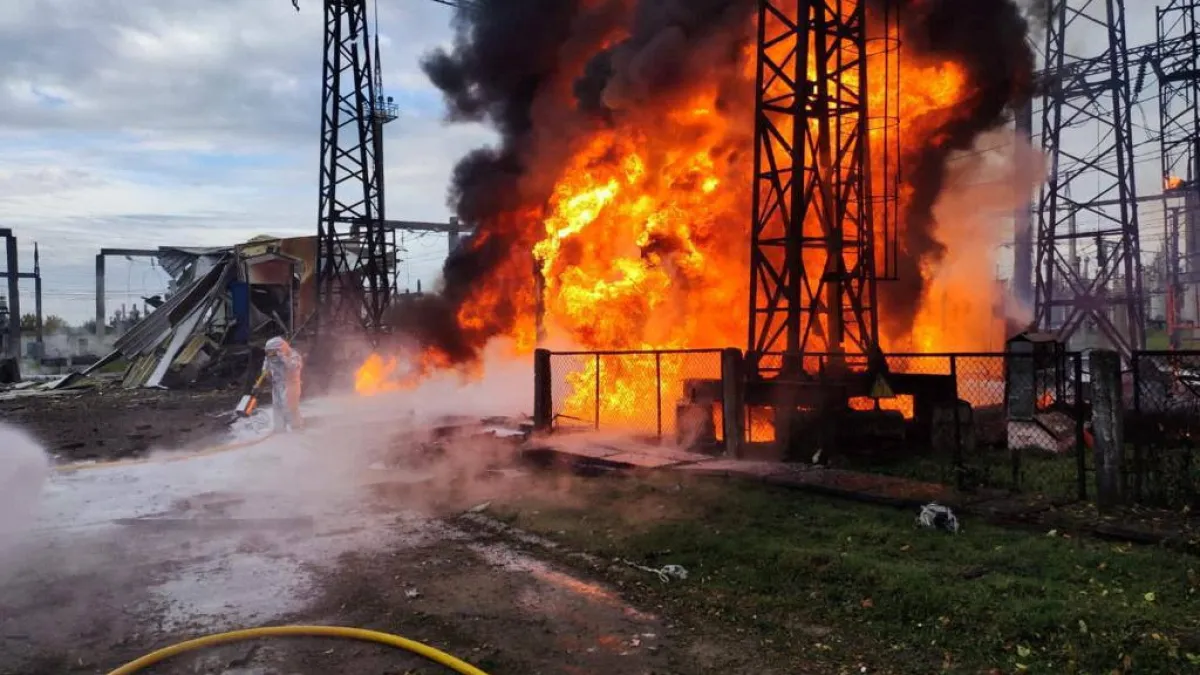
UK warns Moscow’s strikes on power facilities threaten civilians and global energy stability
Russian attacks on Ukraine energy infrastructure have drawn sharp condemnation from the United Kingdom, with Prime Minister Keir Starmer describing the latest strikes as “particularly depraved” amid worsening conditions for civilians across the country. The remarks came after renewed Russian missile and drone attacks targeted power stations, substations, and transmission lines, leaving large areas without electricity, heating, and water during extreme weather conditions.
Speaking to reporters, Starmer said Russian attacks on Ukraine energy systems deliberately aim to inflict suffering on ordinary people rather than achieve legitimate military objectives. He stressed that energy facilities serve hospitals, schools, and homes, making them critical to civilian survival. According to the UK leader, the continued targeting of such infrastructure represents a clear violation of international humanitarian norms.
Russian attacks on Ukraine energy deepen civilian hardship
Russian attacks on Ukraine energy facilities have intensified in recent months, Ukrainian officials say, as Moscow attempts to weaken the country’s resilience ahead of winter. Missile and drone strikes have repeatedly damaged thermal power plants, hydroelectric stations, and electricity grids, forcing emergency blackouts in several regions.
Ukrainian authorities report that millions of households now face unstable power supplies. In some cities, residents receive electricity for only a few hours a day. Heating shortages also threaten vulnerable groups, including elderly people and children. Hospitals rely increasingly on backup generators, raising concerns about patient safety during prolonged outages.
Starmer said these Russian attacks on Ukraine energy systems appear designed to erode public morale. “This is not warfare in any traditional sense,” he said. “It is a calculated strategy to punish civilians and push them into darkness and cold.”
UK pledges continued support to Ukraine
The UK prime minister reaffirmed Britain’s commitment to supporting Ukraine both militarily and economically. He said the UK would continue supplying air defense systems to help protect energy infrastructure from further Russian attacks on Ukraine energy targets. British officials also confirmed additional funding to support emergency repairs and energy resilience projects.
Since the start of the war, the UK has played a leading role in backing Ukraine through military aid, sanctions against Russia, and diplomatic pressure. Starmer emphasized that Britain would not waver in its support, adding that allies must remain united to counter Moscow’s tactics.
UK officials believe strengthening Ukraine’s air defenses remains one of the most effective ways to reduce the impact of Russian attacks on Ukraine energy infrastructure. Recent deliveries include advanced radar systems and missile interceptors designed to counter drones and cruise missiles.
International reaction grows stronger
Russian attacks on Ukraine energy sites have also drawn criticism from European Union leaders and international organizations. Several EU officials warned that the strikes could trigger wider humanitarian consequences, including refugee flows and economic disruption across the region.
Human rights groups argue that attacks on civilian infrastructure violate international law when they cause disproportionate harm to non-combatants. Energy systems, they say, underpin access to healthcare, clean water, and food storage. Disrupting these services places entire populations at risk.
The United Nations has repeatedly called for restraint, urging Russia to halt attacks on civilian infrastructure. Despite these appeals, Russian attacks on Ukraine energy assets have continued, raising questions about Moscow’s long-term strategy.
Kremlin defends military strategy
Russian officials deny deliberately targeting civilians, claiming that energy facilities support Ukraine’s military operations. Moscow argues that disabling power supplies weakens Ukraine’s ability to manufacture weapons and move troops.
However, independent analysts dispute this justification. Energy experts note that many of the struck facilities primarily serve residential areas rather than military bases. They say the pattern of Russian attacks on Ukraine energy infrastructure suggests a broader campaign aimed at undermining civilian life.
Military analysts also warn that such tactics may backfire. Instead of breaking Ukrainian resistance, the attacks appear to strengthen public resolve and international support for Kyiv.
Economic and global implications
Beyond Ukraine’s borders, Russian attacks on Ukraine energy systems carry wider economic risks. Energy disruptions affect industrial output, agriculture, and trade, adding strain to global markets already dealing with inflation and supply chain challenges.
Ukraine remains a key exporter of agricultural products. Power shortages can disrupt grain storage and transport, increasing the risk of food insecurity in parts of Africa and the Middle East. Western officials warn that continued Russian attacks on Ukraine energy infrastructure could indirectly impact global food prices.
Starmer highlighted these concerns, saying the conflict no longer affects only Ukraine. “When energy systems collapse, the consequences ripple far beyond national borders,” he said.
Ukraine vows to rebuild and resist
Despite the damage, Ukrainian leaders insist the country will continue repairing its energy network. Engineers work around the clock to restore electricity, often under the threat of renewed attacks. Mobile power units and temporary grids now play a crucial role in keeping essential services running.
President Volodymyr Zelensky has repeatedly accused Russia of waging “energy terror.” He says Russian attacks on Ukraine energy infrastructure will not force Ukraine to surrender. Instead, he argues, they expose Moscow’s disregard for civilian life.
Ukraine also continues to seek additional international assistance, particularly advanced air defense systems. Officials believe stronger protection could significantly reduce the effectiveness of future strikes.
A test of international resolve
For the UK and its allies, Russian attacks on Ukraine energy systems represent a test of international resolve. Starmer warned that failing to respond firmly could embolden similar tactics elsewhere. He called on democratic nations to maintain pressure on Russia through sanctions, diplomacy, and sustained support for Ukraine.
As winter approaches, the humanitarian stakes continue to rise. With temperatures dropping and infrastructure under strain, millions of Ukrainians face uncertain months ahead. Starmer said the world must not look away.
“The deliberate targeting of energy infrastructure crosses a moral line,” he said. “The international community must stand together and ensure accountability.”