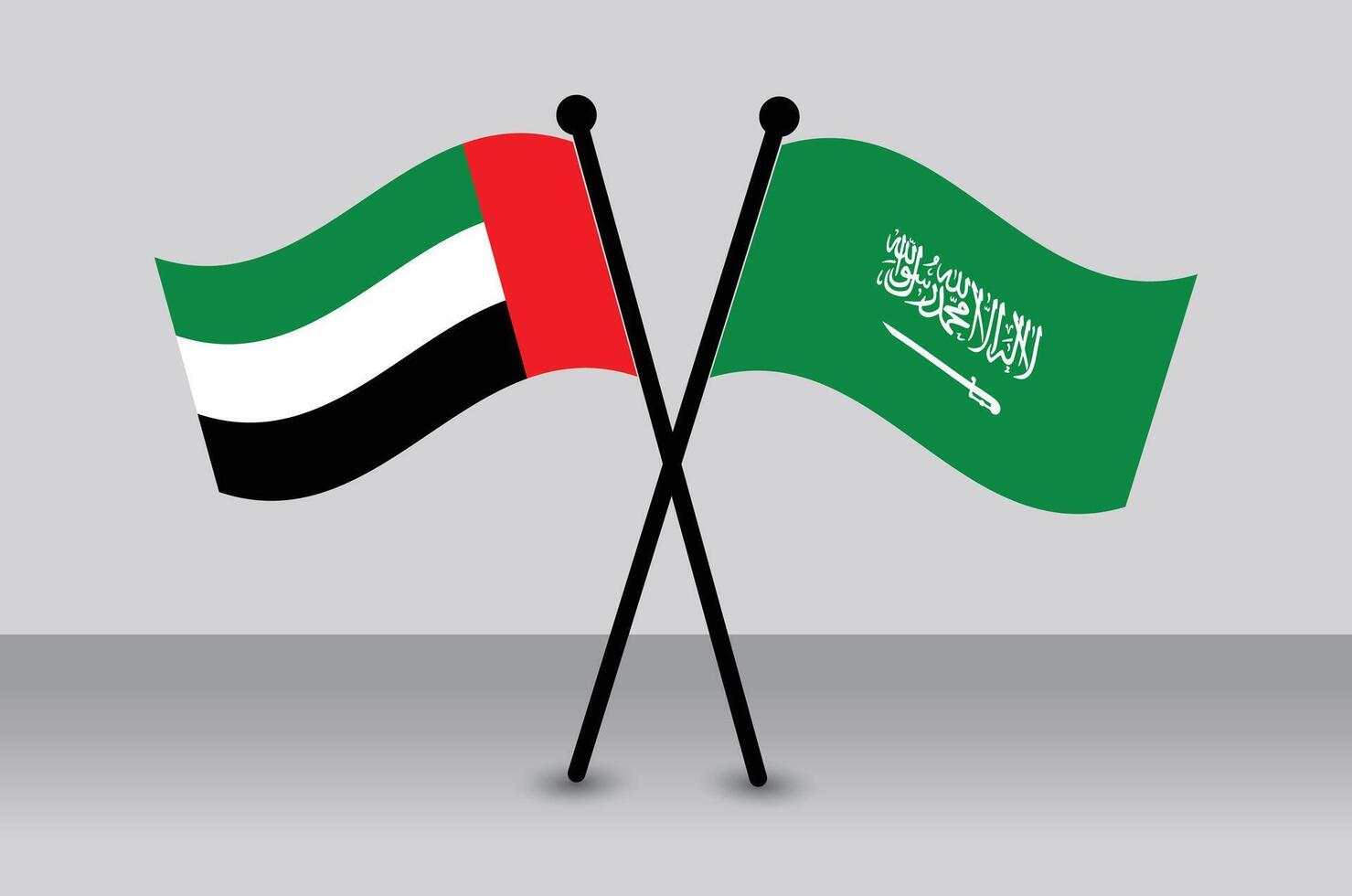
Relations between Saudi Arabia and the United Arab Emirates (UAE) — long seen as pillars of Gulf cooperation — have deteriorated sharply after a Saudi media campaign targeting the UAE, raising fears of a new crisis in the region’s most important economic and political bloc.
A series of fiery accusations circulated on Saudi-run television and social media outlets this week, accusing the UAE of “investing in chaos” and supporting separatist movements from Libya to Yemen and the Horn of Africa. Saudi broadcasters particularly singled out Emirati-backed actions in Yemen, where UAE-aligned forces had previously pursued their own objectives independent of Riyadh’s military strategy.
The tone and scale of these attacks are unusual for Gulf monarchies, where disagreements have traditionally been managed quietly. Gulf security analysts say this marks one of the most visible public rifts between the two partners in years.
The underlying conflict stems from recent events in Yemen, where Saudi air strikes quelled an offensive by UAE-backed separatists in the southern provinces. Saudi media accused the UAE of supporting secessionist groups and even running “secret prisons” — allegations that Abu Dhabi denies, saying facilities shown were military installations.
This sharp rhetoric revived comparisons to the 2017 Gulf crisis, when Saudi Arabia and the UAE led a blockade against Qatar over political differences, although analysts caution that the current feud differs in nature and context.
Commentators suggest the disagreement reflects a deeper strategic divergence: Riyadh seeks to maintain traditional state authority and a united front in Yemen, while Abu Dhabi has pursued more flexible influence through local partners and shifting alliances across North Africa and the Red Sea region.
So far, the UAE government has largely refrained from escalating the dispute in public, with Emirati political scientists noting their country is “not in the habit of provoking our big brother.” Emirati commentators emphasize that Abu Dhabi’s support for local actors in conflict zones reflects its own security and economic interests, not a desire for confrontation with Riyadh.
Despite the sharp language from Saudi outlets, analysts say a complete diplomatic rupture remains unlikely. Both nations have deeply intertwined economies and long-standing political cooperation through frameworks like the Gulf Cooperation Council (GCC) and the Saudi-Emirati Coordination Council established in 2016.
The feud has complicated diplomatic manoeuvres across the broader Middle East and Africa. Recently, the UAE’s president met Indian Prime Minister Narendra Modi to deepen defensive cooperation, while Riyadh has pursued closer ties with Pakistan and regional partners to counter what it views as Abu Dhabi’s expanding footprint.
In Sudan and Somaliland, divergent backing for different factions has further exposed the strategic competition between Riyadh and Abu Dhabi. Some countries, like Somalia, have even suspended agreements with the UAE amid growing friction.
Financial markets have shown sensitivity to the tensions, with investor concern rising over the implications for regional security, though oil markets have remained relatively stable so far. Experts warn that prolonged political rivalry among Gulf powers could undermine confidence in the Gulf’s political unity and its ability to manage broader Middle East crises.
Security analysts argue that the public nature of recent accusations suggests both sides are seeking leverage ahead of broader discussions over influence in strategic theatres like Yemen, Sudan, and the Red Sea region. While the feud has intensified rhetoric, Riyadh and Abu Dhabi remain cautious about full-blown diplomatic escalation, recognizing the economic and political costs of a fracture within the Gulf alliance.
Overall, the Saudi Arabia UAE tensions story illustrates how intra-Gulf rivalries — once handled behind closed doors — are spilling into the open, with potential consequences not just for bilateral ties but for regional stability and economic cooperation across the Middle East.