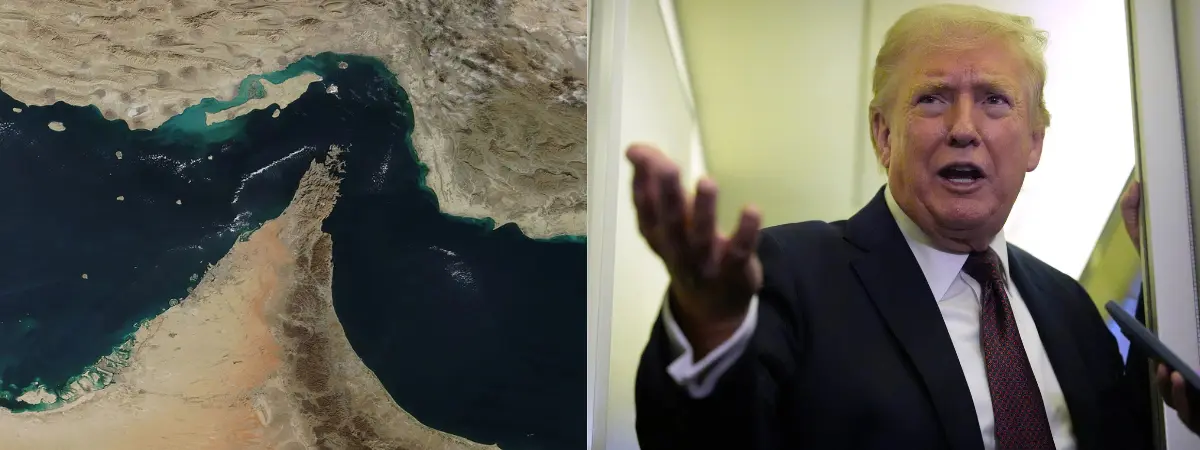
Trump Iran ultimatum over Hormuz Strait raises fears of energy crisis and wider Middle East war.
The Trump Iran ultimatum has intensified global concerns after the U.S. president issued a strict 48-hour warning to reopen the Strait of Hormuz. The move has been seen as a major escalation in the ongoing Middle East conflict, where energy security, military action, and geopolitical stability are now deeply intertwined.
U.S. President Donald Trump has issued a dramatic warning to Iran, stating that if the Strait of Hormuz is not fully reopened within 48 hours, American forces will target and destroy Iran’s power infrastructure. The threat specifically includes major power plants, signaling a shift toward attacking critical civilian-linked energy systems.
This ultimatum has come at a time when tensions are already at a breaking point. Reports indicate that Trump made the announcement through official channels, emphasizing that the action would begin “with the biggest power plants first.”
The Strait of Hormuz is one of the most strategically important waterways in the world. Nearly 20% of global oil and gas supply passes through this narrow corridor, making it vital for international trade and energy markets. The current tension has been building for weeks, especially after Trump’s earlier call to deploy warships in the Strait of Hormuz, which highlighted growing security concerns in the region.
However, the strait has been effectively restricted by Iran amid the ongoing war, leading to severe disruptions in global oil shipments. As a result, energy prices have surged, creating economic pressure worldwide.
The ultimatum did not emerge in isolation. It has been part of a broader and rapidly escalating conflict involving the United States, Iran, and Israel.
- Iranian missile strikes have hit Israeli cities, injuring dozens.
- U.S. and Israeli forces have carried out airstrikes on Iranian targets.
- Military bases, including U.S.-linked facilities, have also been targeted.
This ongoing war, which began in late February 2026, has already resulted in thousands of casualties and widespread destruction across the region.
Iran has strongly reacted to the Trump Iran ultimatum, warning that any attack on its infrastructure will trigger retaliation. Officials have stated that U.S. and allied energy facilities in the region could become targets.
The Iranian government has also demonstrated its military capabilities by launching missiles and drones across multiple fronts, signaling that the conflict could expand further if tensions are not de-escalated.
The crisis is already affecting global markets.
- Oil prices have surged beyond $100 per barrel.
- Shipping routes have been disrupted.
- International trade uncertainty has increased.
Experts warn that prolonged disruption in the Strait of Hormuz could lead to a global economic slowdown, especially for countries heavily dependent on Middle Eastern energy supplies.
One of the most controversial aspects of Trump’s warning is the threat to strike power plants. Analysts argue that targeting energy infrastructure could severely impact civilians and escalate humanitarian risks.
Such actions may also set a dangerous precedent in modern warfare, where civilian-linked infrastructure becomes a primary target.
Global leaders and organizations have expressed concern over the rapidly worsening situation.
- NATO allies have shown hesitation in fully supporting U.S. actions.
- Several countries have called for diplomatic solutions.
- Maritime security efforts are being discussed to ensure safe passage in the Strait.
Despite these efforts, no clear resolution has emerged, and the situation remains highly volatile.