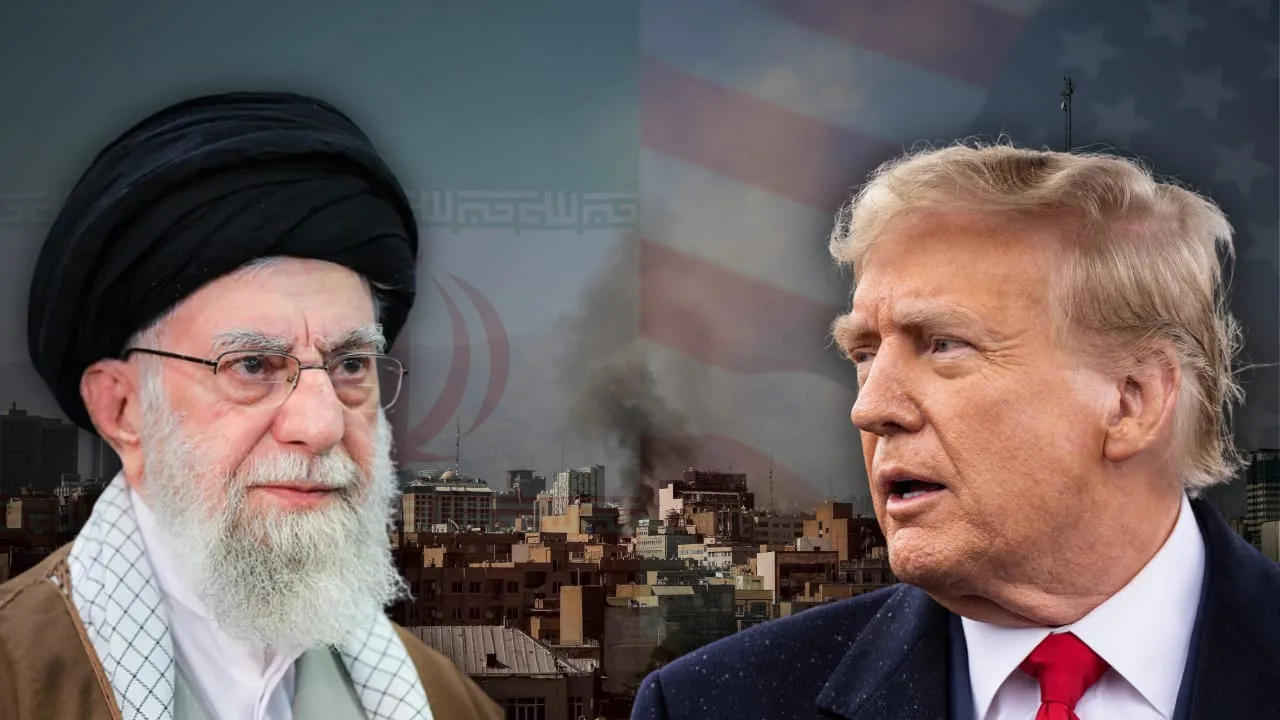
Donald Trump has declared that the United States will not reach any agreement with Iran unless Tehran agrees to “unconditional surrender.”
The statement came as tensions in the Middle East intensified following ongoing military operations involving the United States and its allies. Trump delivered the message through a social media post, making clear that Washington will not consider negotiations unless Iran completely capitulates.
The remark signals a dramatic escalation in rhetoric and reflects the administration’s hard-line approach toward Tehran.
Trump wrote that “there will be no deal with Iran except unconditional surrender.”
He added that after such a surrender and the selection of what he described as “acceptable leadership,” the United States and its allies would help rebuild Iran’s economy and restore stability in the country.
The US president also claimed that Iran could have a stronger future under new leadership and suggested that international partners would support reconstruction efforts once the conflict ends.
His comments came during the seventh day of escalating hostilities between the United States, Israel and Iranian forces. Military operations have targeted Iranian missile capabilities and other strategic infrastructure.
Trump framed the situation as an opportunity for major political change in Iran.
The Trump Iran unconditional surrender demand appeared as fighting spread across several parts of the Middle East.
According to international reports, Israeli and US forces have launched strikes on Iranian military sites, while Iran has responded with missile and drone attacks targeting regional bases and allied countries.
The expanding confrontation has affected several nations in the Gulf region. Missile interceptions and air-defense alerts have been reported in countries hosting American forces.
The conflict has already caused significant casualties and infrastructure damage across multiple locations.
Analysts warn that the situation could escalate further if diplomatic channels fail to reopen.
Trump’s demand for surrender represents one of the strongest public ultimatums issued by a US leader in recent Middle East conflicts.
Political observers say the statement aims to pressure Iran’s leadership while also sending a message to regional allies.
The White House argues that dismantling Iran’s missile and nuclear capabilities remains a central objective of the current campaign.
At the same time, Trump has suggested that the United States should help shape Iran’s political future after the conflict ends. In interviews and public remarks, he indicated that Washington may support the emergence of new leadership in Tehran.
Such comments have generated intense debate among foreign-policy experts.
Some analysts believe the rhetoric increases pressure on Iran’s government. Others warn that demanding unconditional surrender could reduce the chances of diplomatic negotiations.
Trump’s comments have drawn attention from governments around the world.
Several international observers expressed concern that the demand could escalate tensions rather than encourage dialogue.
Diplomatic sources say some countries have already attempted to mediate between Washington and Tehran. Iranian officials have also indicated that external mediation efforts may be underway.
The United Nations and other international organizations have urged restraint, warning that a prolonged conflict could destabilize the entire region.
Global markets are also monitoring the situation closely, especially because Middle Eastern instability can disrupt oil supplies and international trade routes.
Tehran has not formally accepted the idea of surrender. Iranian leaders historically reject ultimatums from foreign powers, especially those involving regime change.
Officials in Tehran argue that any political settlement must respect the country’s sovereignty and national security.
If Iran refuses the demand, analysts expect the conflict to continue with further military operations and retaliatory strikes.
That possibility raises concerns about wider regional escalation involving additional states and armed groups.