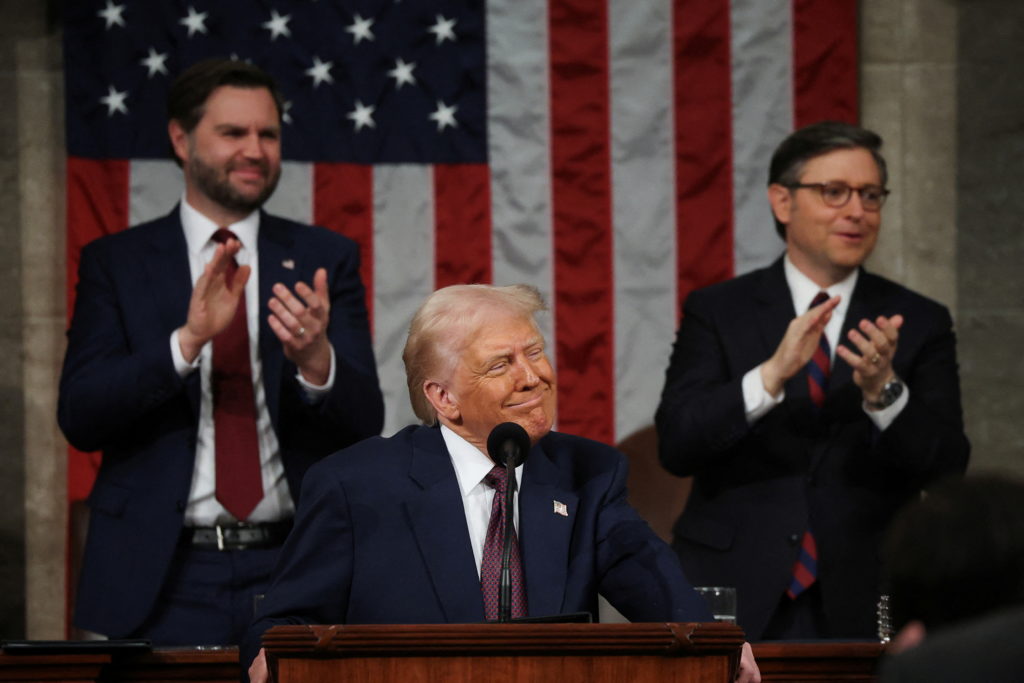
WASHINGTON, D.C. — President Donald Trump is preparing to deliver the 2026 State of the Union address at one of the most consequential moments of his presidency, facing domestic dissatisfaction, global tensions and looming midterm elections that could redefine American political power.
Scheduled for 9:00 p.m. EST on February 24, 2026, this speech before a joint session of the 119th Congress takes place against a backdrop of economic unease, political polarization and critical foreign policy questions.
Trump’s second term has so far been marked by strong rhetoric and polarizing policy decisions, yet his approval ratings have notably declined as many Americans express concern about inflation, the cost of living and the direction of the nation. Recent polls show a significant portion of the public believes the country is heading in the “wrong direction,” with just about one-third of Americans agreeing that Trump sets the right priorities.
Economic dissatisfaction remains central to public sentiment. While the Dow Jones and stock markets have seen gains under the administration, household affordability concerns continue to dominate national conversations, particularly ahead of the 2026 midterm elections.
As a constitutionally mandated speech, the State of the Union provides the president a national platform to outline policy priorities and legislative goals. Traditionally, it covers achievements, challenges and future plans.
Economic emphasis
The Trump administration plans to highlight economic achievements — especially job growth and domestic manufacturing — and propose new initiatives intended to lower costs of living and spur broader prosperity. These include incentives for technology firms to absorb infrastructure costs and proposed healthcare reforms aimed at reducing premiums.
However, critics argue that these proposals may not fully address the lived realities of many Americans struggling with high prices and stagnant wage growth. As such, the president faces a balancing act between touting successes and acknowledging persistent economic pressures.
Trump is also expected to promote border security initiatives and discuss his administration’s approach to immigration enforcement, a core theme of his political messaging. Supporters argue these policies enhance national security, while opponents cast them as overly restrictive and potentially harmful to immigrant communities.
The address will extend beyond domestic concerns to include Trump’s perspective on global challenges. Tensions with Iran and other geopolitical hotspots have shaped the administration’s foreign policy, and the president is likely to reaffirm his stance on national security and America’s role on the world stage.
Despite Trump’s efforts to portray foreign policy as a strength, some analysts suggest that his approach has provoked international controversy, particularly regarding military presence and diplomatic strategies. The speech offers an opportunity for Trump to frame his global leadership narrative and rally allies ahead of ongoing conflicts.
Notably, the 2026 State of the Union comes amid deep political polarization. Many Democratic lawmakers are reportedly planning alternative events, boycotts or counterstatements, underscoring the fracture in national political discourse.
Virginia Governor Abigail Spanberger and Senator Alex Padilla are among those expected to deliver official Democratic rebuttals in response to Trump’s policy claims, focusing on issues such as economic equity, healthcare, and social services.
Trump also faces institutional challenges that will influence the address’s reception. A recent Supreme Court decision striking down portions of his tariff policies has spotlighted tensions between the executive branch and the judiciary, and underscored questions about executive authority and constitutional limits.
These dynamics complicate Trump’s attempts to project control and unify support across a divided government, making the State of the Union a pivotal moment for redefining his political narrative.
The 2026 midterm elections are widely viewed as a referendum on Trump’s policies and leadership, especially as both parties prepare for intense campaigning. Republicans hope to maintain or expand their congressional majority, while Democrats aim to capitalize on public dissatisfaction and regain influence.
Political strategists observe that Trump’s address will be critical not just for declaring policy priorities, but also for energizing voter bases and framing election narratives that will shape the United States’ political landscape for years to come.
Global observers, from diplomatic analysts to foreign governments, are watching closely. Trump’s approach to trade, global alliances and national security broadly influences U.S. relationships, especially as rival powers assert their own strategic interests. Critics argue that Trump’s policies have occasionally strained alliances, while supporters emphasize his focus on direct U.S. interests.
The international media has widely covered Trump’s upcoming address, noting its significance as a reflection of America’s current political climate — one marked by debates over national identity, economic direction, and global leadership.
As the nation awaits the live broadcast from the United States Capitol, Trump’s 2026 State of the Union will serve as a defining moment in his presidency — a chance to reset the discourse, rally supporters, and respond to critics. Whether it succeeds in shaping the coming political season remains uncertain, but its impact on U.S. policy and political momentum will be felt far beyond the Capitol chambers.