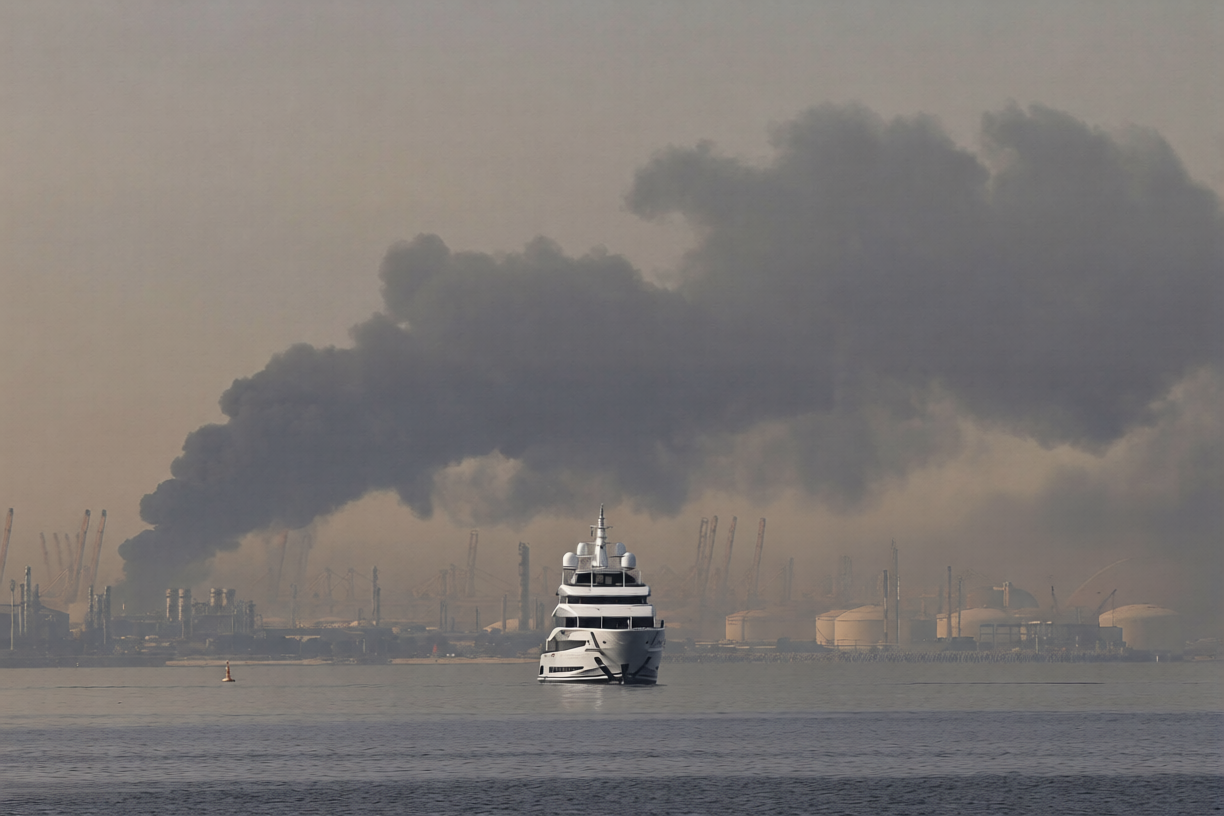
Tensions in the Middle East have taken a sharp turn after a major oil tanker was struck near the coast of Dubai, shortly following strong warnings from former U.S. President Donald Trump targeting Iran’s energy sector. The incident has sparked fresh fears over regional stability and the safety of global oil supply routes, as officials and analysts attempt to piece together what exactly happened and what it could mean for the future.
Maritime security agencies reported that the oil tanker was moving through a key shipping route in the Arabian Gulf when an external strike hit it. Investigators believe an outside force carried out the attack. Authorities are still assessing the full extent of the damage. However, early reports show that the vessel suffered structural damage but did not sink. Officials have not confirmed any casualties yet. Meanwhile, the crew members remain on high alert following the incident.
The timing of the attack has drawn significant attention. Just hours earlier, Donald Trump had issued a strong statement warning that the United States could take aggressive measures against Iran’s energy infrastructure if tensions between the two nations continued to escalate. His remarks were seen by many as a direct signal of increasing pressure on Tehran, particularly targeting its vital oil and gas sector, which forms the backbone of the country’s economy.
No group has officially claimed responsibility for the tanker strike. However, several security experts noted that the attack resembles previous incidents in the region, which they believe involved Iranian-backed forces. These experts highlighted the use of precision strikes and the targeting of commercial vessels in key transit routes. Iranian authorities have not responded directly to these accusations, and officials have yet to release any concrete evidence.
The attack has immediately raised concerns among global energy markets. Oil prices reacted with noticeable volatility as traders and investors grew cautious about potential disruptions in supply. The Arabian Gulf remains one of the most critical regions for global oil transportation, with a significant portion of the world’s crude shipments passing through its narrow waterways. Any threat to these routes can quickly ripple across international markets, affecting fuel prices and economic stability worldwide.
Shipping companies operating in the region have also begun reviewing their security protocols. Some firms are reportedly considering rerouting vessels or increasing onboard security measures to reduce risks. Insurance costs for tankers passing through the Gulf are also expected to rise if the situation continues to deteriorate, adding another layer of financial pressure to global trade.
Diplomatic reactions have started to emerge as well. Several international leaders have called for restraint and urged all parties involved to avoid actions that could further escalate the situation. There is growing concern that a cycle of threats and retaliatory actions could lead to a broader conflict, something the region has experienced multiple times in recent decades.
At the same time, analysts are closely watching how Iran might respond to the latest developments. Trump’s warning targeting Iran’s energy sector is particularly significant because it touches on a critical vulnerability for the country. Any direct action against its oil infrastructure could have severe economic consequences, potentially pushing Tehran to respond in ways that could further destabilize the region.
The incident near Dubai also highlights the ongoing risks faced by commercial shipping in geopolitically sensitive areas. Despite increased surveillance and military presence in the Gulf, attacks on vessels continue to occur, often with little warning. This has raised questions about the effectiveness of current security measures and whether more coordinated international efforts are needed to protect vital trade routes.
Countries that rely heavily on imported energy, especially in Asia, are monitoring the situation closely. A prolonged period of instability could push fuel prices higher, disrupt supply chains, and create broader economic challenges. Governments may need to implement contingency plans to secure alternative energy sources if the risks continue to rise.
Investigators continue examining the tanker strike, but the lack of clear information has increased uncertainty. Authorities are working to identify the cause of the attack and hold those responsible accountable. These investigations take time, especially in complex geopolitical regions involving multiple actors.
What is clear is that strong political rhetoric combined with real-world incidents is creating a volatile situation in the Middle East. The phrase “Trump threatens Iran energy sector” is no longer just political talk. It now connects directly to unfolding events that could affect global security and economic stability.
In the coming days, much will depend on how both sides choose to respond. A measured approach could help ease tensions and prevent further incidents, while any escalation could quickly spiral into a larger crisis. For now, the world watches closely as one of the most important energy corridors remains under pressure, with the potential to impact millions far beyond the region itself.