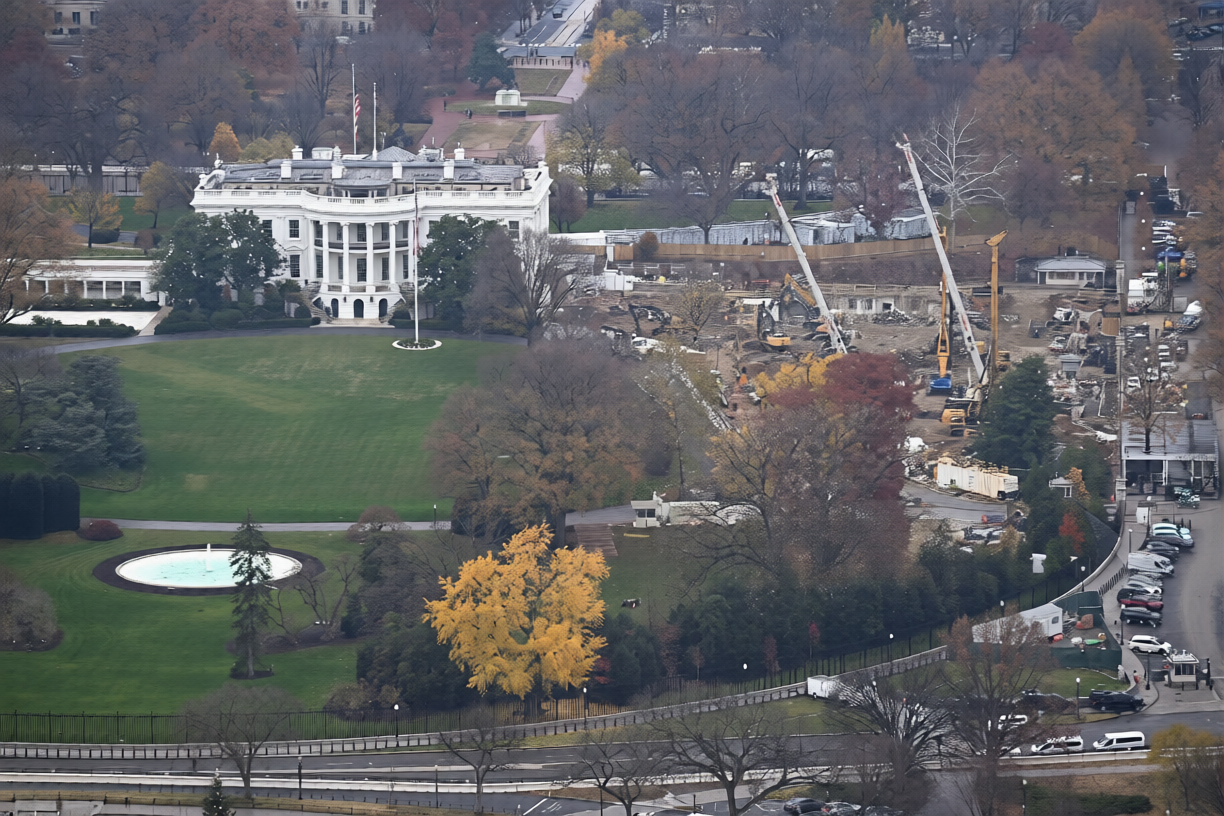
The Trump White House ballroom project has been temporarily halted after a federal judge issued an order stopping its construction. The decision has quickly become a major topic in US political and legal discussions. It raises concerns about executive authority, historical preservation, and government spending.
According to legal sources, multiple parties filed objections and raised concerns about whether authorities followed proper procedures before initiating the project. As a result, the court decided to pause construction until it completes a full review of the matter.
The project, strongly associated with Donald Trump, was intended to add a large and luxurious ballroom to the White House complex. However, critics argue that such a move requires deeper review and approval.
The Trump White House ballroom plan has been controversial from the beginning. Supporters claimed it would modernize the White House and provide space for large official events. On the other hand, critics raised serious concerns.
First of all, preservation experts warned that modifying the White House could affect its historical value. The building is not just a residence; it is also a national symbol. Therefore, any structural change becomes a sensitive issue.
In addition, legal experts questioned whether the project followed federal guidelines. Normally, such changes require multiple approvals from planning and heritage bodies. However, reports suggested that some of these steps may have been bypassed.
Because of these concerns, legal challenges were filed. Eventually, these challenges led to the judge’s decision to halt the project.
The court ruling focused on whether the Trump White House ballroom project complied with legal procedures. The judge stated that there were “serious questions” about how the project was approved.
As a result, the court has temporarily paused construction, and it will keep the halt in place until it completes a full legal review. The judge emphasized that this step is necessary to maintain transparency and protect public interest.
Moreover, the ruling does not cancel the project completely. Instead, it delays progress until all legal concerns are addressed. This means the future of the ballroom remains uncertain.
The decision to halt the Trump White House ballroom project has triggered strong reactions across the political spectrum.
Supporters of Trump argue that the project is beneficial. They believe it would enhance the White House’s functionality. Additionally, they claim the legal challenge is politically motivated.
However, critics strongly disagree. They argue that the project reflects unnecessary spending and misuse of authority. Furthermore, they stress the importance of preserving the White House in its original form.
Meanwhile, public opinion appears divided. Some people support modernization efforts. Others prefer maintaining historical integrity. As a result, the issue continues to spark debate.
The halt of the Trump White House ballroom project could have wider implications. It sends a clear message that even high-level projects must follow proper legal procedures.
For instance, future government construction plans may face stricter scrutiny. Agencies might need to ensure full compliance before starting any work. This could slow down decision-making but increase accountability.
In addition, the case highlights the role of the judiciary in overseeing executive actions. It shows that courts can intervene when legal concerns arise.
The future of the Trump White House ballroom project now depends on the outcome of further legal proceedings. Several possibilities exist.
First, the court could allow construction to resume if all requirements are met. In this case, the project would continue with additional oversight.
Alternatively, the court could impose strict conditions. This might include redesigning the project or obtaining new approvals.
Finally, the project could be canceled entirely if major violations are confirmed. Although this is less likely, it remains a possibility.
For now, all construction activities remain paused.
The halt of the Trump White House ballroom project marks an important moment in US politics and law. It highlights the balance between development and preservation.
On one hand, modernization is necessary for evolving needs. On the other hand, historical landmarks require careful protection. Therefore, decisions like this must be handled with transparency and responsibility.
As the legal process continues, the outcome will shape not only this project but also future government initiatives. For now, the Trump White House ballroom remains a symbol of ongoing debate.