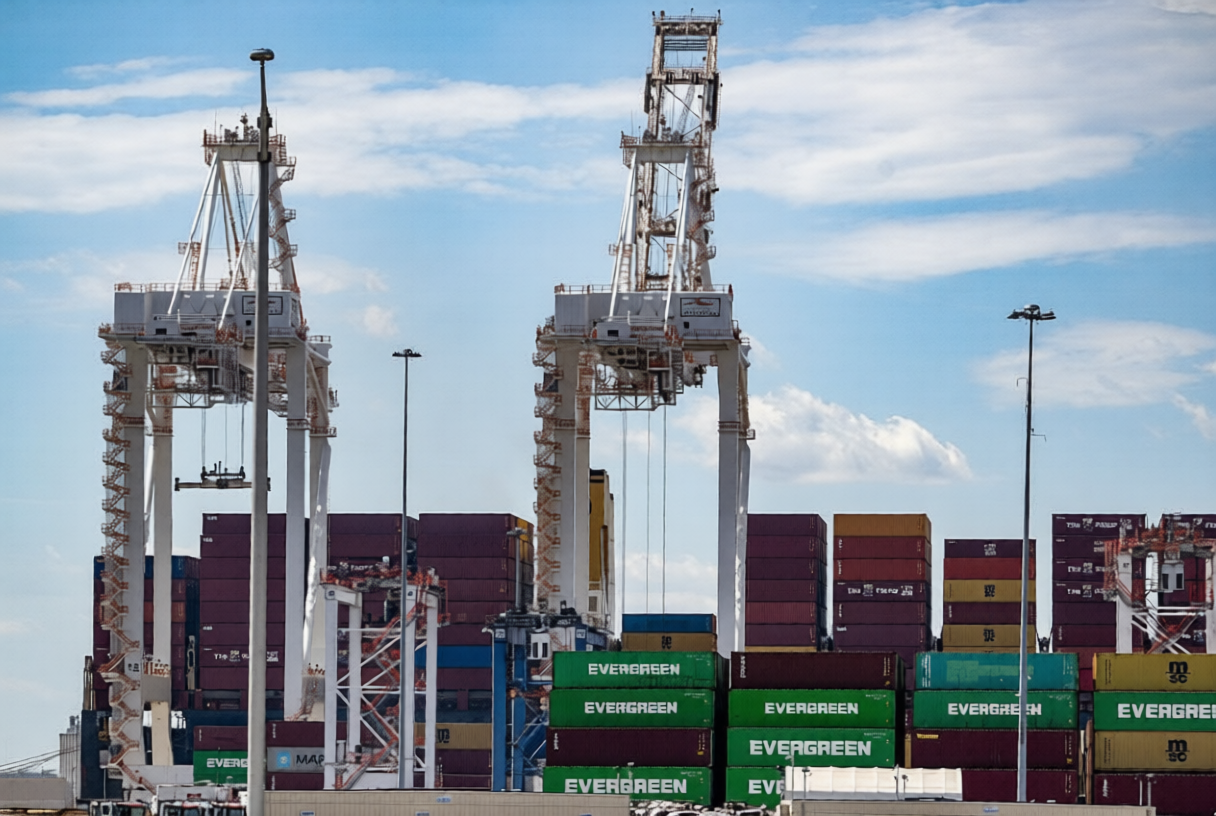
The United States has launched a sweeping US unfair trade probe targeting several major trading partners, a move that could reignite tariff tensions and reshape global economic relations. The investigation is being conducted under Section 301 of the Trade Act of 1974, a powerful legal tool used by Washington to challenge trade practices it considers unfair.
The new probe has been widely interpreted as an effort to rebuild tariff leverage following recent legal setbacks that weakened earlier trade measures introduced during President Donald Trump’s administration. Analysts say the move signals a renewed commitment by Washington to use tariffs as a strategic tool in global trade negotiations.
Investigation Targets Major Global Economies
The investigation focuses on more than a dozen major trading partners that the United States believes maintain policies contributing to global overproduction and trade imbalances. Countries reportedly included in the probe include China, India, Japan, South Korea, the European Union, and Mexico, along with several Southeast Asian economies.
Other economies such as Taiwan, Vietnam, Thailand, Malaysia, Singapore, Indonesia, Switzerland, and Bangladesh are also expected to come under scrutiny as the investigation unfolds.
U.S. officials argue that these nations have created structural imbalances in industries such as automobiles, semiconductors, and manufacturing by maintaining excess industrial capacity and trade surpluses.
According to the U.S. Trade Representative’s office, the goal of the probe is to determine whether foreign policies and industrial practices are harming American producers and workers.
Tariffs Could Return Within Months
Trade experts warn that the investigation could ultimately lead to new tariffs on imported goods, potentially affecting hundreds of billions of dollars in global trade.
Officials involved in the investigation have indicated that findings could be completed by mid-year, with potential remedies—including tariffs—being introduced shortly afterward.
This timeline has raised concerns among economists and global businesses, many of whom fear that new tariffs could trigger another round of trade disputes similar to those seen during the earlier US-China trade war.
If tariffs are implemented, they could affect industries ranging from electronics and machinery to automobiles and consumer goods.
Legal Strategy Behind the Probe
The new US unfair trade probe is being carried out under Section 301, a provision of American trade law that allows the government to investigate foreign trade practices deemed discriminatory or harmful to U.S. commerce.
Historically, Section 301 investigations have been used to justify tariffs or other trade sanctions. The same mechanism was used during the earlier U.S.–China trade conflict to impose billions of dollars in tariffs on Chinese imports.
The current probe is being seen as an attempt to rebuild tariff authority after a recent court ruling undermined a key part of the previous tariff framework.
By launching new investigations under existing trade law, Washington may be able to impose fresh import taxes while avoiding legal challenges that weakened earlier policies.
Forced Labor Investigation Expands Trade Pressure
Alongside the industrial capacity investigation, the United States has also launched a separate probe focusing on forced labor in global supply chains.
This investigation will examine imports from more than 60 countries and assess whether goods entering the United States are linked to forced labor practices.
The probe expands previous enforcement actions targeting supply chains linked to forced labor concerns, particularly those related to regions such as Xinjiang in China.
Officials say the initiative aims to ensure that American consumers and businesses are not supporting labor abuses through international trade.
Global Reaction and Diplomatic Concerns
The announcement of the US unfair trade probe has already sparked reactions across the world. Several governments have indicated that they are closely monitoring the investigation and preparing for potential negotiations with Washington.
Countries like Japan and Taiwan have pointed to existing trade agreements with the United States and expressed hope that diplomatic dialogue will prevent new tariffs.
Meanwhile, some governments have warned that unilateral tariffs could disrupt global supply chains and harm international economic cooperation.
Economists have also cautioned that escalating trade tensions could slow global economic growth at a time when many countries are still recovering from inflation and supply-chain disruptions.
Impact on Global Trade and Supply Chains
If tariffs are eventually imposed, the consequences could extend far beyond bilateral trade relationships.
Global manufacturers rely heavily on complex supply chains that span multiple countries. New tariffs could increase production costs, raise consumer prices, and force companies to restructure supply networks.
Technology industries, in particular, could be affected if tariffs target semiconductor components or electronic manufacturing hubs in Asia.
At the same time, supporters of the probe argue that stronger enforcement is necessary to protect domestic industries from unfair competition.
They say that excessive foreign industrial subsidies and overproduction have distorted global markets and undermined American manufacturing.
A Strategic Move in Global Economic Politics
Many analysts see the US unfair trade probe as part of a broader strategic shift in Washington’s economic policy.
In recent years, both political parties in the United States have shown increasing support for tougher trade enforcement, particularly against countries accused of maintaining unfair industrial policies.
By launching new investigations and potentially imposing tariffs, the U.S. government may be attempting to strengthen its negotiating position in future trade discussions.
The move also comes ahead of possible high-level diplomatic engagements between the United States and major economic powers, including China.